#507 - DAVID LEE, Founder of Buildnotes
SUMMARY
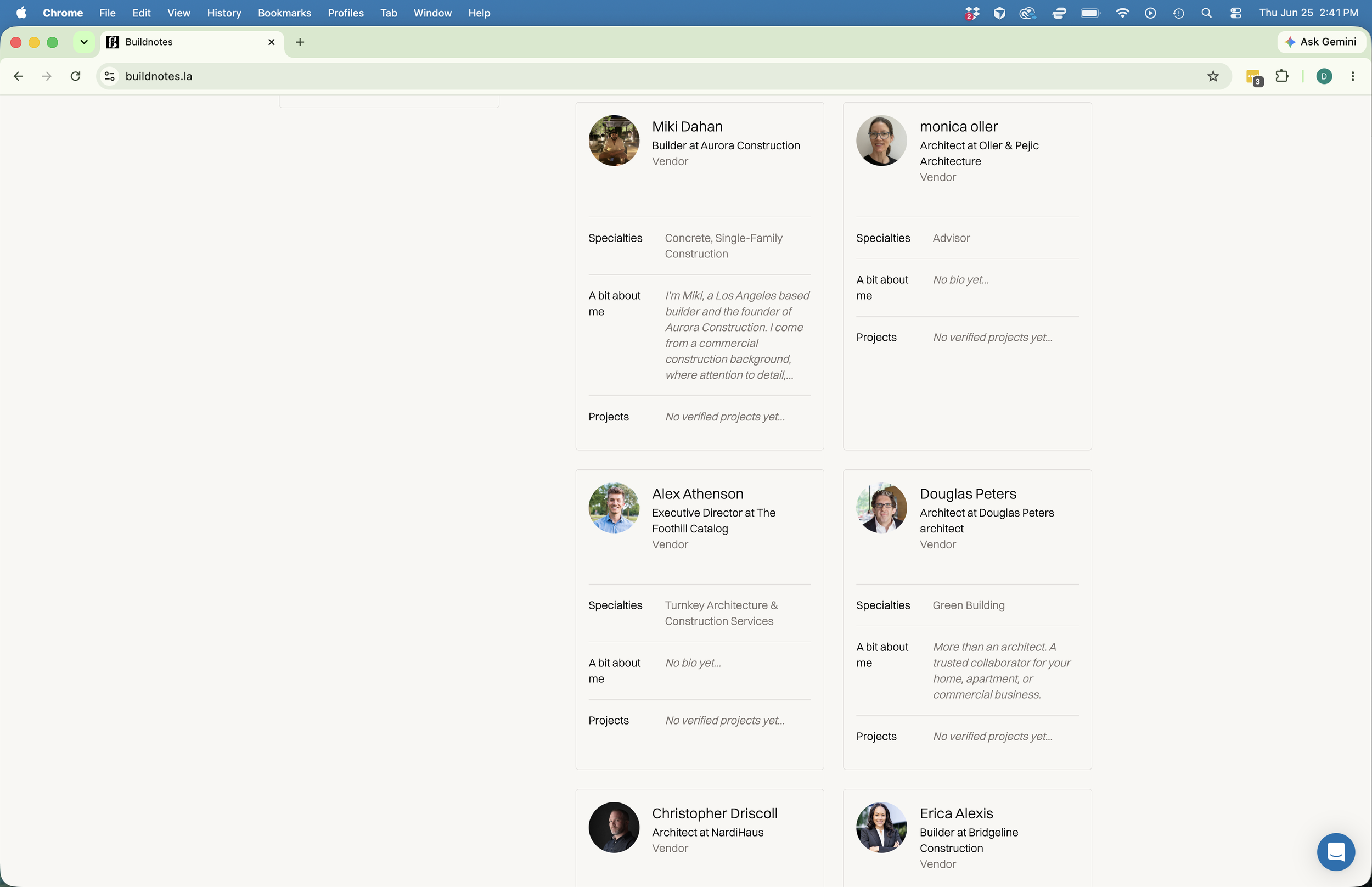
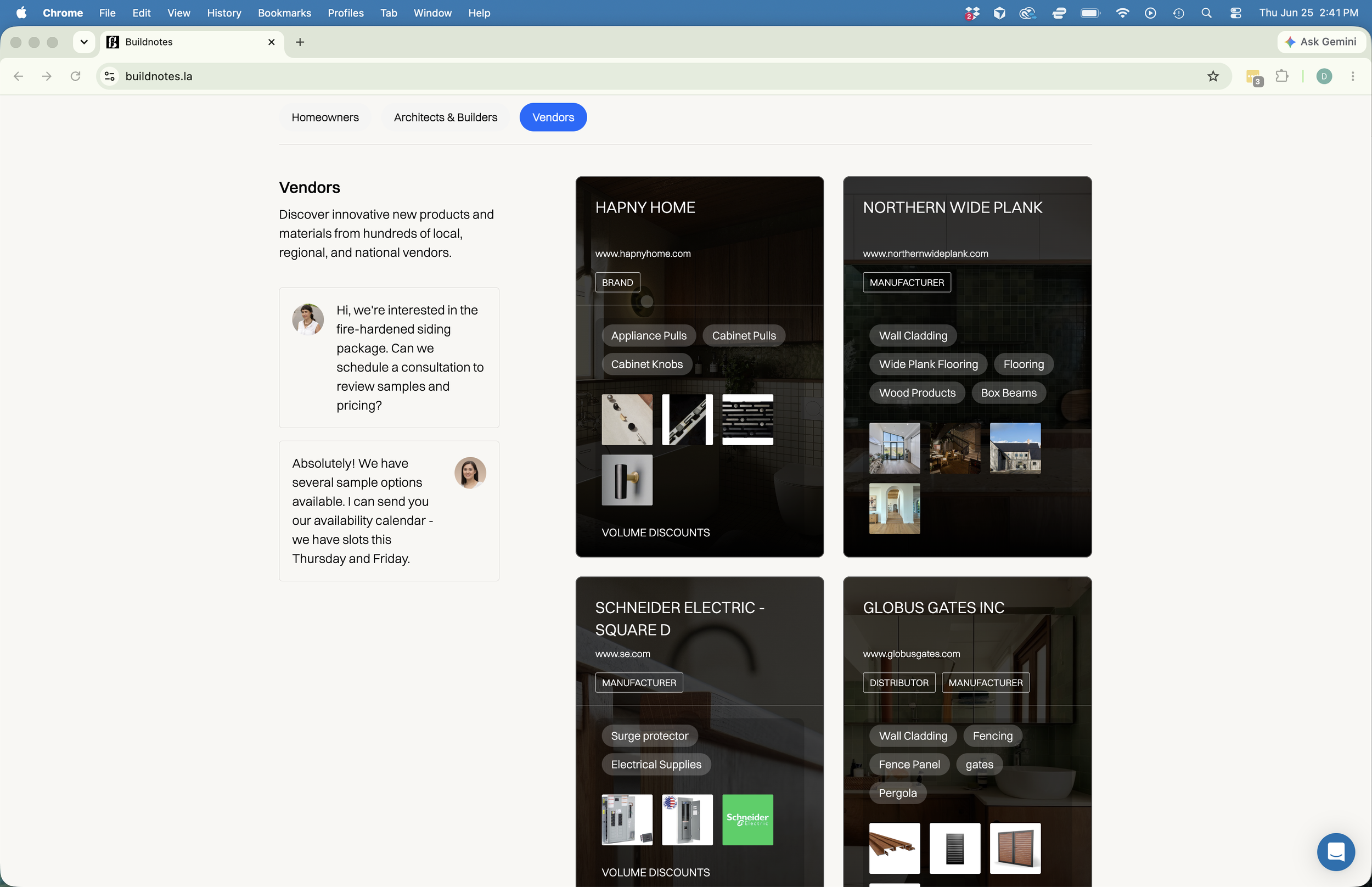
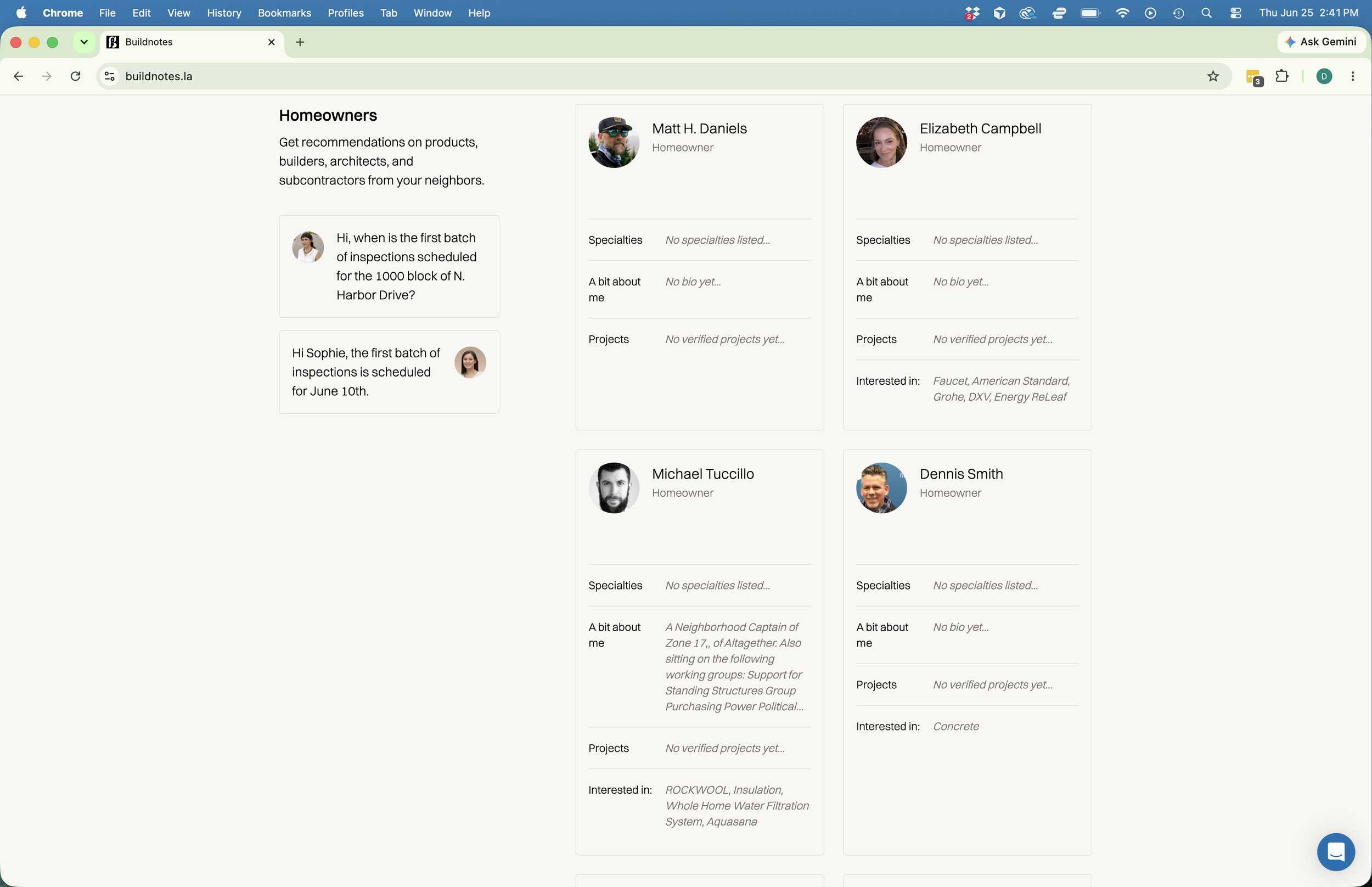
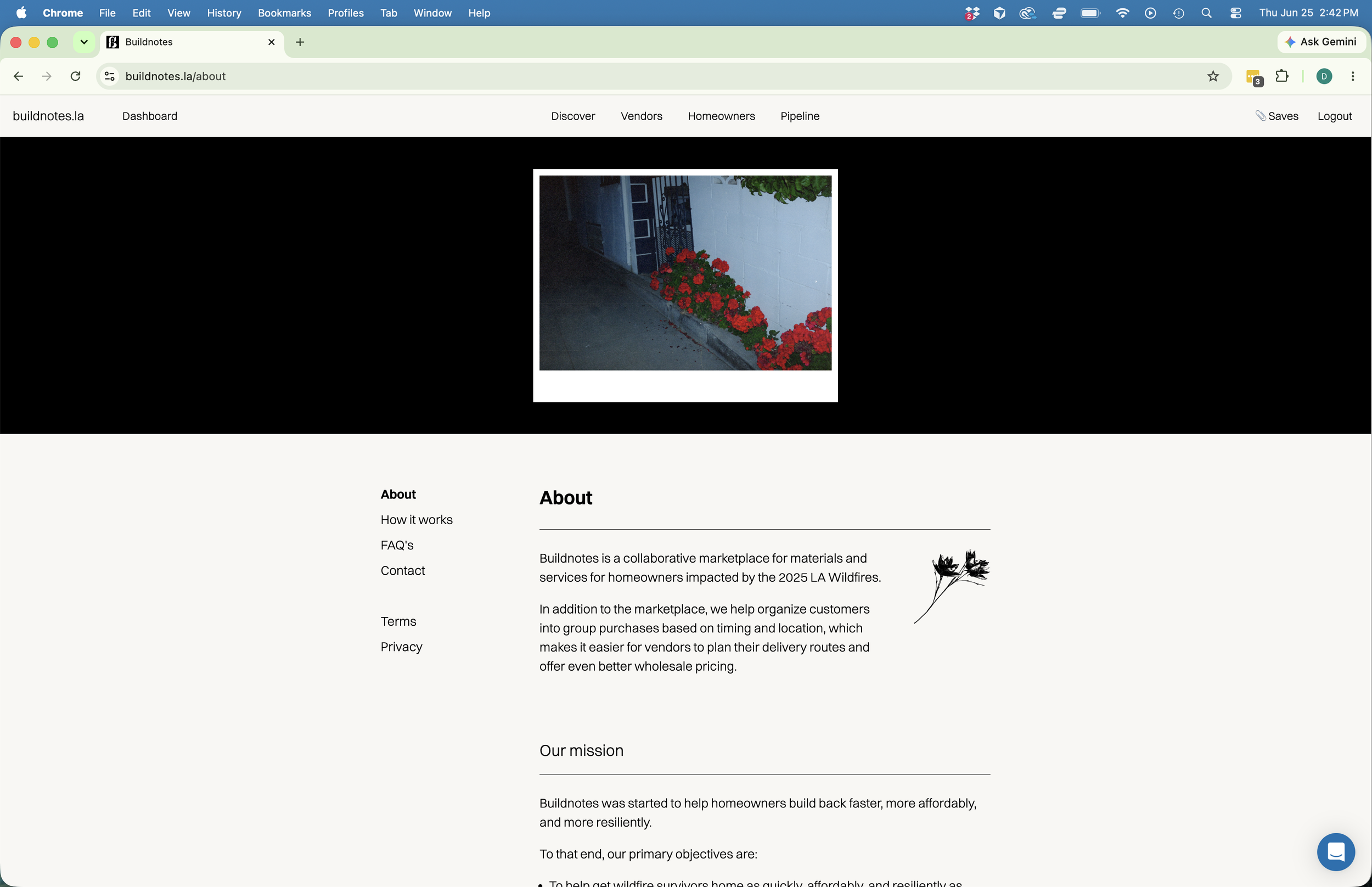
This week, David and Marina of FAME Architecture & Design are joined by David Lee, founder of Buildnotes. The two discussed how David got involved with the LA fire rebuild effort, bulk purchasing, what is Buildnotes, how it started, and how it works, types of vendors and products on Buildnotes, how the community can help, navigating different community organizations, gaining trust, marketing and vendors intake, collaborating with large developers, how payment and purchases work on Buildnotes, next step for Buildnotes, and more. Enjoy!







ABOUT DAVID
David is a software developer and designer who’s worked in both the private and non-profit sectors. He began his career as an early employee at small e-commerce companies in San Francisco and New York before shifting to the non-profit world, where he worked in prison re-entry and rehabilitation. Most recently, he has focused on developing software for optimizing wholesale procurement, fulfillment, and demand aggregation.
David has an unhealthy fixation with collective bargaining, coordinated delivery logistics, and group purchasing dynamics that help small businesses, communities, and individuals achieve the same wholesale rates as large corporations, conglomerates, and governments.
TIMESTAMPS
(00:00) How David got involved with the fire rebuild effort.
(02:20) Bulk purchasing.
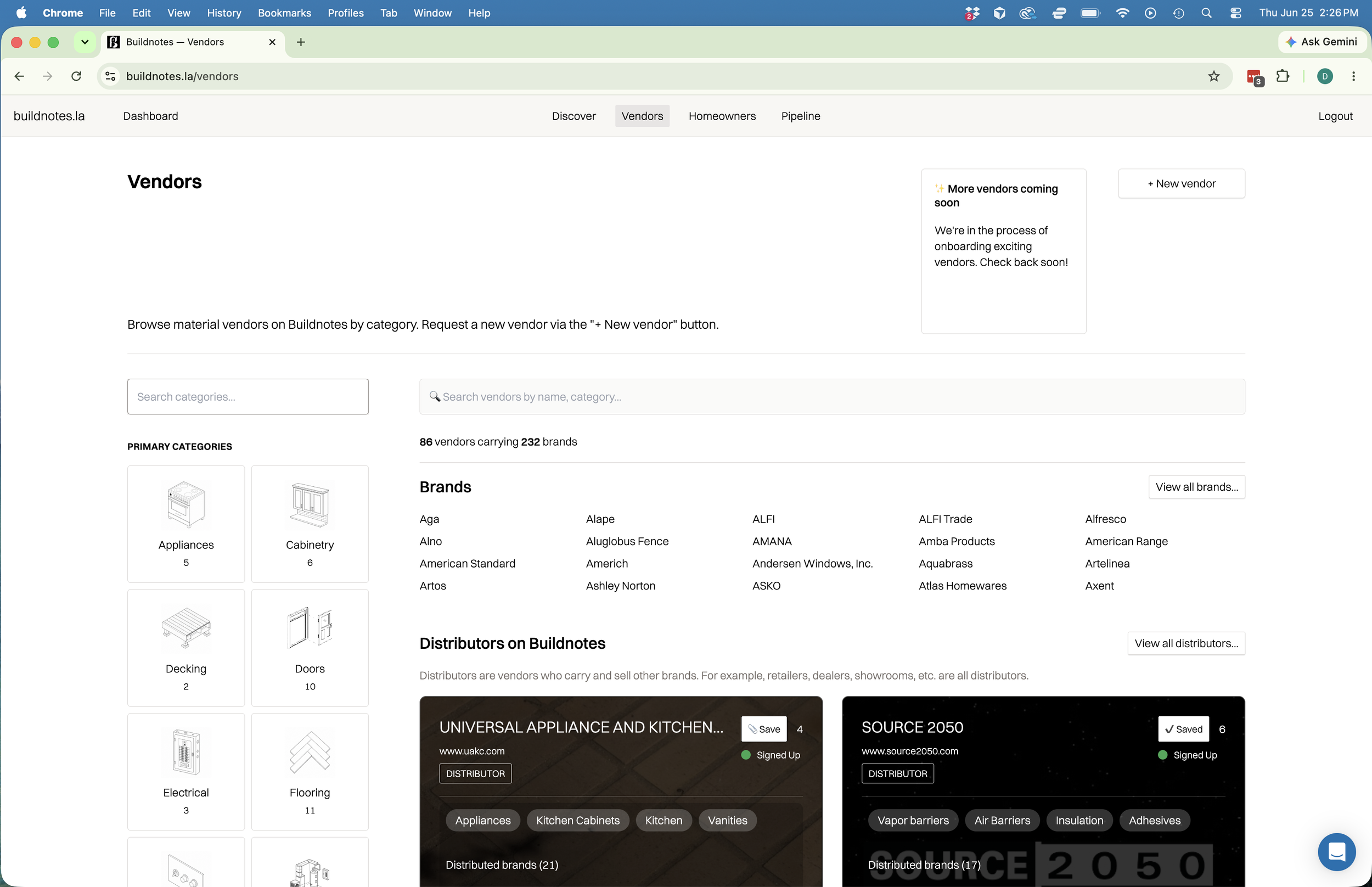
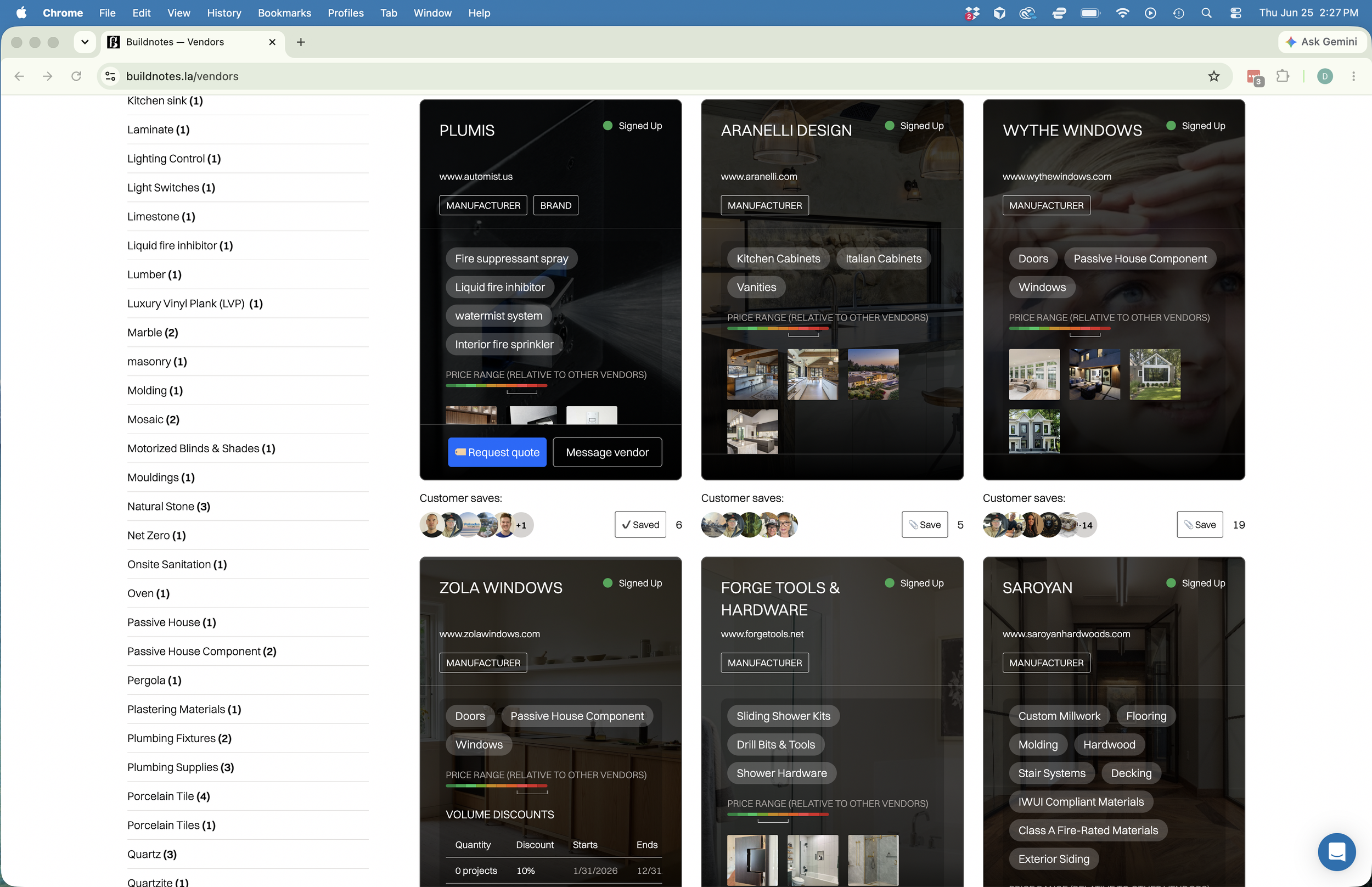
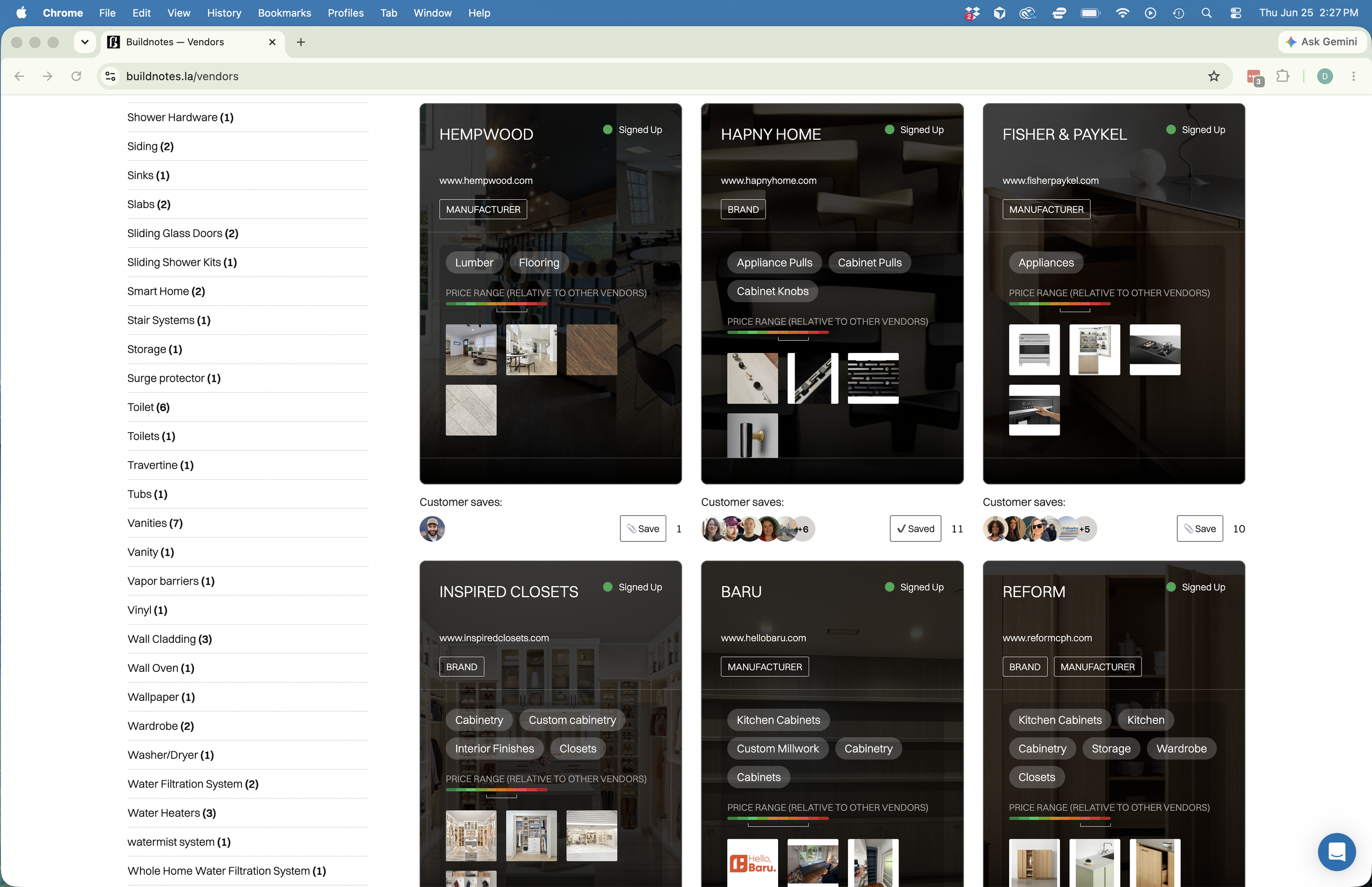
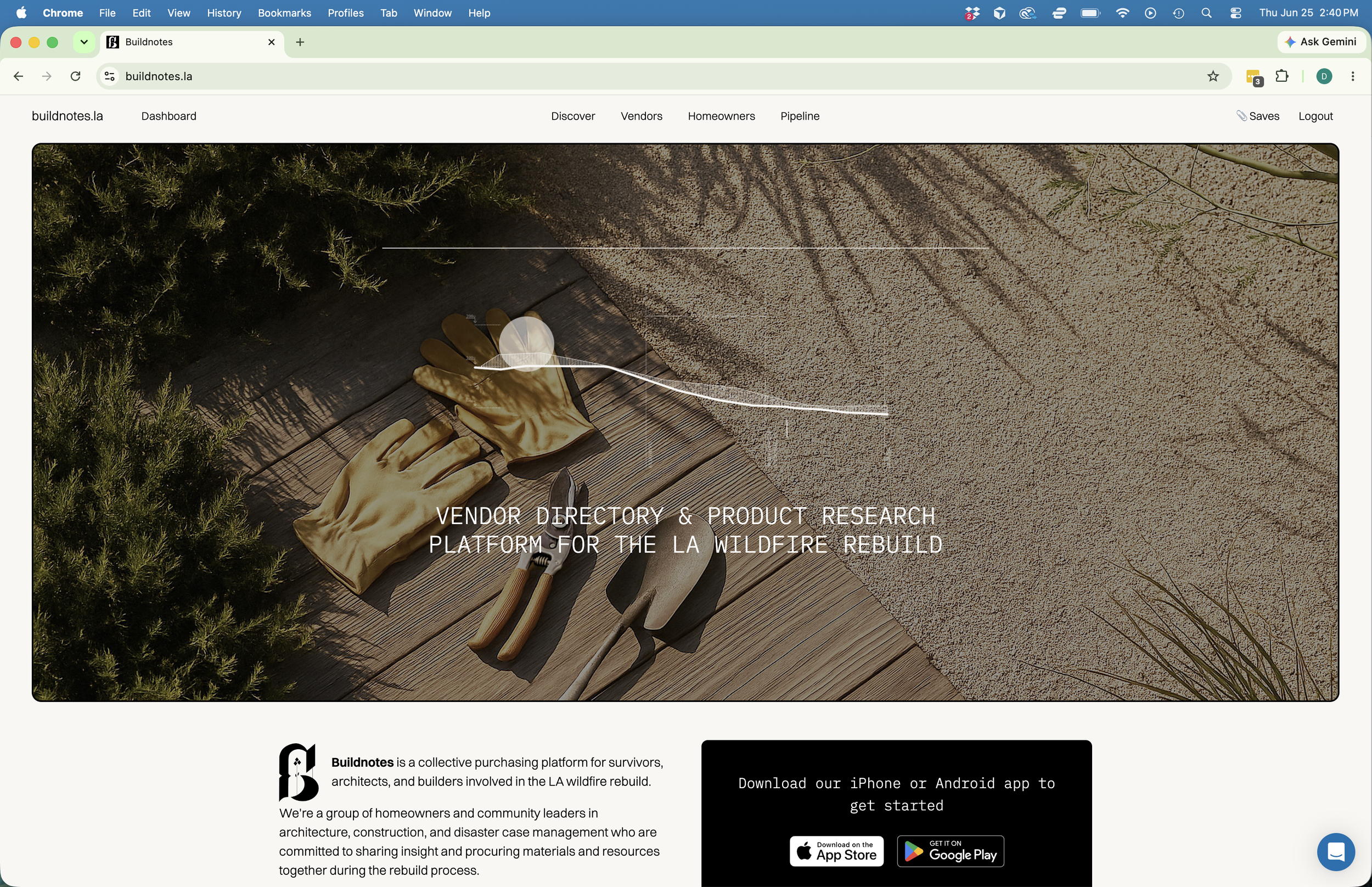
“The simplest way to think about Buildnotes is that it is a wholesale marketplace that was developed specifically for the LA wildfire rebuild. We are trying to save folks anywhere from 40-60% off on their construction materials, and we're trying to do that by organizing and enabling larger volume purchases of those materials. We do this by helping to coordinate amongst the customers, but also amongst the vendors who have been really receptive and great because it really serves their objectives too.” (06:13)
(06:08) What is Buildnotes & how it works.
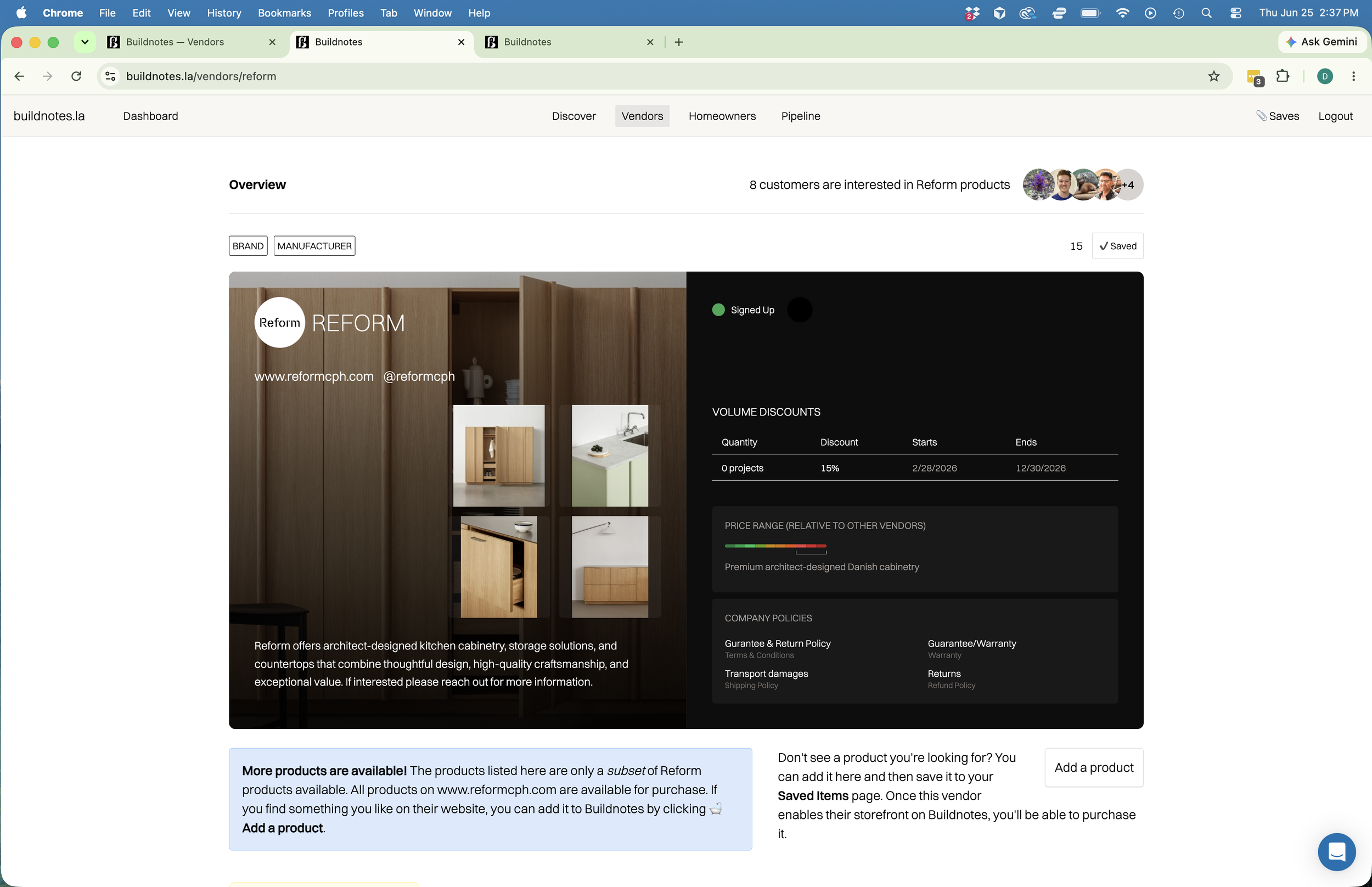
“We've gotten the vendors to treat the entire community as one group. So all three burn zones: Altadena, Palisades and Malibu. If anyone purchases from a vendor in any of those three areas, they can count towards a minimum order quantity for that vendor. It doesn't matter where you're located, it doesn't matter when you purchase, within a reasonable time frame. The vendors can set minimum order quantities for the entire community to hit. For example, if five projects purchased from them in the next two years, that will unlock 30% off for the entire community. If ten projects purchased from them, that will unlock 40% off for the entire community. It's a really simple format and a really intuitive goal for the community to hit, while also giving the vendors some measure of commitment or numbers before they commit to these deeper discounts.” (09:53)
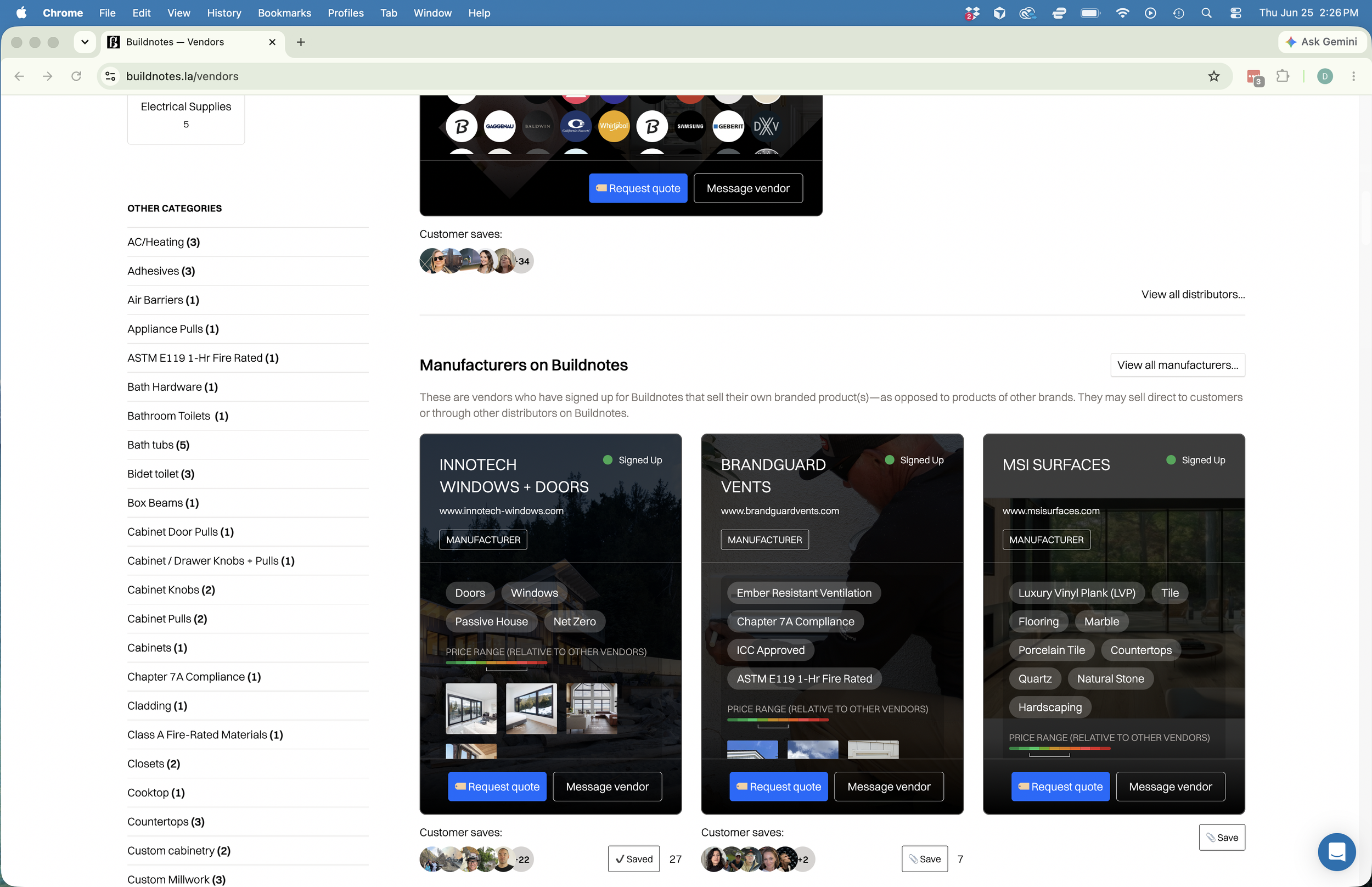
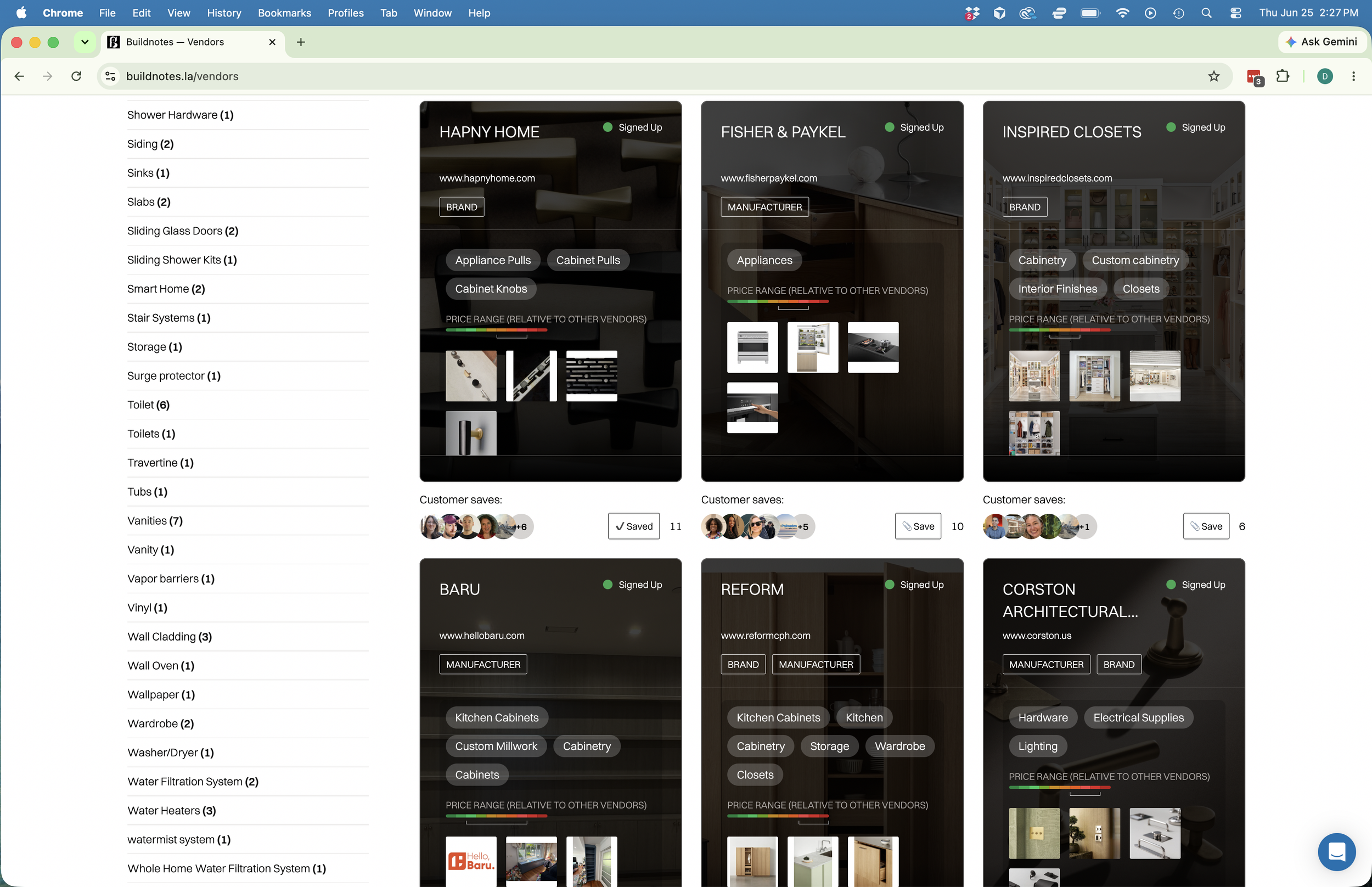
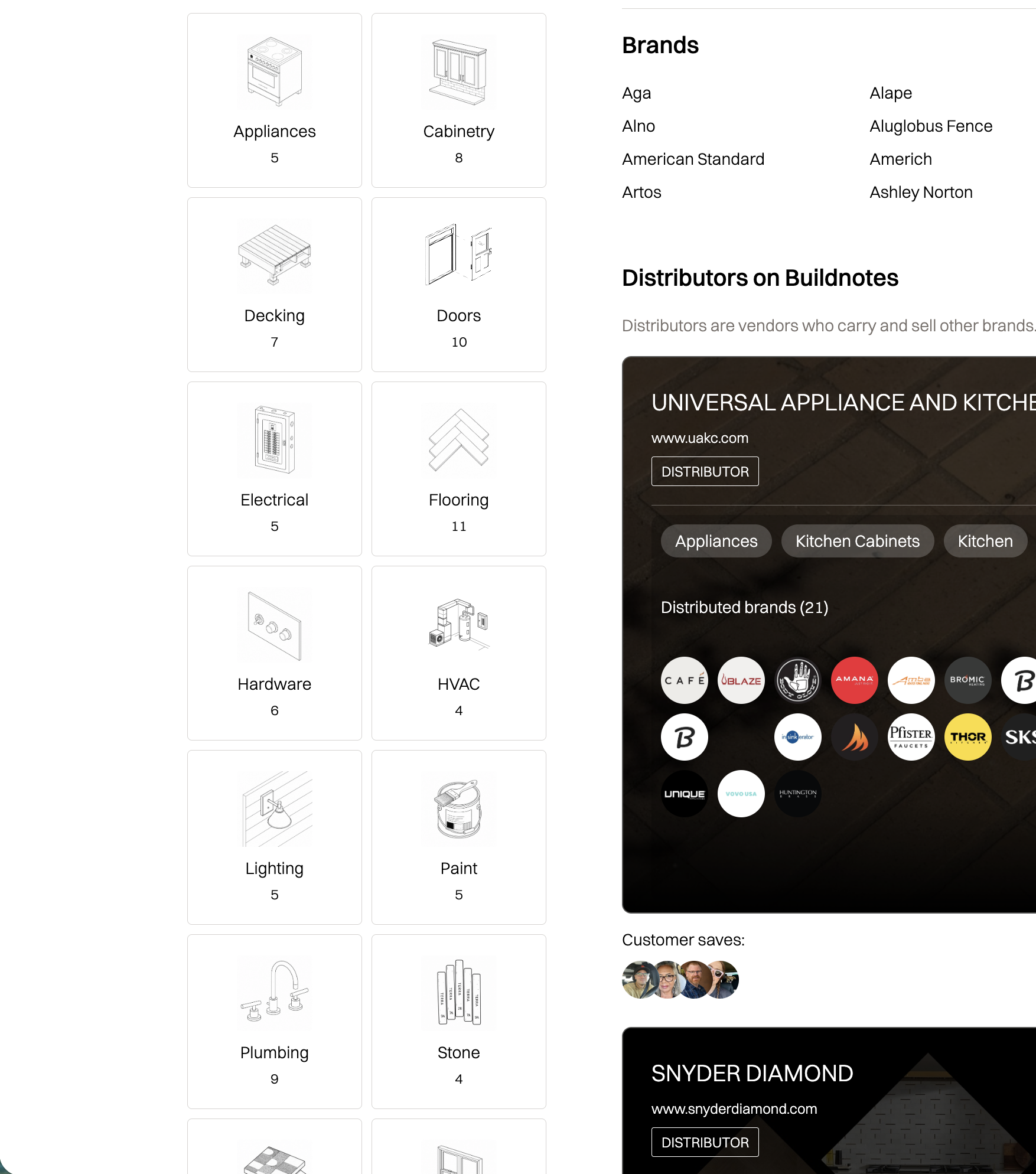
(17:10) Types of vendors & products on Buildnotes.
(21:49) How did Buildnotes start?
(29:05) What does Buildnotes need from the community?
(30:36) Navigating different community organisations.
(33:25) Gaining trust.
(39:46) Marketing and vendors intake.
(42:25) Collaborating with large developers.
“There's a couple of models that have emerged for rebuilding in the community, which I think are complementary. You have larger developers who have tremendous capacity. They built thousands of homes across the country every year, and they obviously have economies of scale with their vendors. They come into the community with turnkey solutions, meaning pre-approved plans and a set of homes that you can buy. They'll take care of everything and just deliver you a home. At the same time, there's a large segment of the community who really wants to build custom or semi-custom. It's harder to participate in those turnkey solutions, so that's where we feel like we offer a really complementary option here, where you can build custom, but you can also get some of the economies of scale on the material side, so you can work with an architect and designer while still getting some benefits of the economy of scale.” (43:03)
(47:06) How does purchase & payment work on Buildnotes.
“We are not a full marketplace like Amazon.com. We're more of a broker, so we connect you with the various vendors. We don't process payments on our platform. For the most part, payment is paid directly to the vendor. Returns, warranties, fulfillment, all of that is between you and the vendor. We do take a commission after the fact from the vendor if there's a purchase, so a small percentage of the transaction. IOur entire platform also works on a quote and invoice basis. So there's no one-click checkout like on Amazon.com where you purchase the product and it arrives 12 hours later. If you're interested in the product, you or the builder can reach out to the vendor on our platform, request a quote, and they can give you a quote based on all the parameters. If there's an agreement, they can furnish an invoice on the platform and you can pay it with their preferred methods.” (47:36)
“You have customers who just have decision paralysis. Because we have so many vendors, they don't know which one to reach out to first, and they certainly don't want to have a conversation with every single one of them just to get a quote. So we came up with soft quotes. You as a customer, just upload your plans or material schedules. The vendors are actually not allowed to chat with you until they've given you a ballpark quote based on the plans and materials, and that gives the customer a really easy read on roughly how much does this vendor cost relative to others. Are we talking about a $60,000 window or a $140,000 window vendor? Because one of those is just not even going to be relevant to me. That can also save the vendor time when they're quoting, because instead of having to think that every single quote is final, they can give a range to the customer knowing that it could change, and knowing that the goal is just to get a rough estimate.” (51:11)
(57:30) Next steps for Buildnotes.
“If you think about the economics that architects face, they're under siege at all times from a lot of different angles. For example, a project that an architect is trying to bid might end up going to a design builder because they've figured out ways to leverage economies of scale, to buy in bulk, build in bulk, and to develop a lot more efficiently. If there was a way for an architect to get the client maybe 20, 30 or 40% off on just the materials, that could be the difference between the client deciding to go with the design builder or sticking with you and your workflow. So we really feel like there's a lot of synergies with folks who want custom, beautiful technical design, but also could make use of ways to get volume purchases and economies of scale as well.” (01:00:35)