SUMMARY
This week, David and Marina of FAME Architecture & Design are joined by Anthony Poon, Founder of Poon Design Inc. The three discussed Anthony’s background, music & architecture, design approach, early career experience, architecture, writing & music as one creative process, marketing an architecture firm, when Anthony started Poon Design, being a specialist in design, finding an architectural style, what makes an ideal client, ideal project type, and more. Enjoy!








ABOUT ANTHONY
Educated as a multi-disciplinary designer, Anthony Poon is an award-winning architect, published author, classical musician, and mixed-media artist. Spanning three decades of professional experience, Anthony is a LEED-accredited architect licensed in California, Virginia, Montana, and Georgia. For his contributions to the industry and society nationally, he has been elevated to the prestigious College of Fellows of the American Institute of Architects, the highest national membership honor bestowed by the organization, of which only 3% are recognized with this distinction. Anthony earned his Master of Architecture from Harvard University and his Bachelor of Arts from University of California, Berkeley, Magna Cum Laude. A frequent public speaker, he presents at national and regional conferences, as well as schools and universities. Anthony has received countless accolades throughout his career. Notably, he was awarded the National Grand Prize from Learning by Design in both 2005 and 2006, the highest honor given to an educational project in the country. In 2018, he earned the American Institute of Architects’ top national award for residential design. Anthony was also a concert pianist for the 2012 Architects in Concert and an award-winning artist at the 2013 and 2020 national Beverly Hills Art Show. His critically acclaimed books offer an inside look at the architecture profession and the creative ego. Recently, he adapted his book into a screenplay, Death by Architecture, which was honored by Scriptapalooza 2025 with inclusion in the Top 30 Best Scripts internationally.

TIMESTAMPS
(00:00) Anthony's Background.
(05:15) Music & architecture.
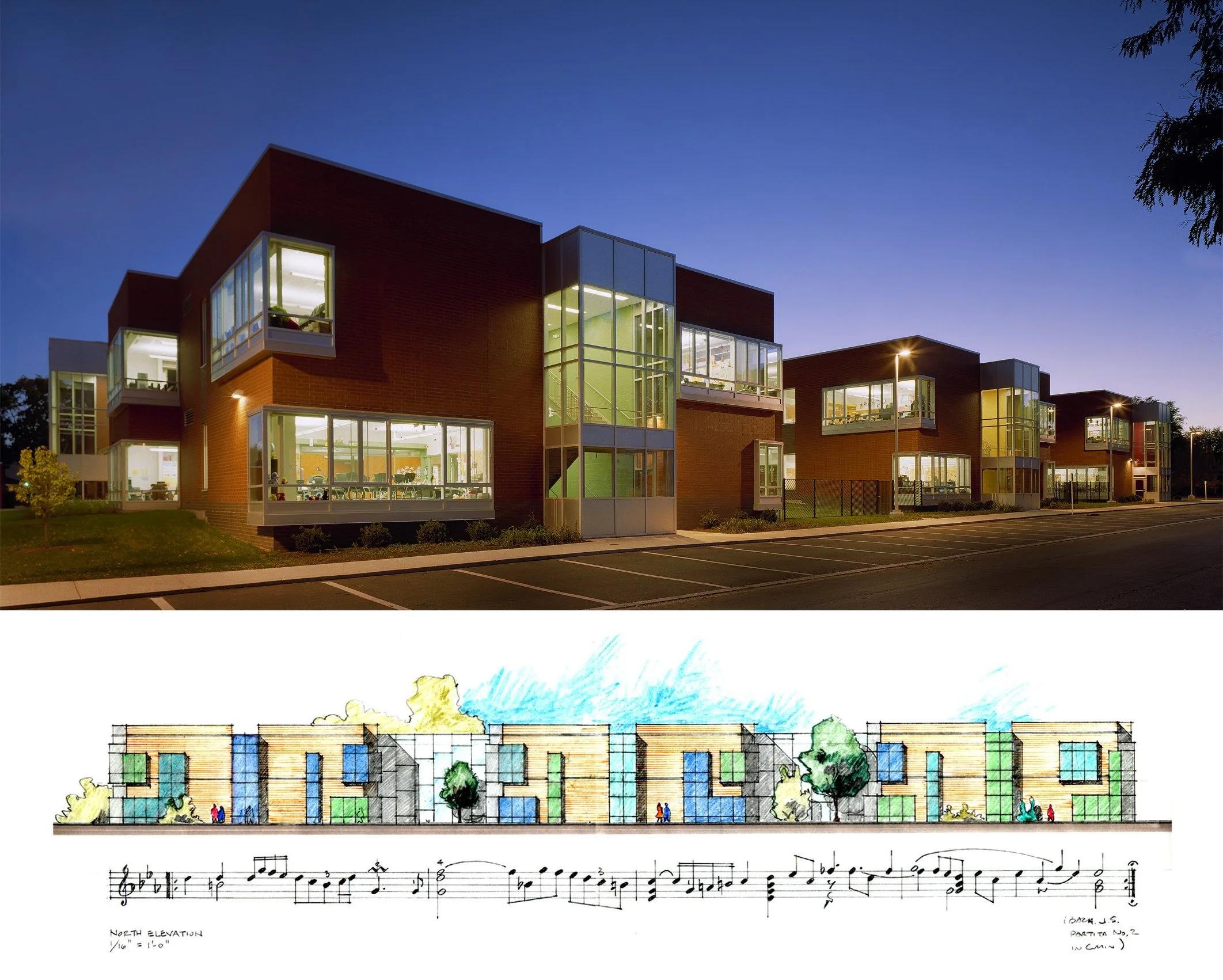
“There's the famous Goethe quote: 'Architecture is frozen music." There are all these overlaps in conceptual themes, like harmony, rhythm, structure, and counterpoint. These ideas explain both music and architecture. My interest, though, was really in the process: how music is made and how architecture is made.” (07:54)
“In grad school, the word "rigor" was used throughout all our presentations, classes, and by our professors. I was thinking, yes, it's a great word. You're right. Architecture is a discipline. We have liability and responsibility to the users and visitors of our buildings. But can we loosen up the creative process while still maintaining an overall umbrella of rigor?” (12:48)
(13:57) How Anthony's firm approaches design.
“The beginning can start sort of anywhere. It could be a group discussion, with everyone throwing out ideas and drawing together, bringing in favorite projects. Maybe someone's inspired by a reading or a piece of music. Everything in the beginning has some value to the creative process. It doesn't have to start with someone running calculations. It could be a piece of wood or a particular walnut plank that inspires us. Maybe the grain pattern becomes something that inspires the section diagram of a building. It's really about recognizing that inspiration can come from everywhere, and we should constantly be aware of it so we can grab onto it when it hits us.” (14:31)
(17:00) Early career experiences.
(24:31) Architecture, writing & music as one creative process.
“Architecture, music, writing, art, painting. To me, it's all one moving creative force that's propelling me every day. They're not really distinct things. I'm not going from work to the piano. It's all one big momentum that I enjoy being part of. If you're passionate about something, you find the time, and I get the same rewards whether I'm designing a Buddhist temple or an elementary school, writing an essay or an article, or playing or composing a piece of music. It's all part of the same artistic journey for me.” (26:55)
(34:07) Marketing an architecture firm.
(36:51) When Anthony started his firm.
(40:09) Specialist in design vs project type
“We even have conversations about why that level of expertise isn't necessarily good for a project. It might produce cookie-cutter ideas or formulaic solutions. Why hire a firm that's done 20 of the same project? You think yours is going to be so special. Those kinds of conversations help us stand out. Clients see the diversity of our portfolio, and we like to talk about how doing a church project might inspire how we design an art gallery, or what we learn from a house might inspire how we design a preschool. It's that cross-pollination that makes our approach and ideas interesting to a client, compared to someone who asks, "How many of these have you done?" If that's really their fixation, then they may not be the right client for us.” (41:37)
(43:51) Finding architecture style.
(50:55) What makes an ideal client?
“Clients often come to you with pictures they've researched, maybe a Pinterest page full of images. Our job is to take all of that in, edit and curate it, and pull out the underlying themes. You can't literally take the ideas from hundreds of photos. You have to decipher why they're showing you each image. It might be a picture of a master bathroom, not because of the style of the sink, but because of the way the light is coming in. That's where our curation process comes in. They might not even know why they included a particular image, other than the fact that they're attracted to it. Our job is to go through all of that and establish the themes for the project. Every material we select and every detail we draw will then be informed by those themes we established with the client at the beginning.” (51:11)
(55:51) Ideal project type.
(59:28) Favorite building.