#504 - RECENT STARCHITECT PROJECTS AND ARCHITECTURE TRENDS IN SCHOOL
SUMMARY
This week, David and Marina have a casual chat about architecture projects: Copenhagen's new tower, LACMA by Zumthor, OMA's New Museum extension, unoccupied buildings by famous architects, architecture trends in school, and more. Enjoy!








HAVE QUESTIONS OR SUGGESTIONS?
TEXT/CALL OUR HOTLINE
213-222-6950



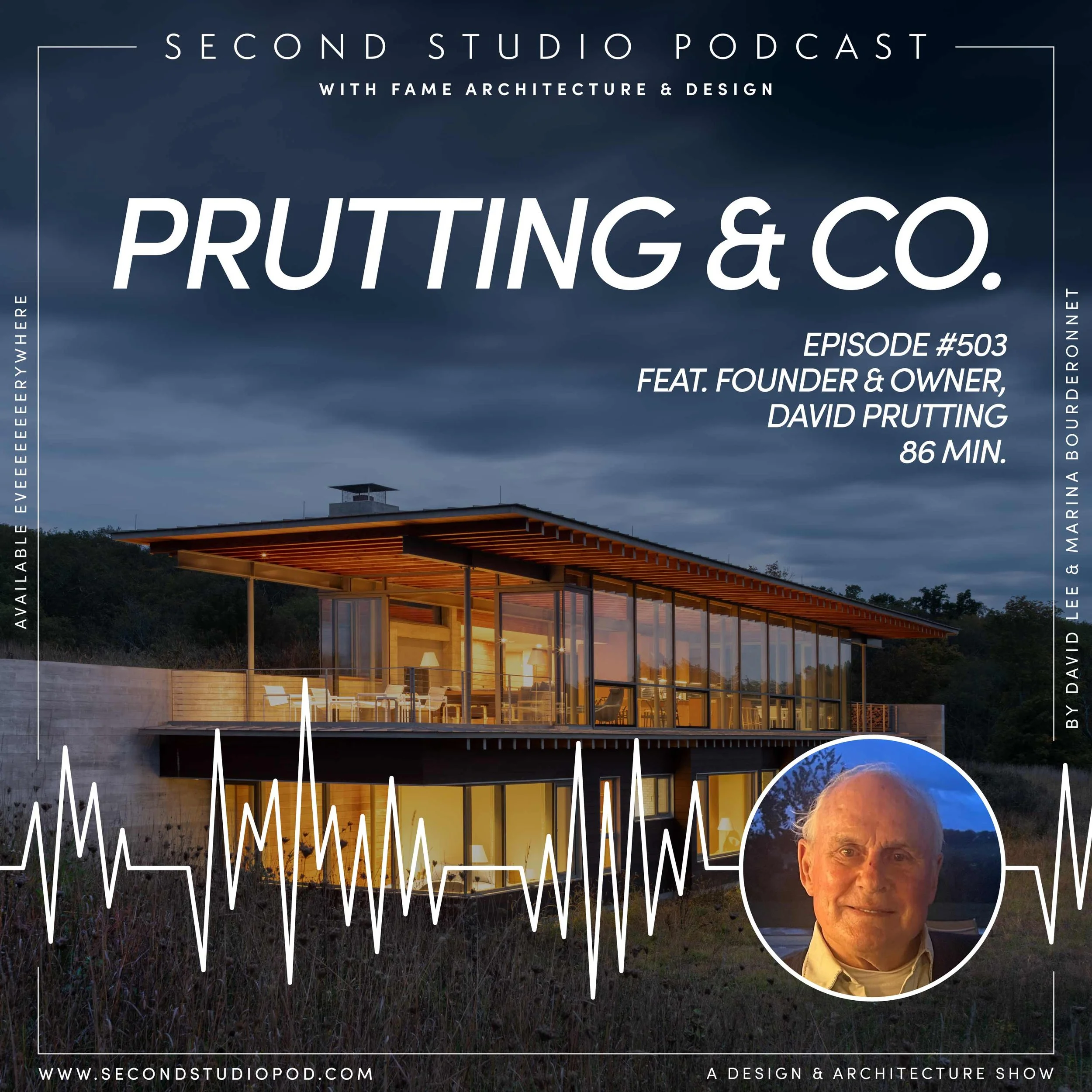
#503 - DAVID PRUTTING, Founder and Owner of Prutting & Co
SUMMARY
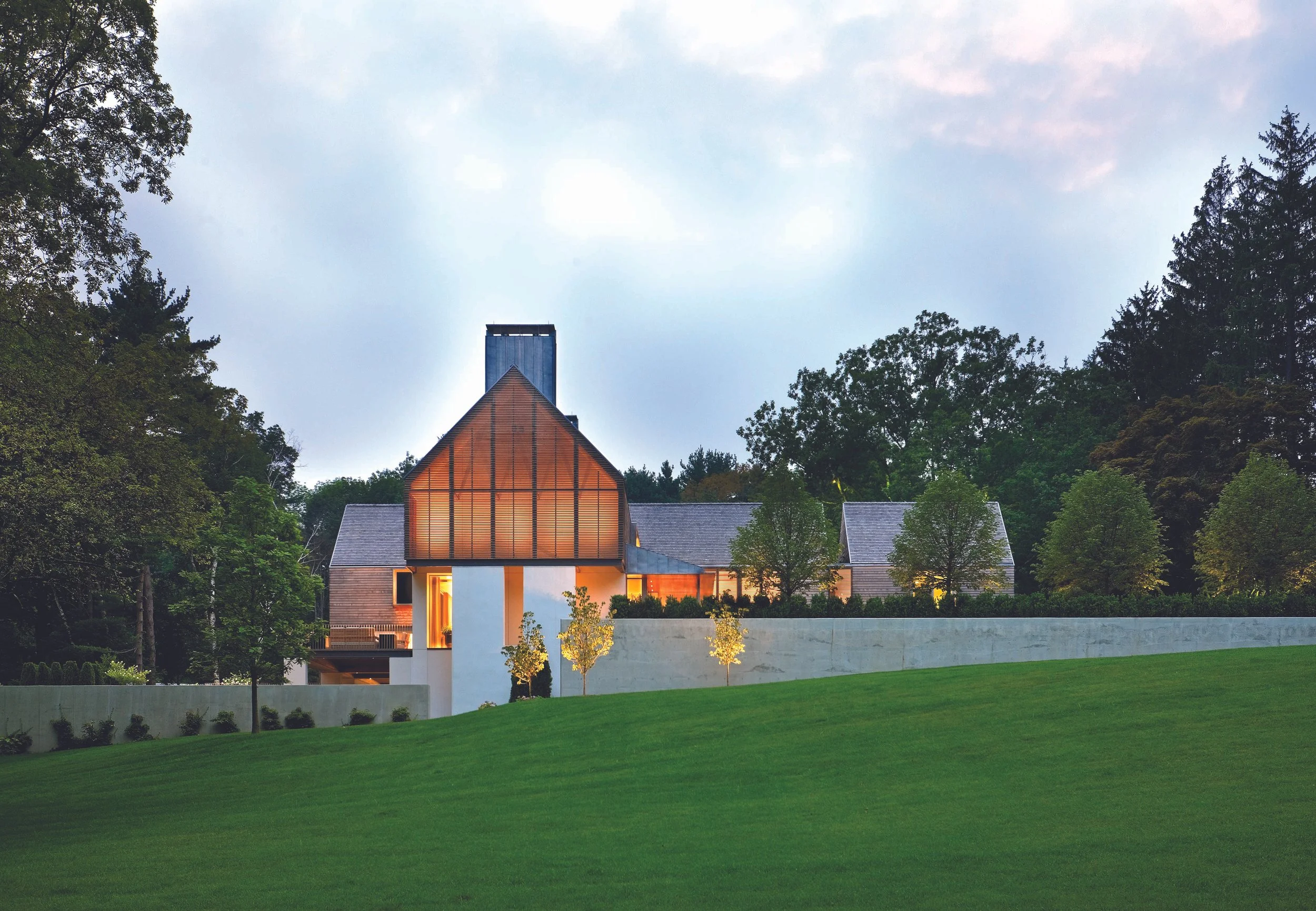
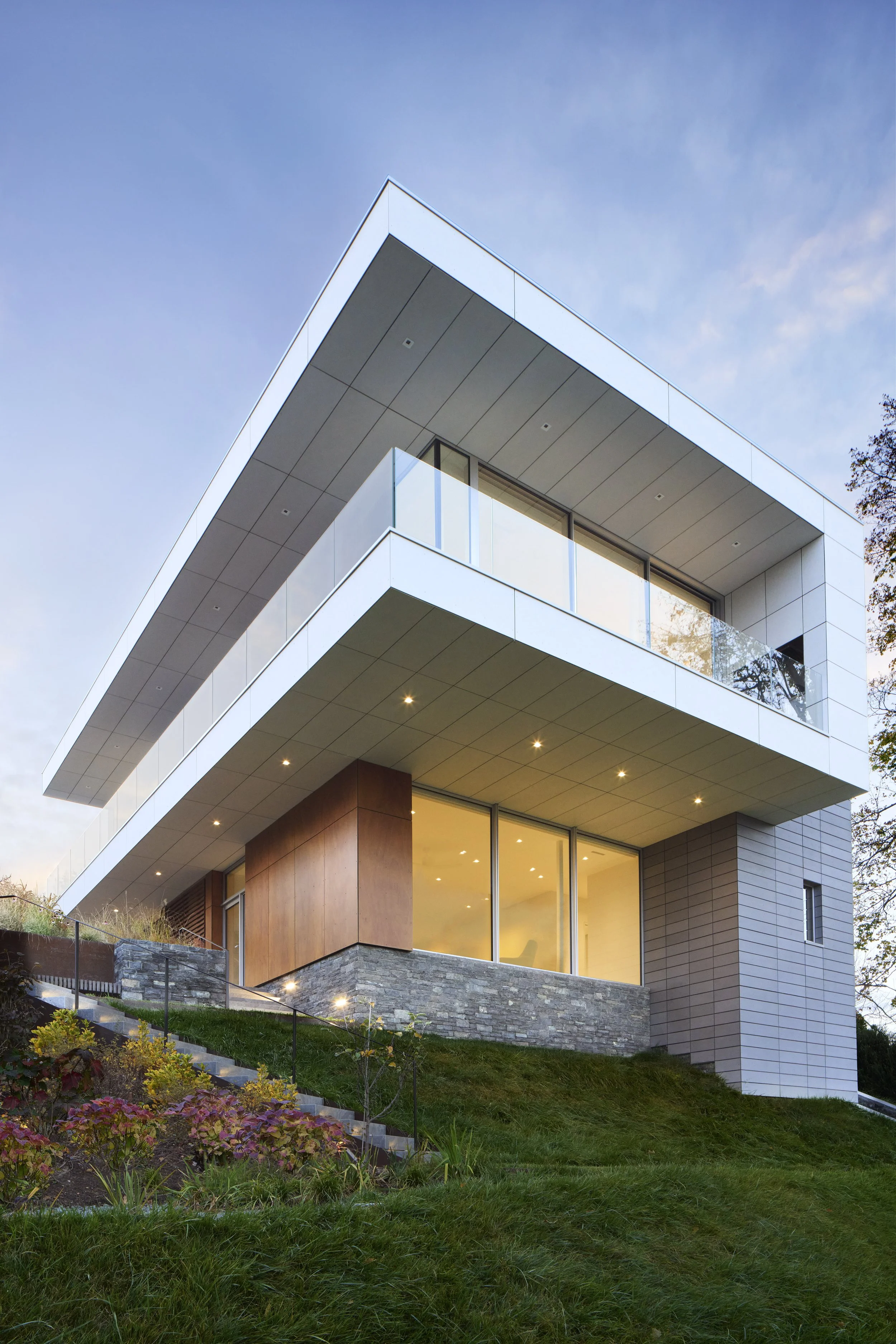
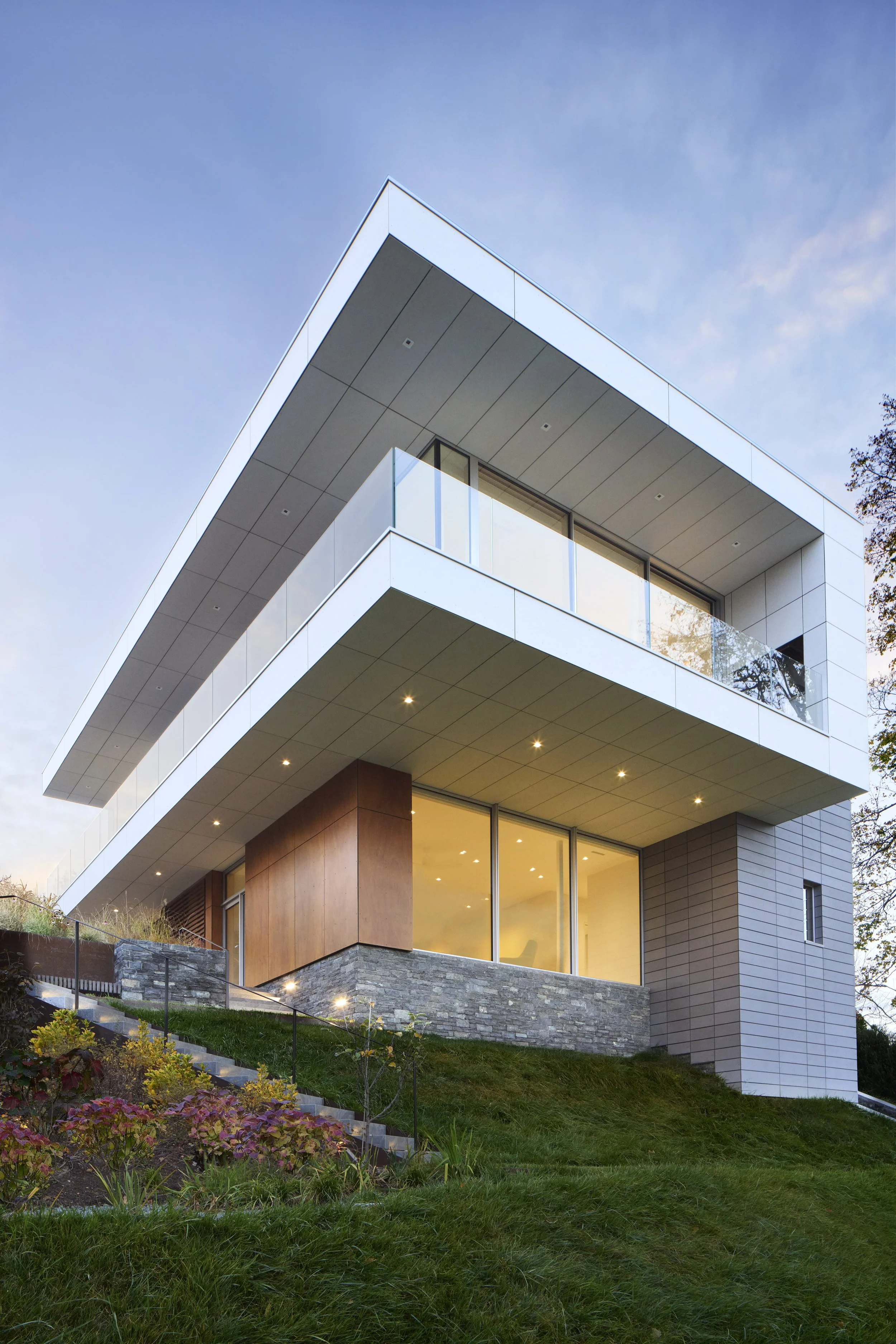
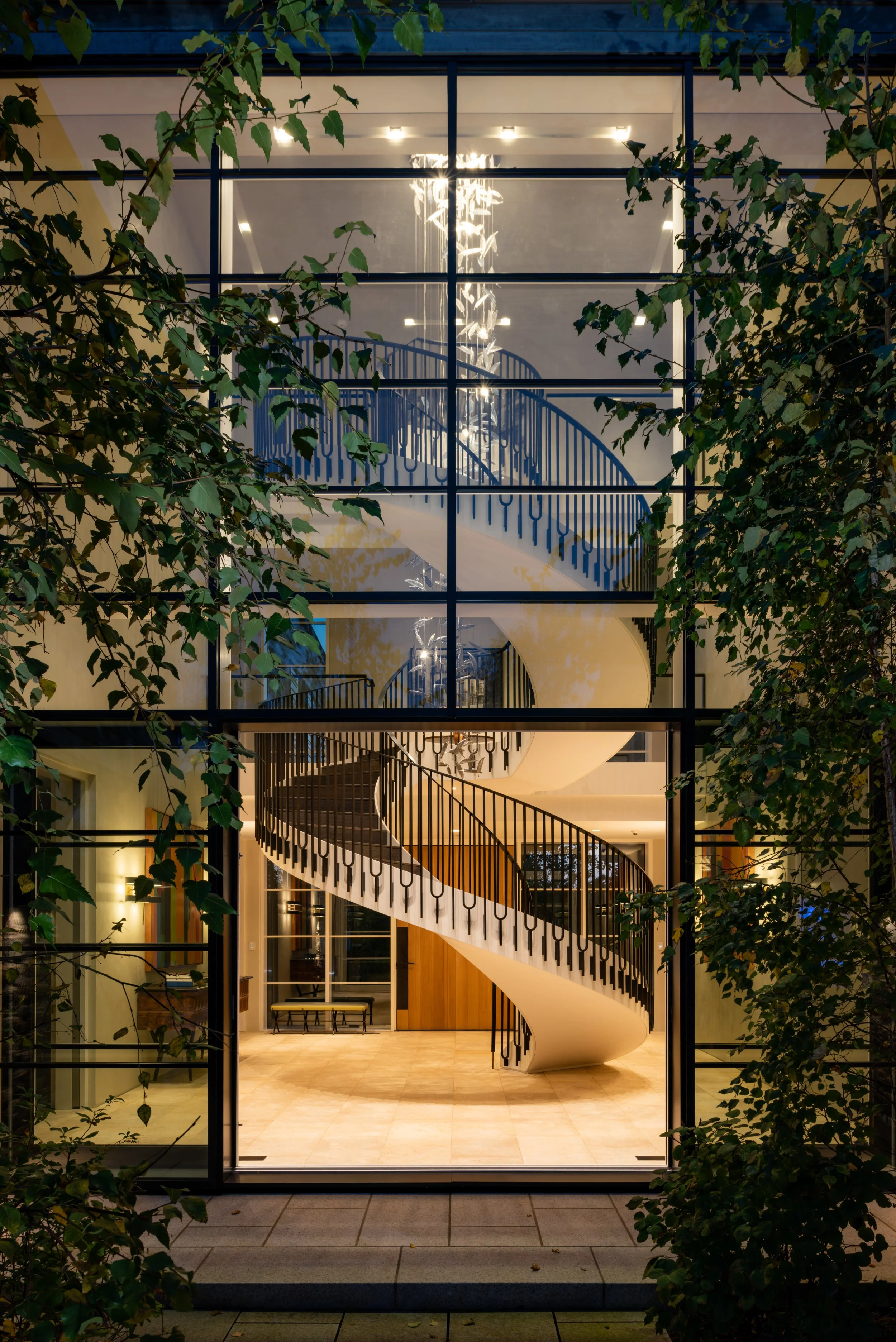
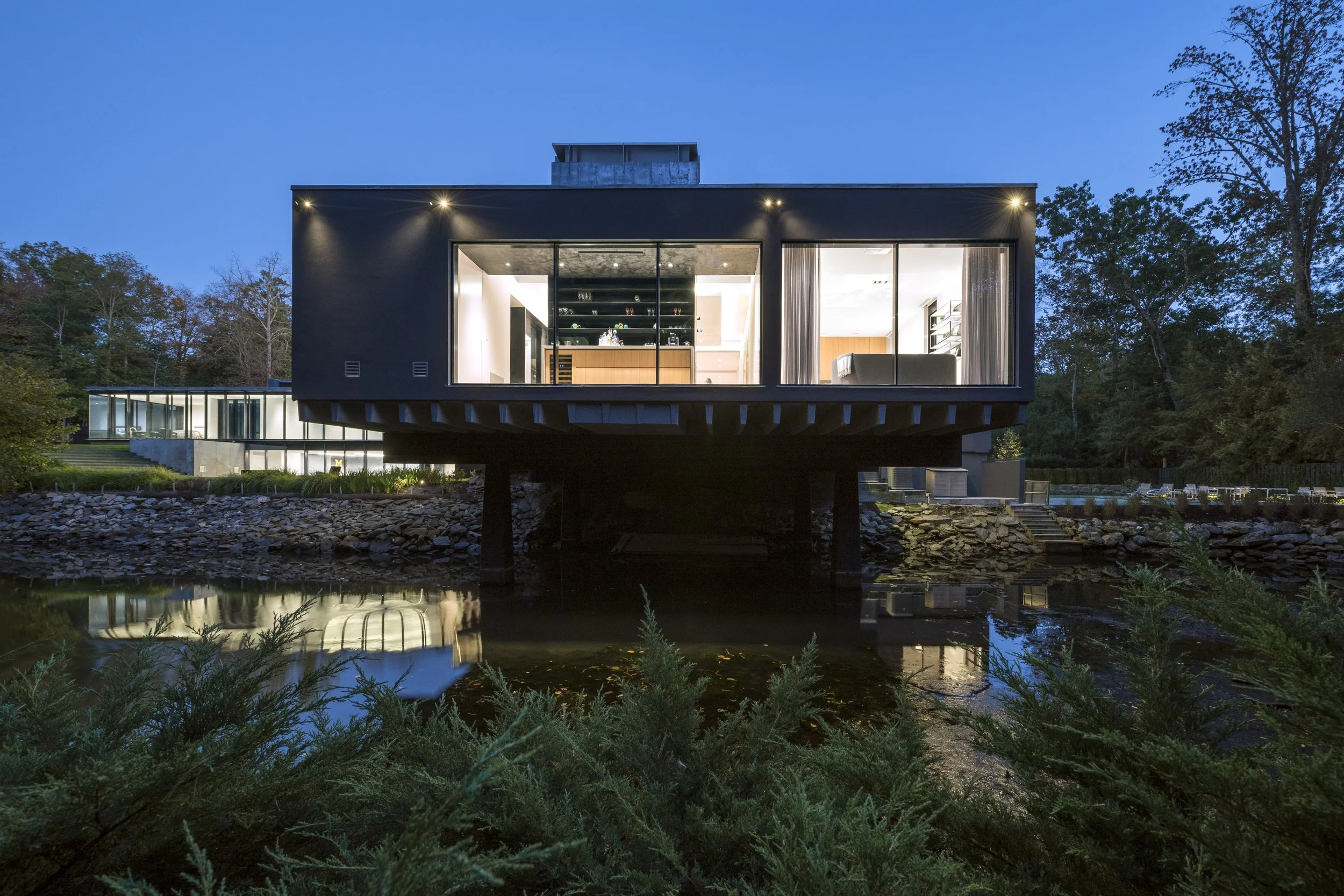
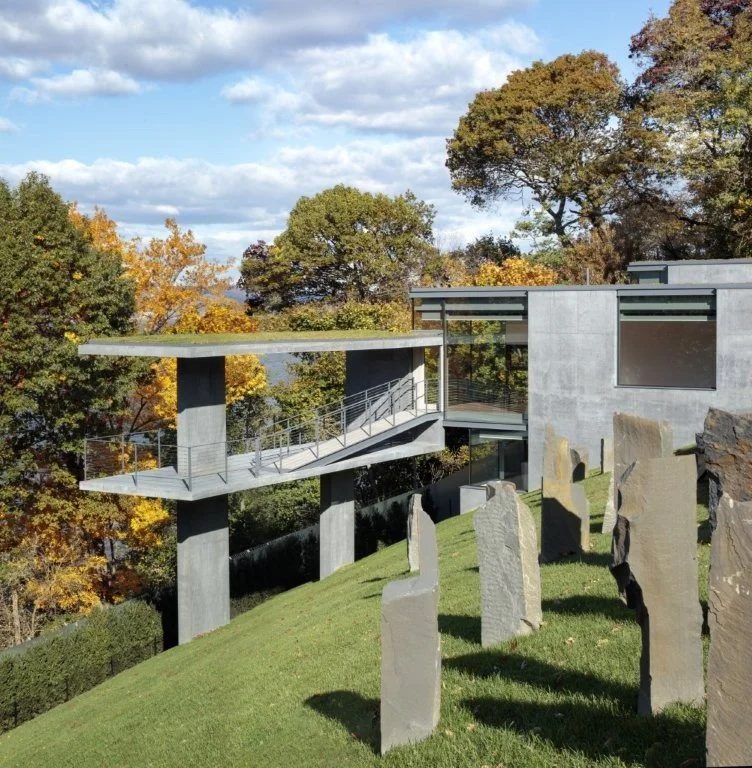
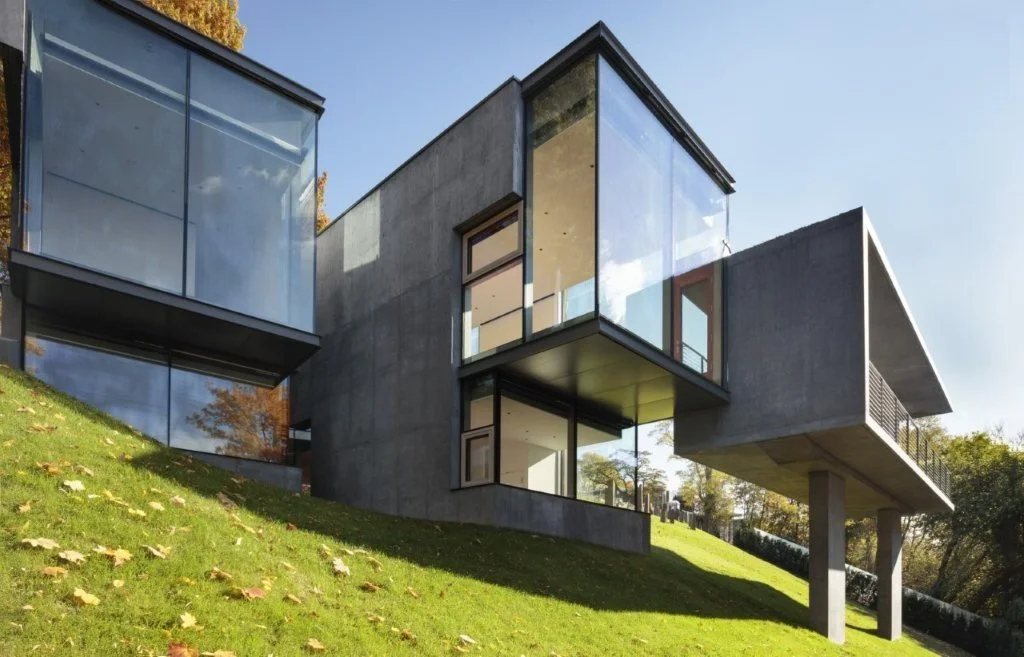
This week, David of FAME Architecture & Design is joined by David Prutting, Founder and Owner of Prutting & Co. The two discussed David’s background, his career journey, starting his own business as a contractor, working on new builds, arrogance and ego in design, communication and alignment with clients, Grace Farm project by SANAA, good architect contractor partnership, pre-construction service, change in construction costs, most challenging project, and more. Enjoy!
ABOUT DAVID
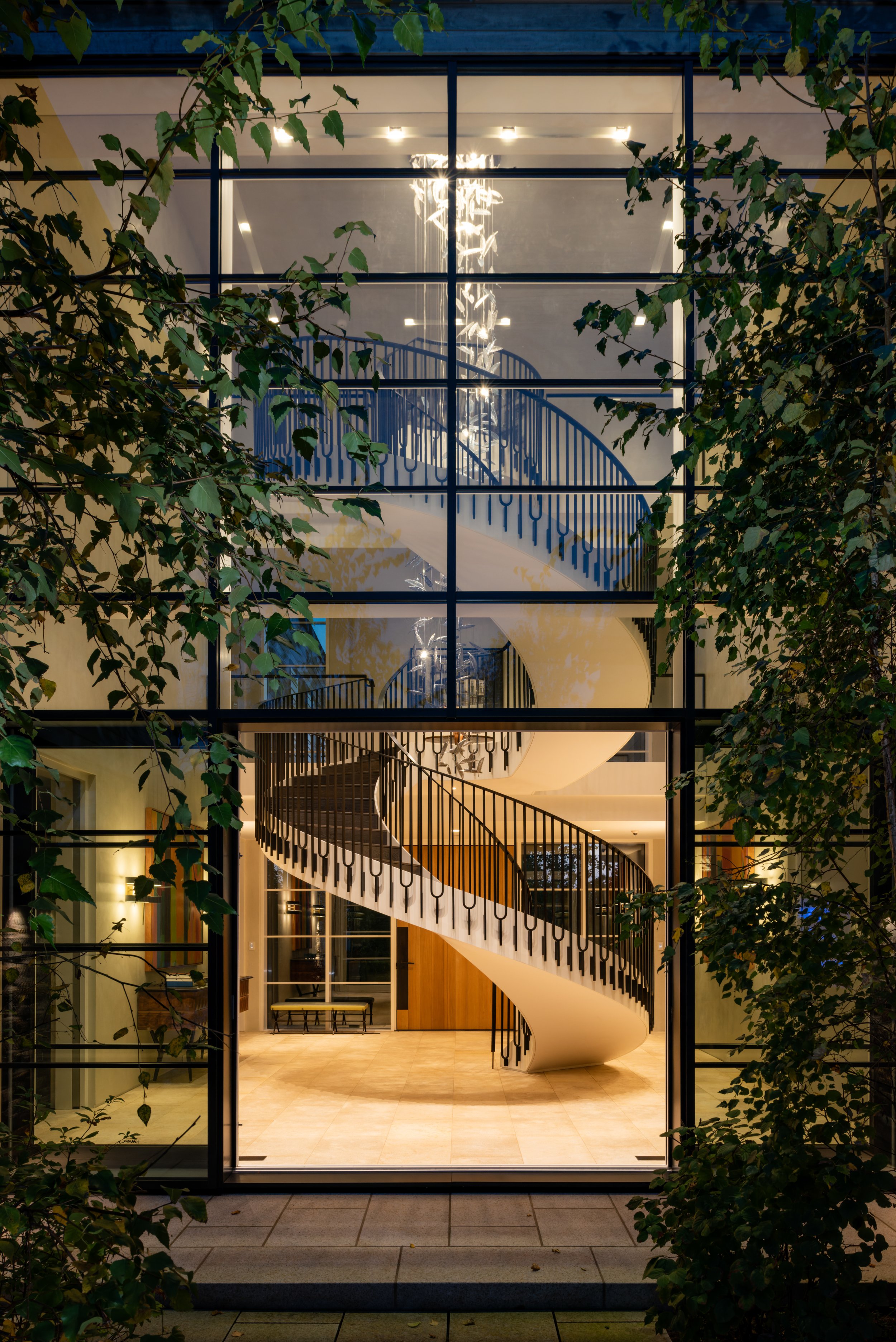
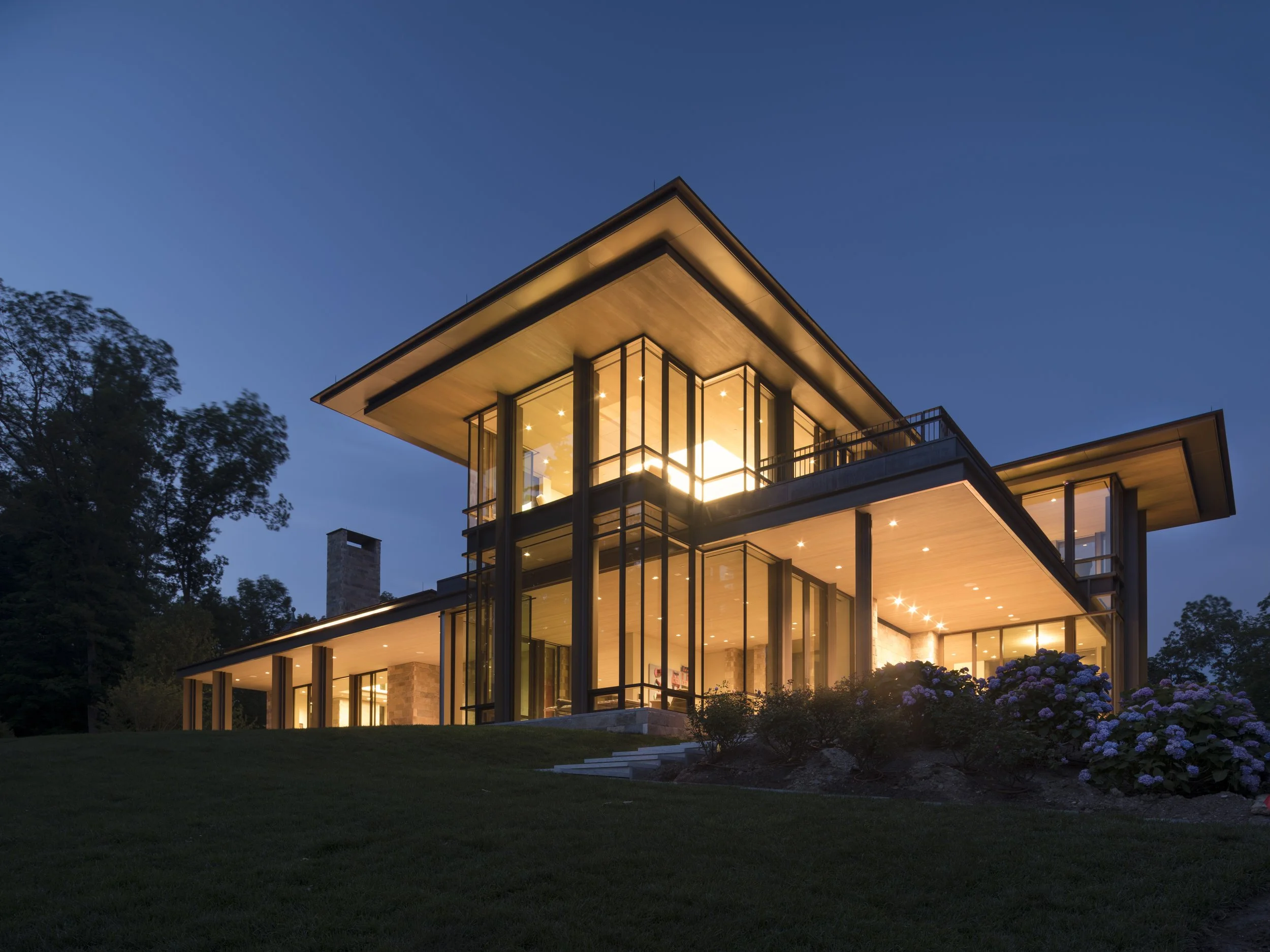
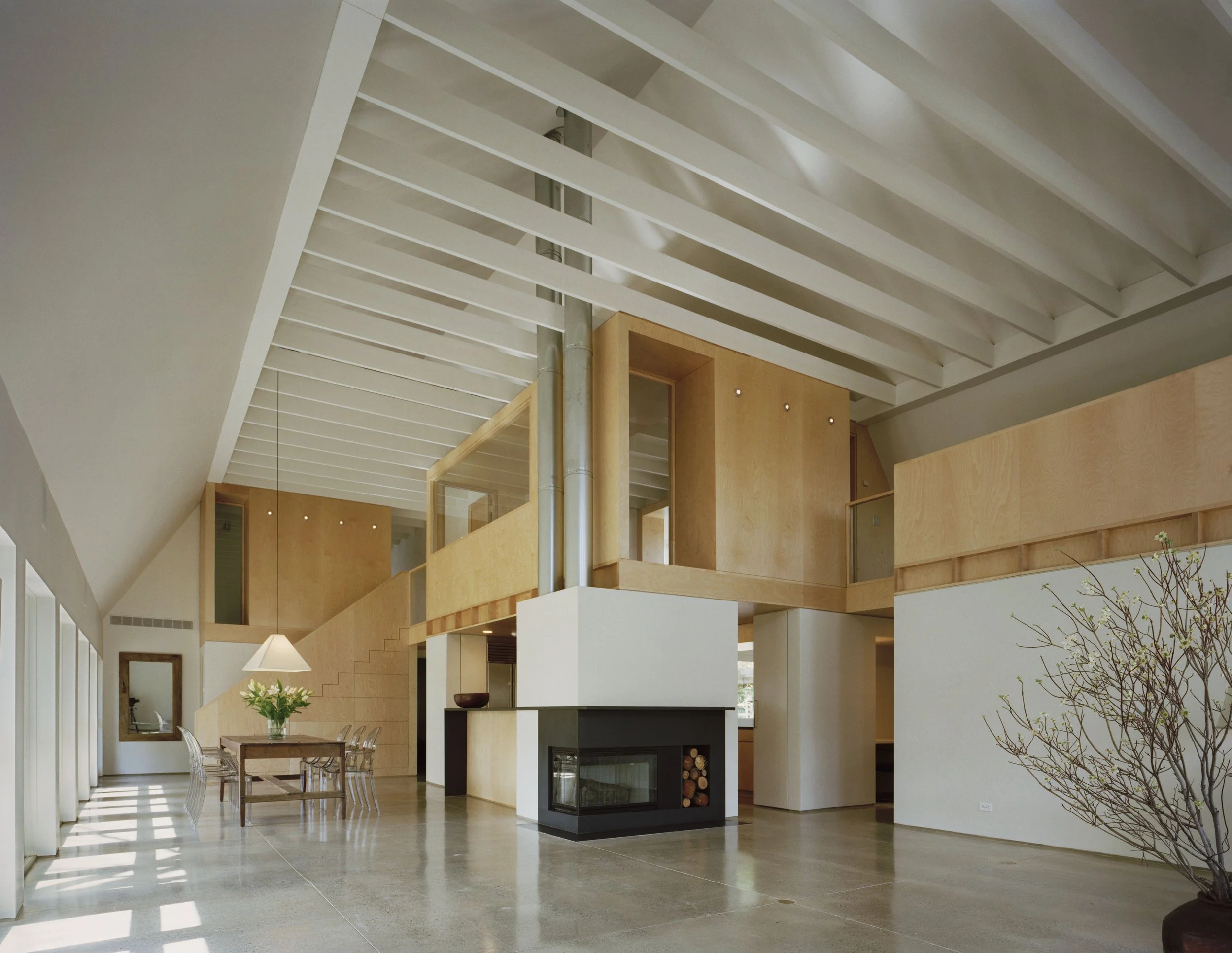
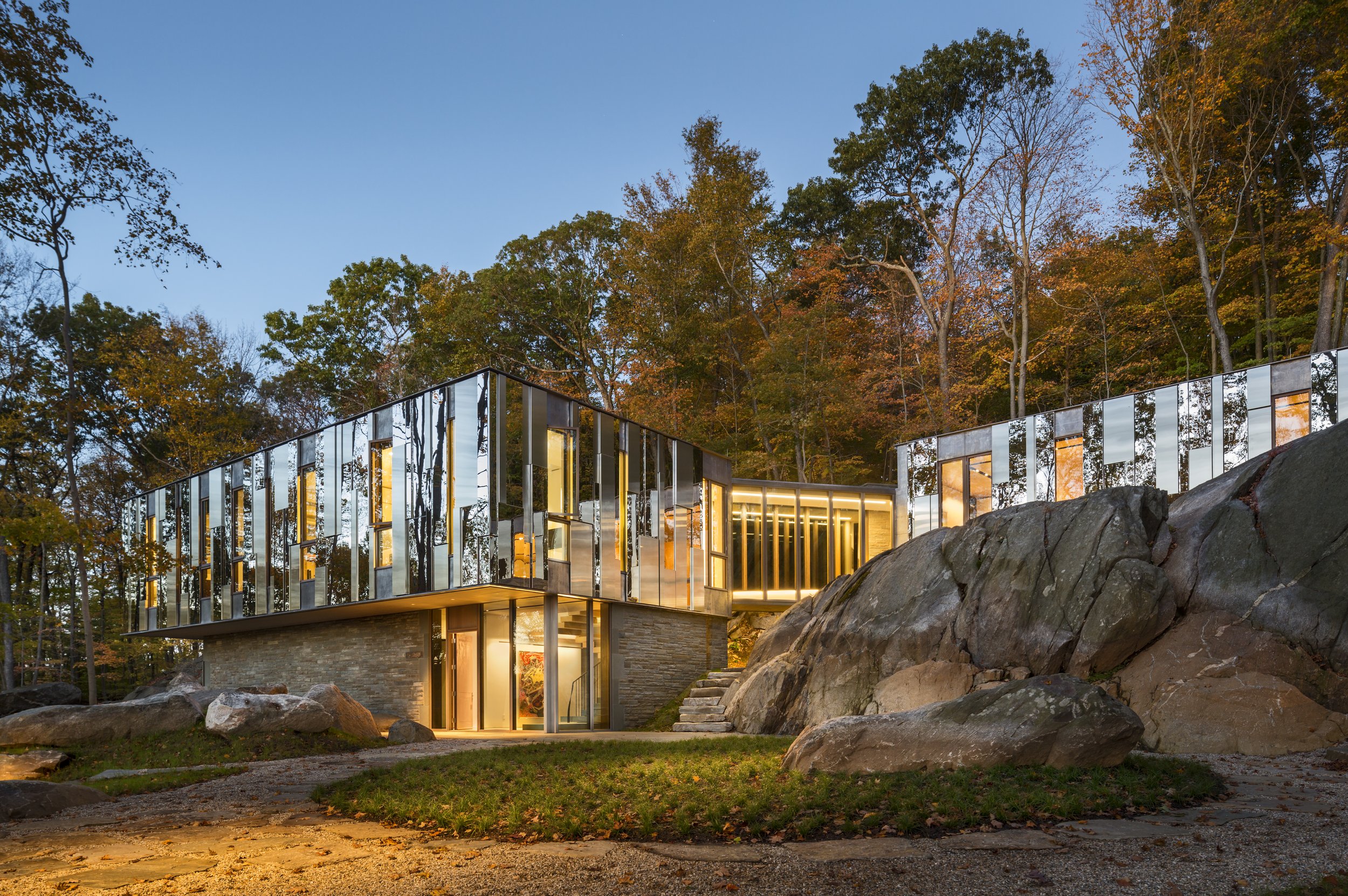
David Prutting founded Prutting + Co. with his wife, Deborah, more than fifty years ago. Based in Connecticut and New York, the high-end custom building firm constructs and crafts modern, contemporary homes. The team consists of experienced builders, architects, and design graduates. It works with award-winning architects, designers, and landscapers across the United States, and has won numerous awards for its work.
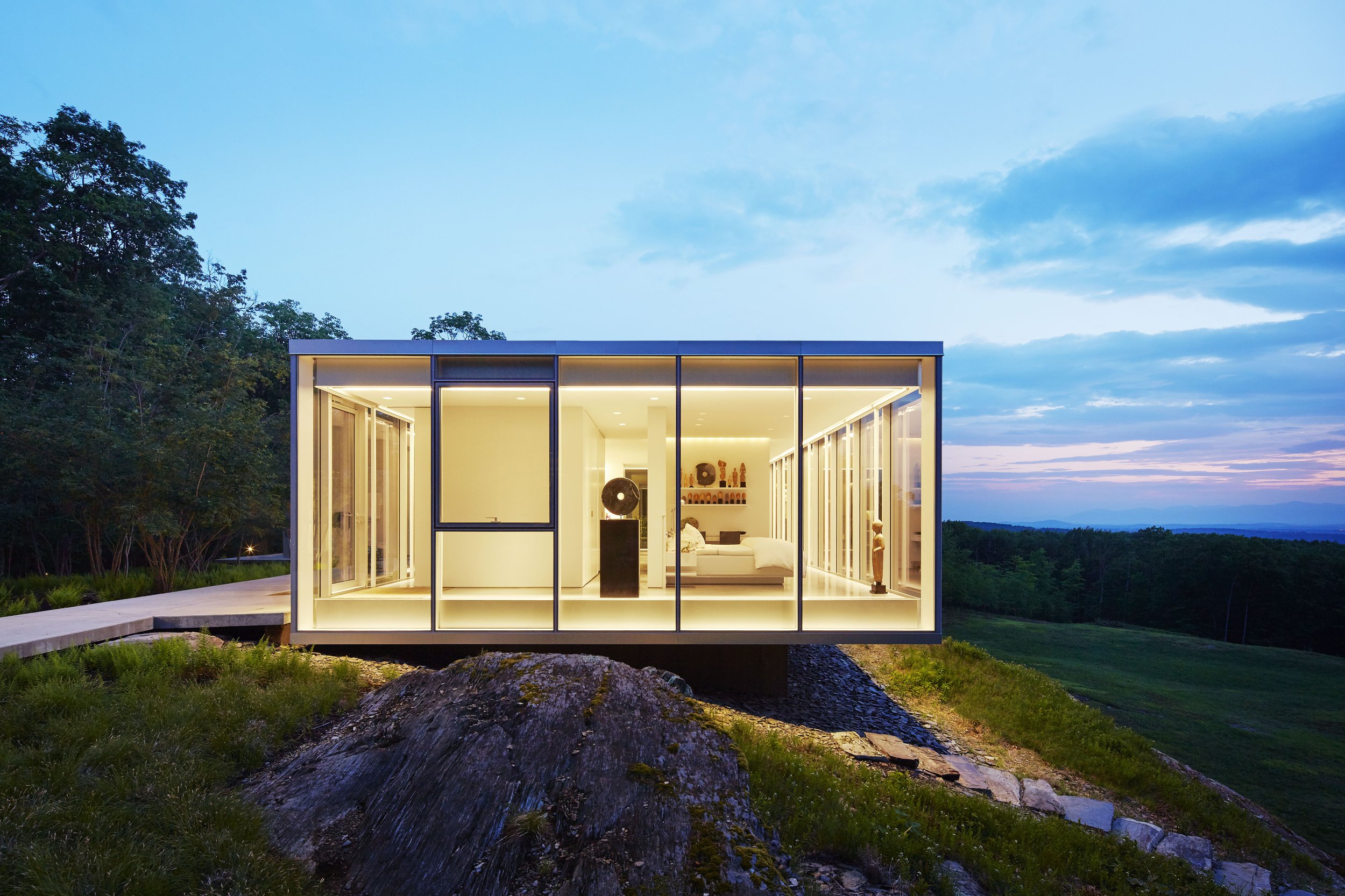
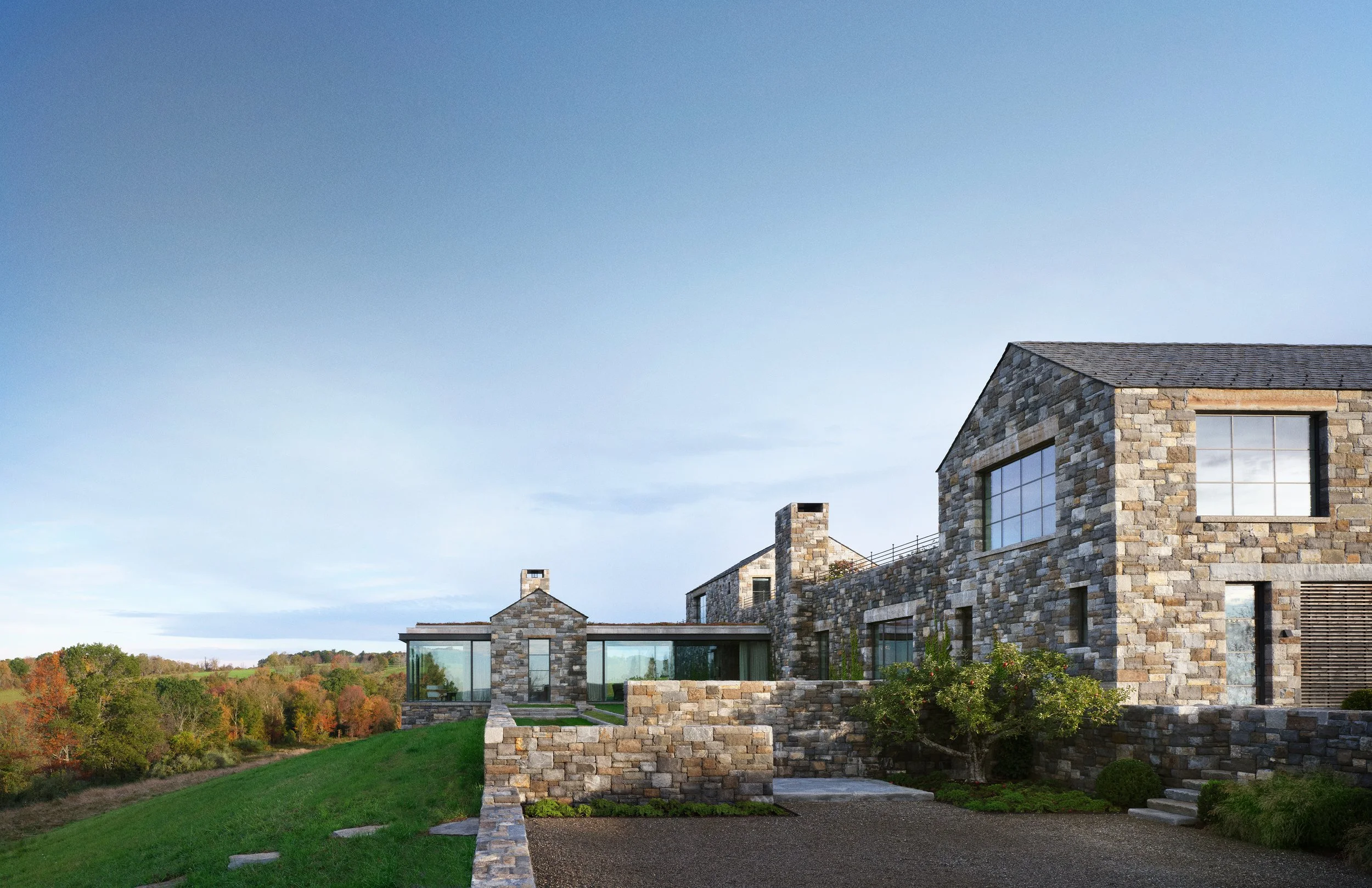
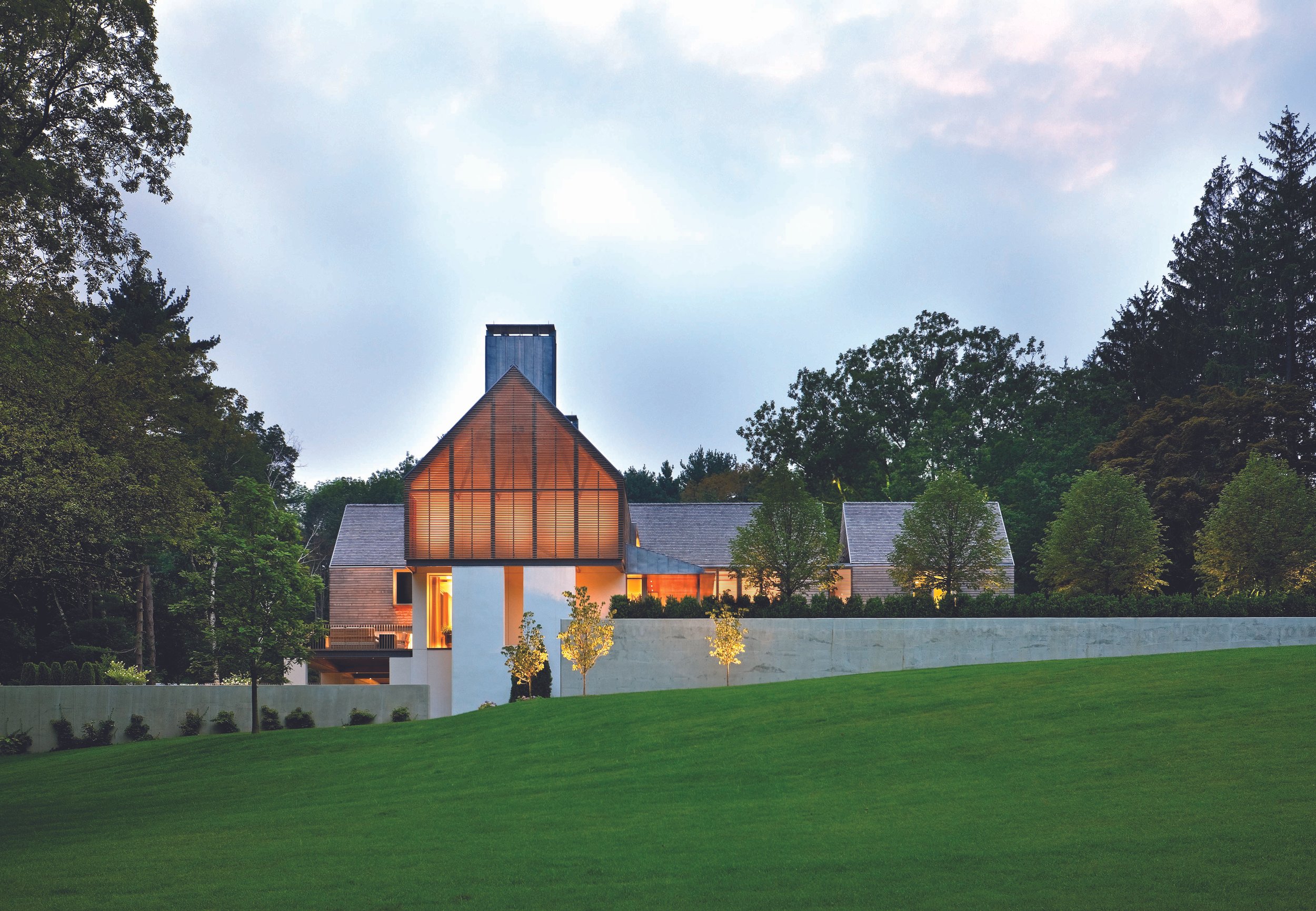
TIMESTAMPS
(00:00) David's background.
(11:30) David's career journey.
(14:16) Starting his own business as a contractor.
“My advice to architects and builders [who want to start their own business] is don't be shy. Don't be afraid to hear “no thanks.” Be ambitious and go find the work you want. Try advertising. There’s a saying, “Advertising pays, it doesn't cost.” I think it's wise, but only tasteful advertising. Let the photographs do the talking and associate us with the constructed building.” (15:41)
(21:31) Working on new builds.
“When in doubt, which is a lot when you are the client, turn to the professionals. That's why you hired them. If you don't know how many windows or how high the ceiling should be, as laypeople, we aren't schooled in design, so have faith in the architects. The designer has to earn that trust by being a good listener. Find out what the client is saying. What do you hear they really want [and what will make them happy?] If they ask a specific question like, “What's the difference between this showerhead and that showerhead?” Your answer should be truthful, like, “I don't know, but I'll find out, and I'll get back to you.” If you do that, then the clients feel that you’ve heard them and understood what they were anxious about. That kind of customer service is what it's all about.” (27:33)
(30:18) Arrogance & ego in design.
(36:12) Communication & alignment with clients.
(45:47) Grace Farms project by SANAA.
(47:28) Good architect, contractor partnership.
“I need an active partner that has answers for us. Because the biggest boo-boo on a job site is when the plumber shows up and asks, “Where do you want the sink?” And you're like, “Well, we're waiting for the architect to tell us.” That just kills momentum; it kills the schedule. At least give us the location. The more detail and information that you can provide, and then be accessible for questions, interpretation, and follow-up, the better. That tells me you are listening to us and understand our needs.” (51:36)
“Early in my career, I would make suggestions. Then I realized, it's not my job to suggest where the outlet should be. It's fine to participate if we’re needed, but the less we have to think on our own, like, what did the architect intend here? It's better from our standpoint because it makes our job easier. When the plumber walks in and asks, “How should I lay out this bathroom?” That's your job to have a plan ready. You're the one making most of the layout decisions. We'll certainly help you and work with you to make suggestions based on the situation on site, but most builders and tradesmen just want to walk into a job and follow a plan.” (53:53)
(56:19) Pre-construction service.
(01:08:03) Change in construction cost.
(01:12:40) Most challenging project.
(01:16:57) David's favorite building.
HAVE QUESTIONS OR SUGGESTIONS?
TEXT/CALL OUR HOTLINE
213-222-6950

#502 - TV SHOWS & DAVID AND MARINA’S PREDICTIVE INDEX BEHAVIORAL ASSESSMENT
SUMMARY
This week, David and Marina have a short chat about TV shows, then dive into their Predictive Index Behavioral Assessments, discussing the personality tendencies and dynamics in the workplace. Enjoy!

HAVE QUESTIONS OR SUGGESTIONS?
TEXT/CALL OUR HOTLINE
213-222-6950

#501 - DISNEYLAND!
SUMMARY
This week, David and Marina have a casual chat about their trip to Disneyland. The two discuss Star Wars Galaxy's Edge, the Rise of the Resitance, food, the making of Disneyland, and more. Enjoy!

HAVE QUESTIONS OR SUGGESTIONS?
TEXT/CALL OUR HOTLINE
213-222-6950
#500 - SAUL KIM, Director of Saul Kim Studio
SUMMARY
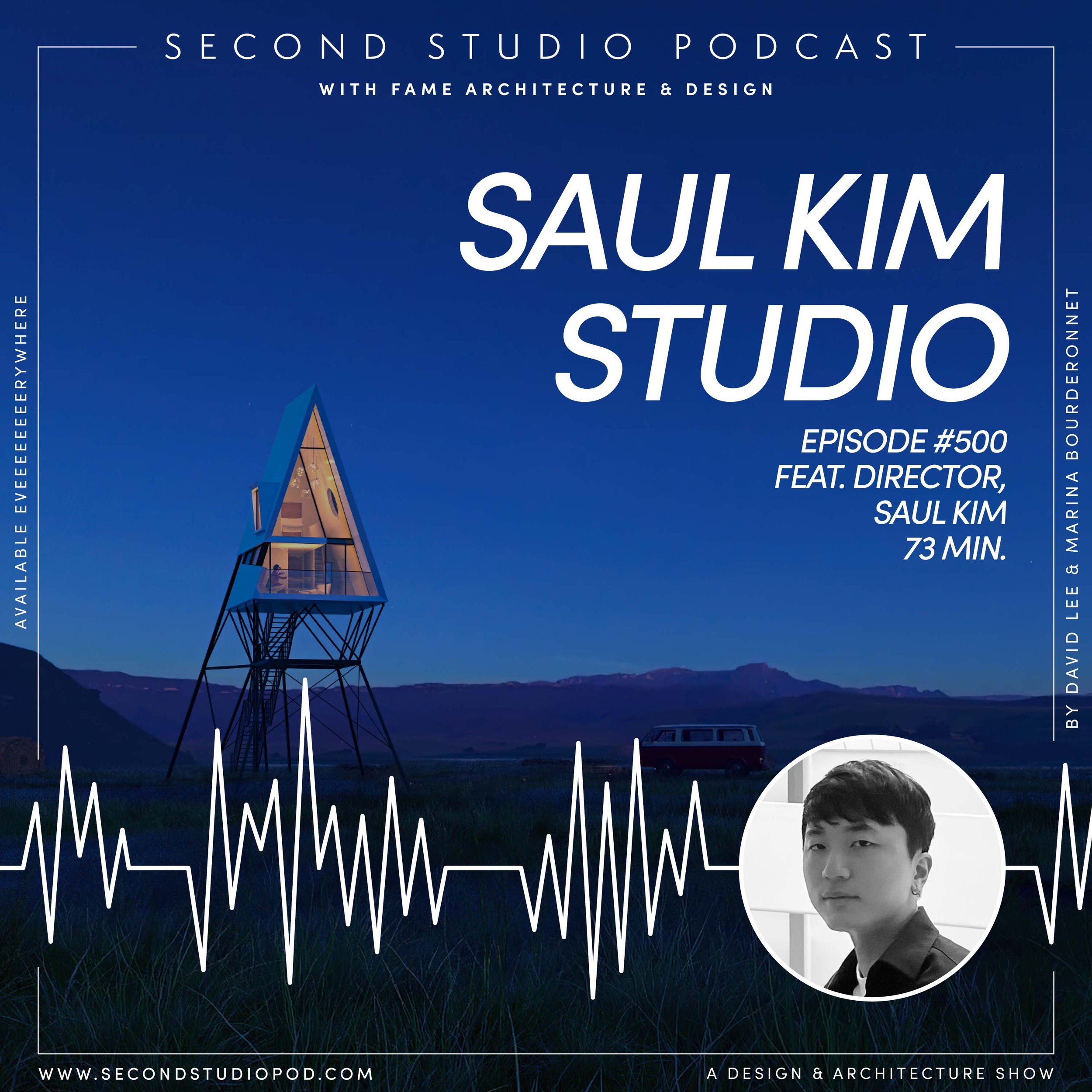
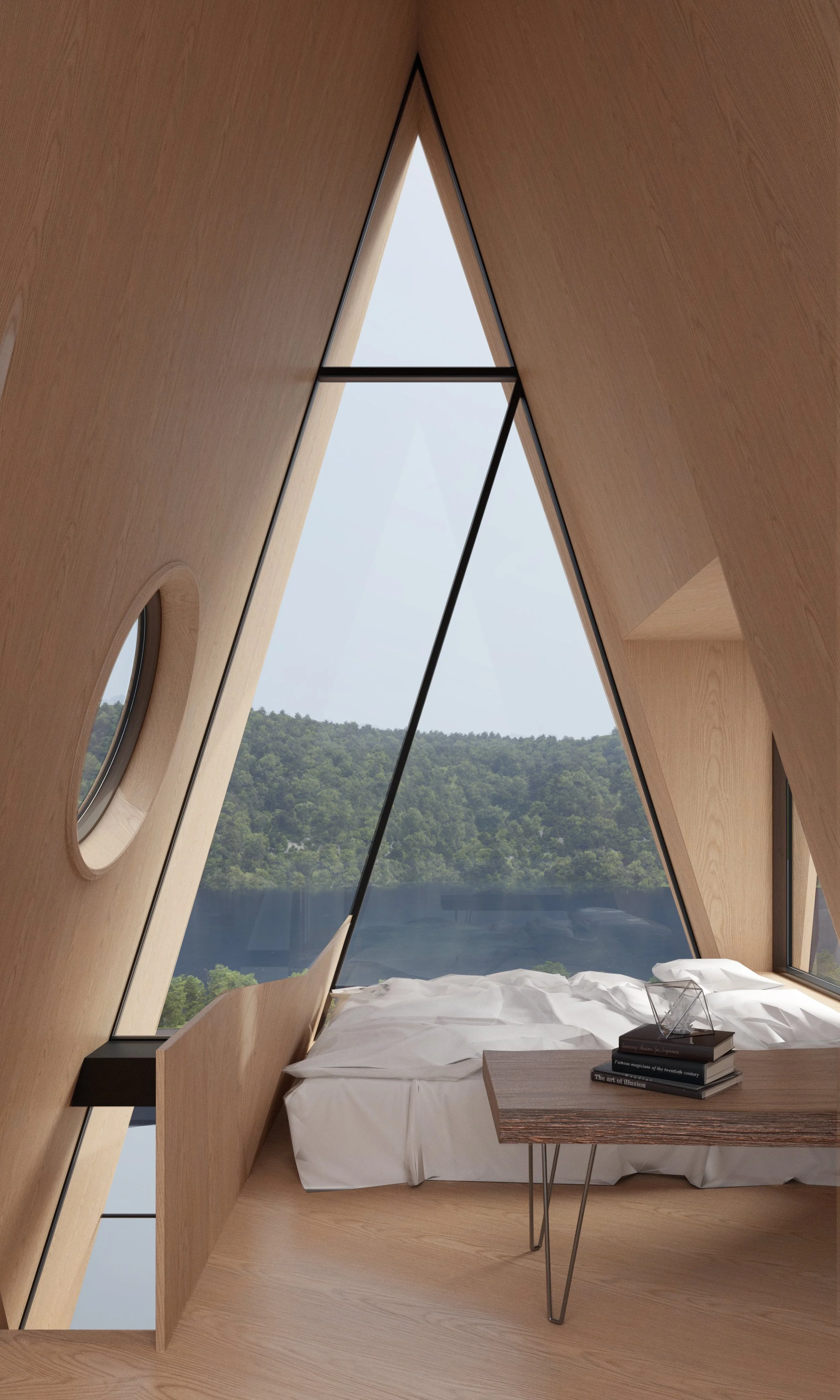
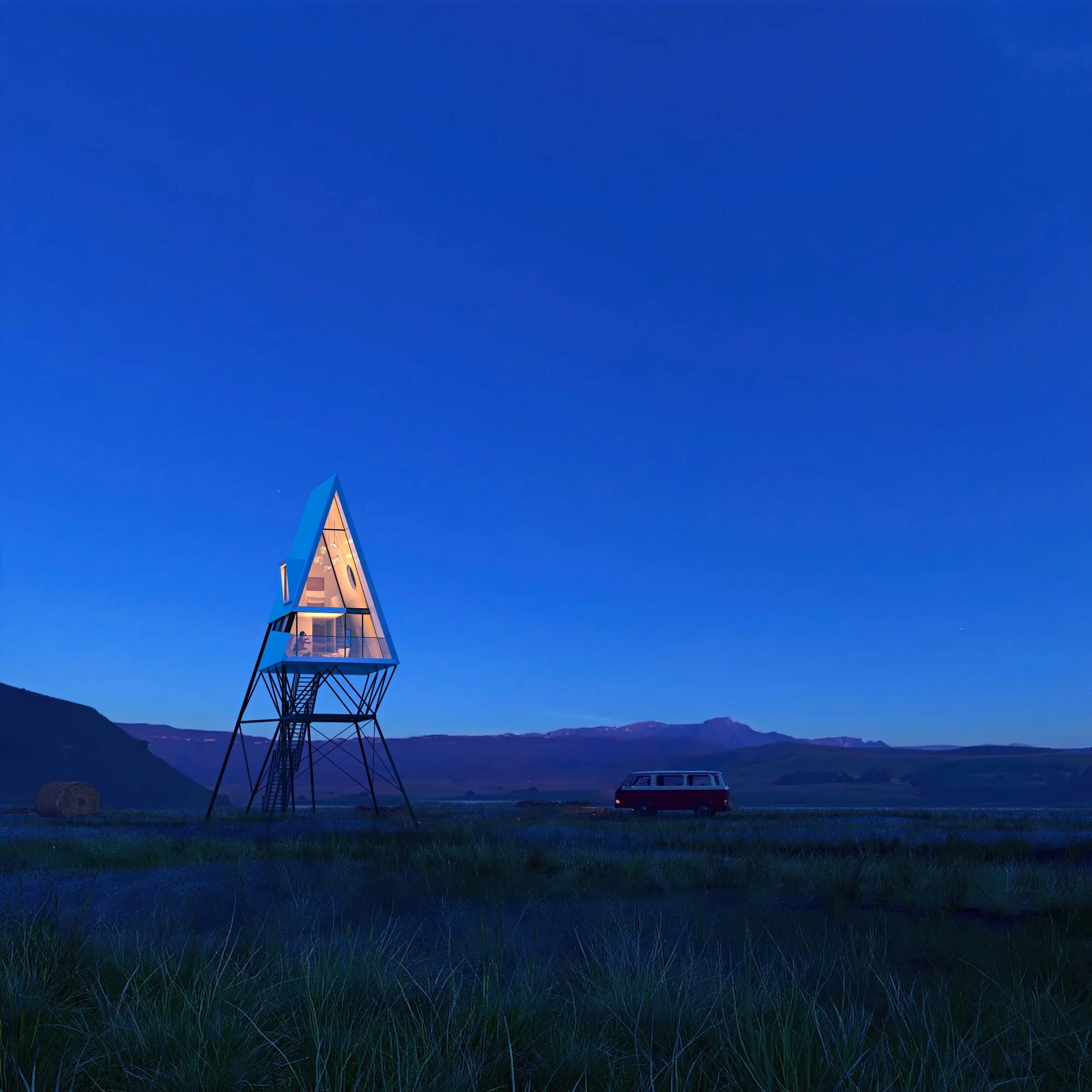
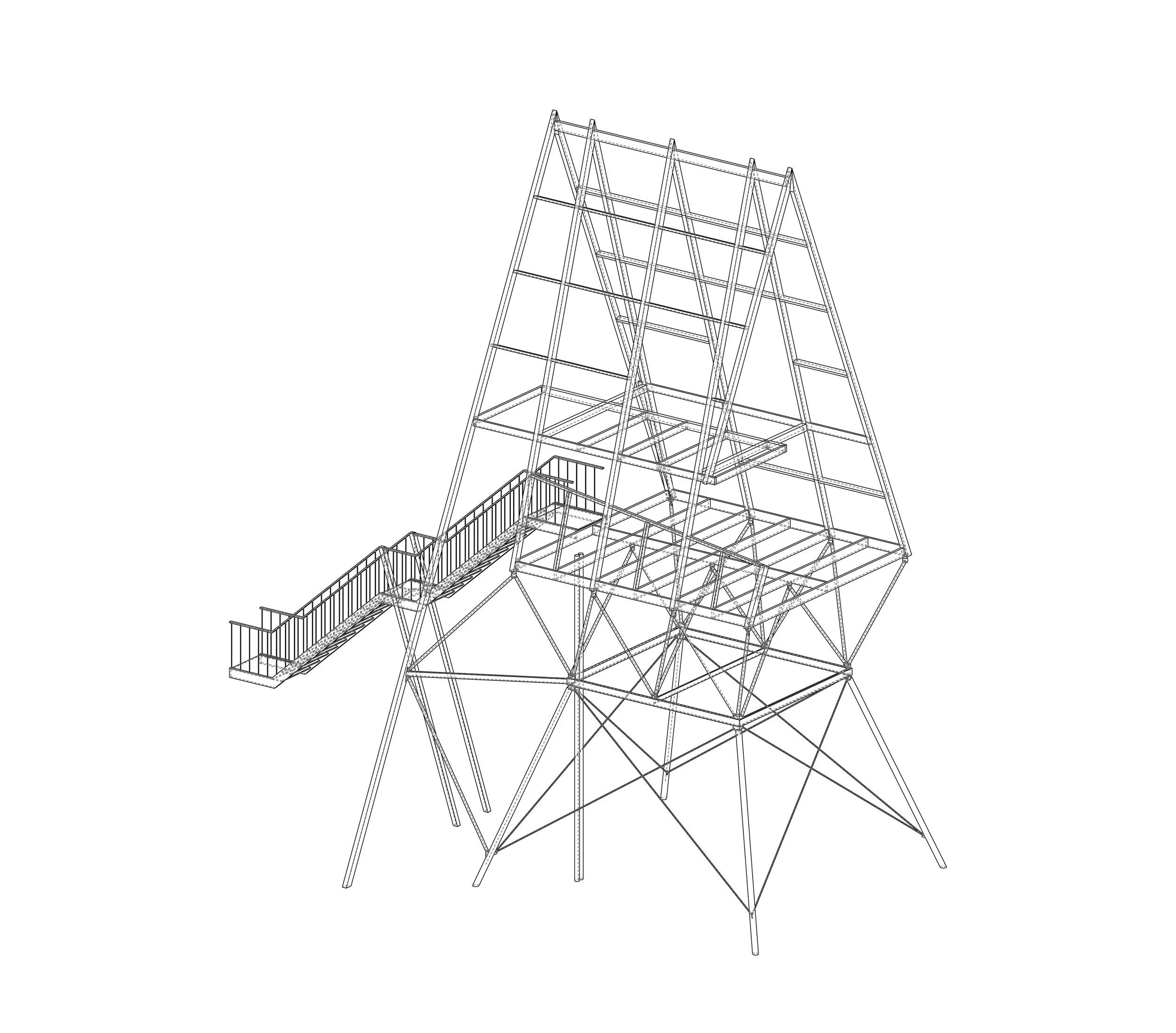
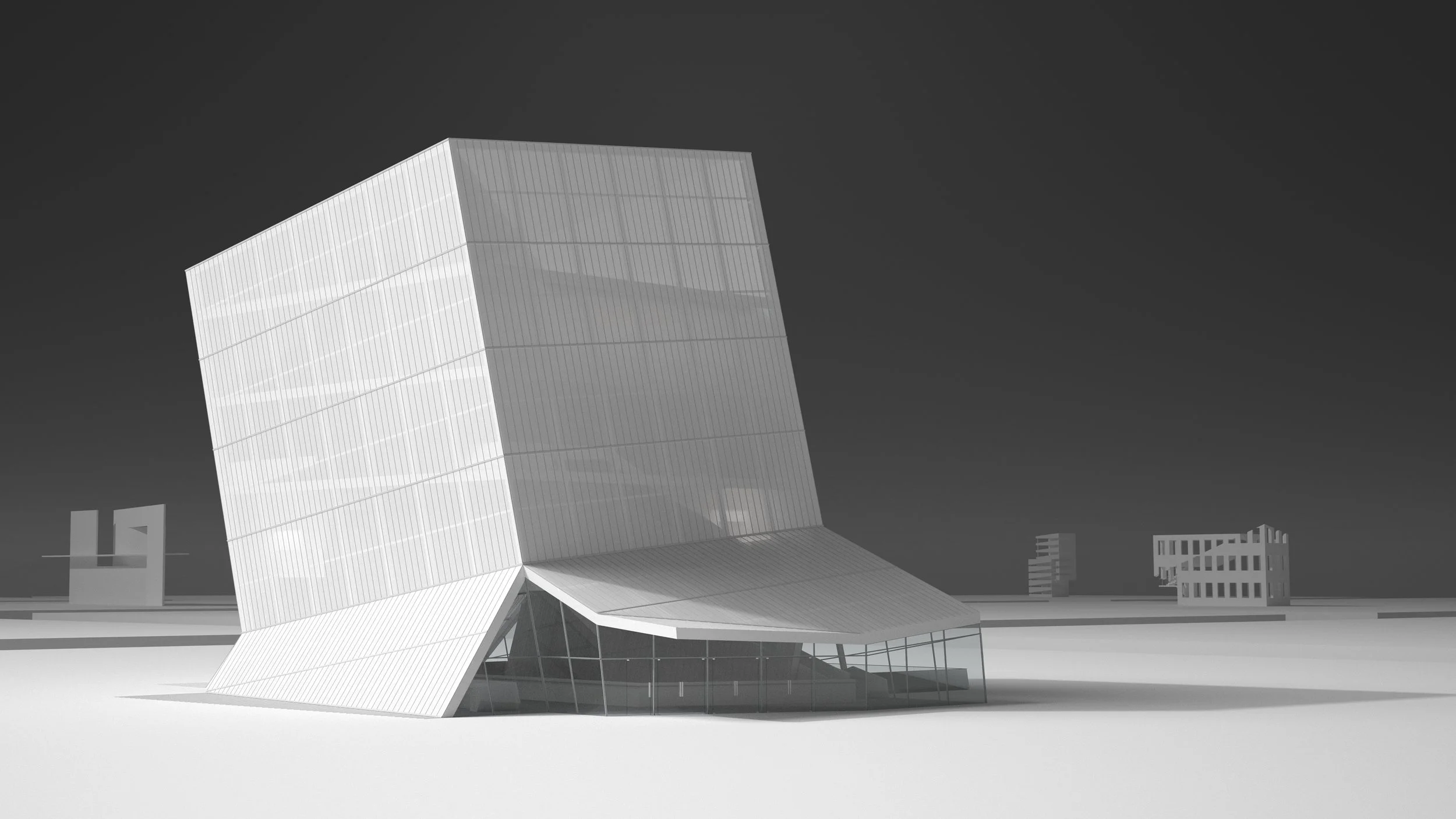
This week, David and Marina of FAME Architecture & Design are joined by Saul Kim, Director of Saul Kim Studio & Adjunct Professor at Hanyang University ERICA. The three discussed Saul’s background and architecture education, finding his own niche in architecture, pursuing a masters degree, anomalies experimental studies, teaching students to find their style, communicating conceptual architecture, simple yet captivating buildings, getting hired based on conceptual projects, translating an abstract concept to a build project, Saul’s latest work, and more. Enjoy!
ABOUT SAUL
Saul Kim is a designer and researcher working from an architectural foundation.
He began his architectural journey in Singapore, earning a Bachelor of Architecture from SCI-Arc and a Master of Architecture from Harvard University Graduate School of Design.
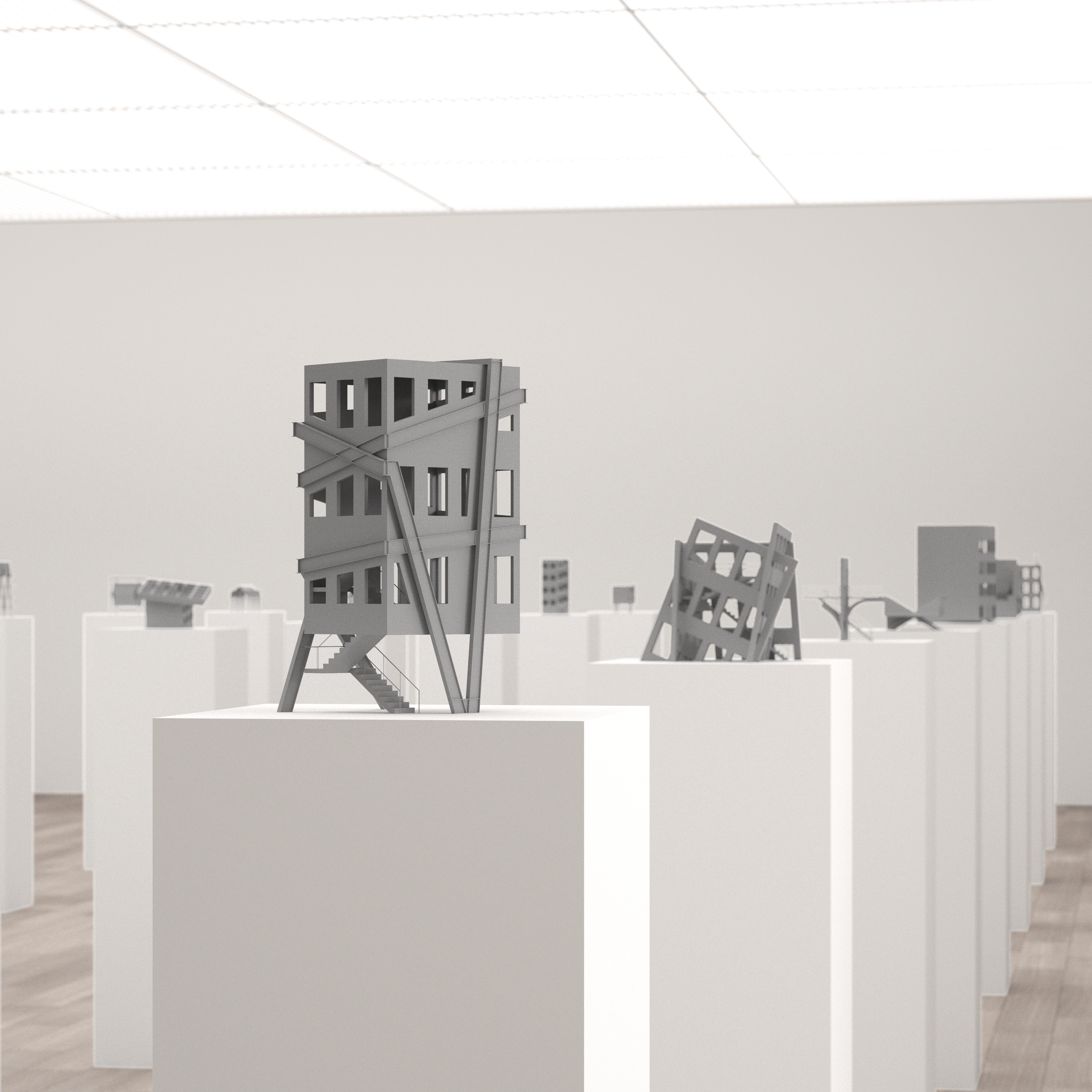
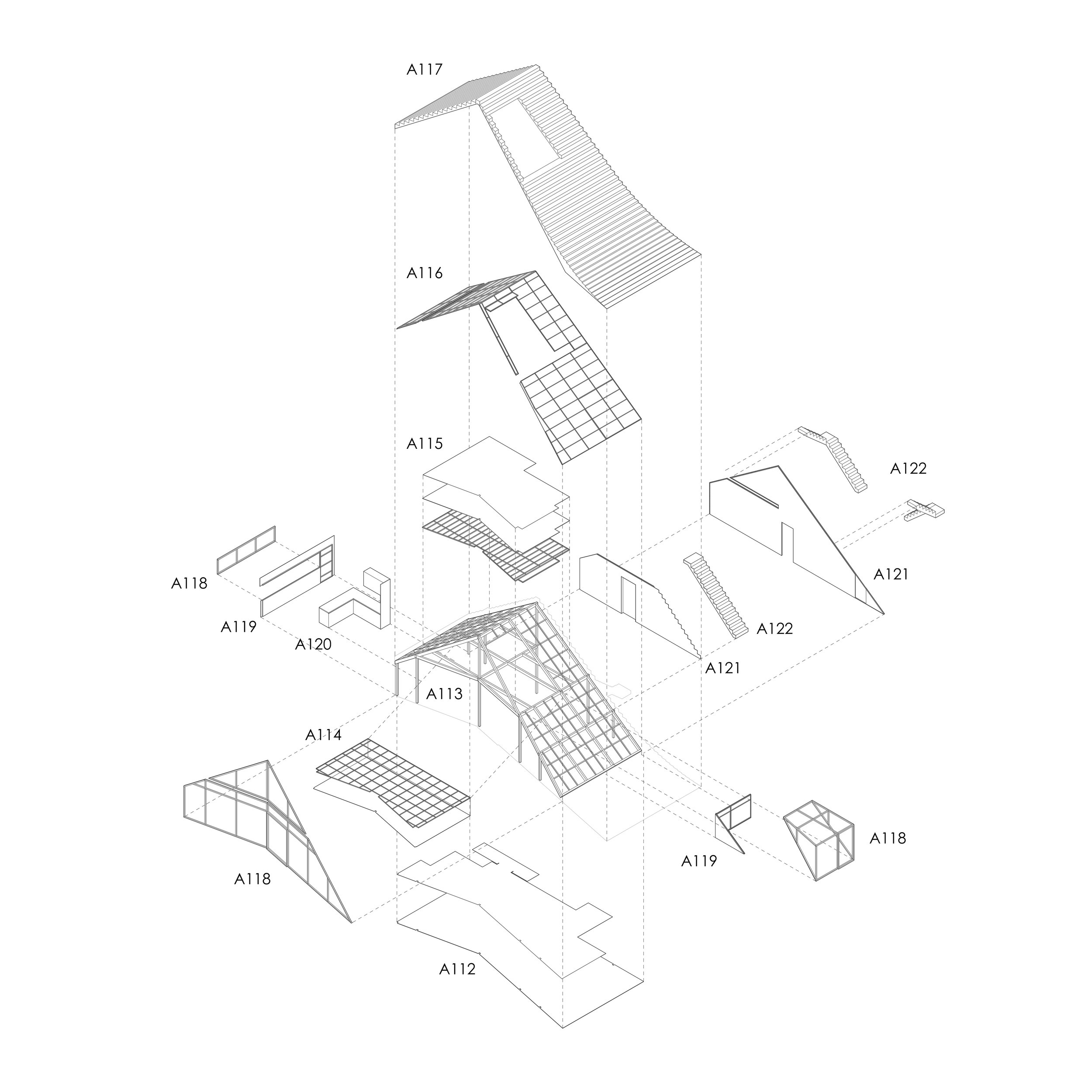
Since 2020, he has developed the Architecture Anomaly research series, in which familiar architectural elements are reconfigured in unconventional ways to question the essence of architecture and its modes of assembly.
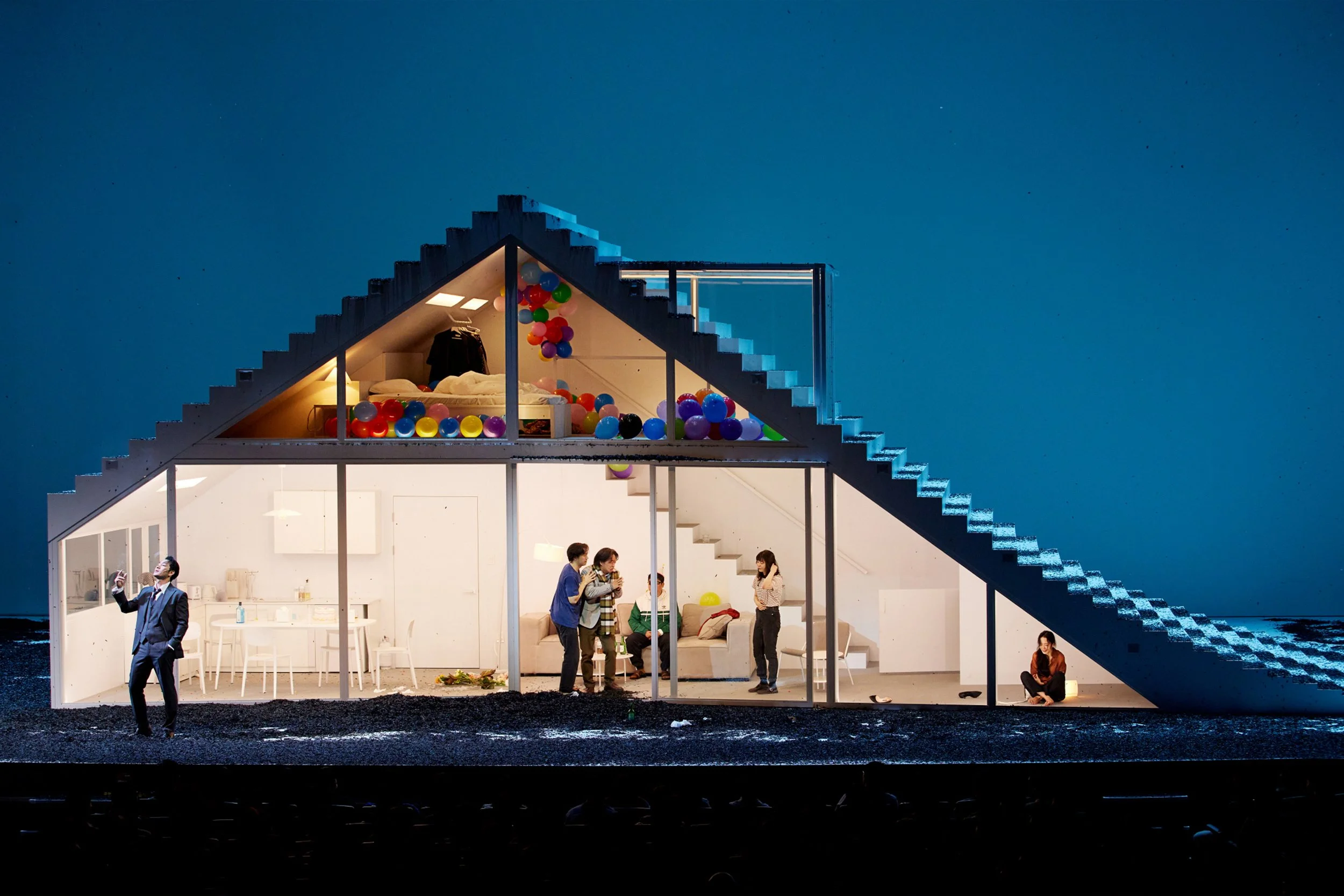
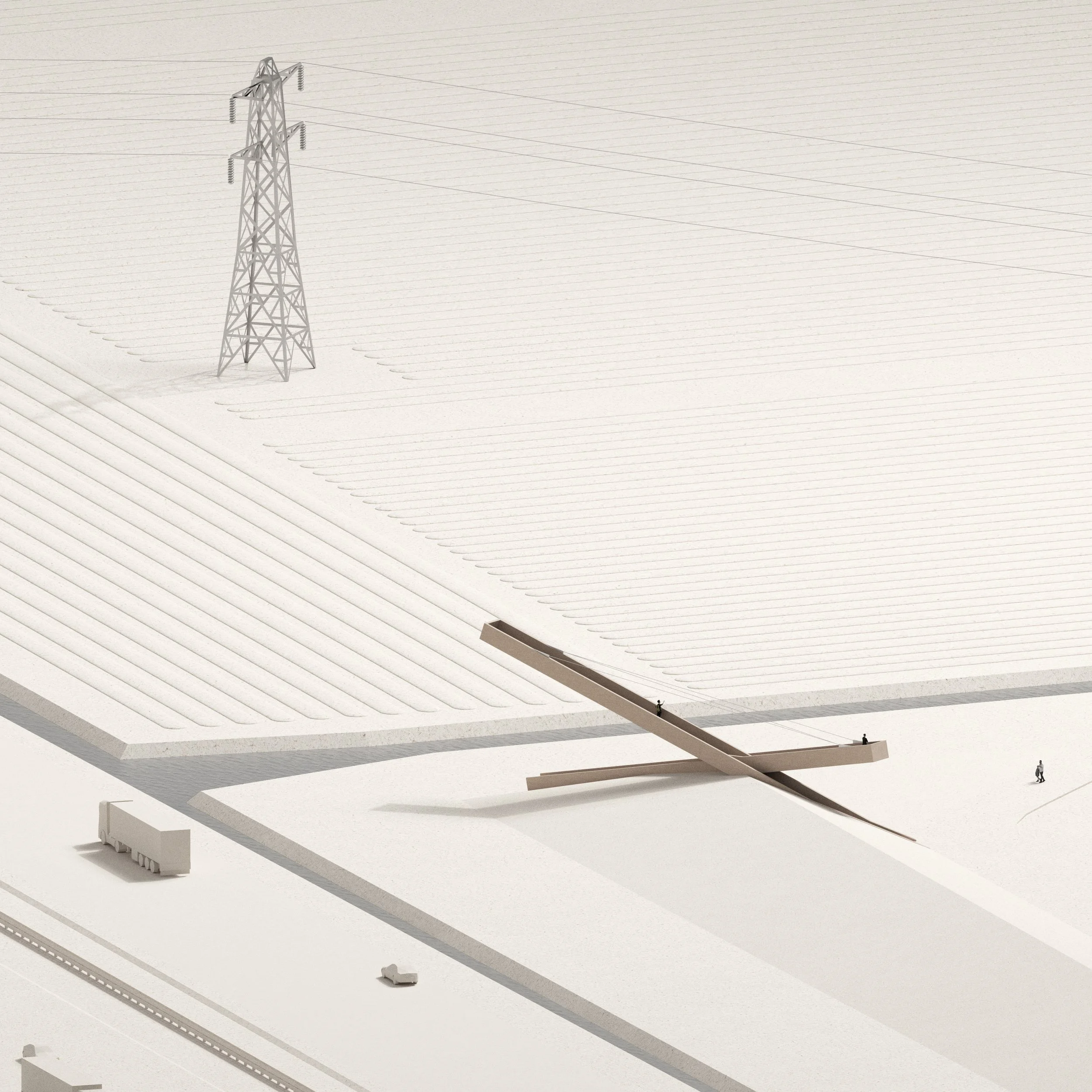
His work extends from architecture into exhibitions, set design, furniture, and products, focusing on how architectural thinking is translated across different scales and media.
His projects have been presented through international publications and exhibitions, and he currently leads Saul Kim Studio, working across Korea, the United States, Indonesia, and Ukraine.
Since 2023, he has been active in education in Korea, serving as an adjunct professor at Hongik University and Kaywon University of Art and Design.

TIMESTAMPS
(00:00) Saul's background.
(05:05) Architecture education.
“I'm still doing OOO architecture right now. It's an object oriented ontology. It came from the concept of Speculative Realism that was written by Graham Harman, a philosopher. There are two ways of seeing things. First is humanism, where everything is human centered. So the way I would comprehend the world, other people, animals, objects, every existence is dependent on my consciousness. But speculative realism argues that everything is independent. Let's say I'm holding this mug right now. I can see it, I can feel the weight, therefore, I understand that this exists. But in speculative realism, they argue that this would exist without my existence. It's not dependent on my senses or my personal biases. So it's basically architecture without humans. We have always evolved to design for people, but they were saying, why not design for objects? Why not design for something that we don't know of?” (15:58)
(22:04) Finding his own niche in architecture.
(28:14) Pursuing a masters degree.
(40:43) Anomalies experimental studies.
“I don't necessarily think of them [experimental forms] as built products. They don't have to be visualized at a specific scale. They're just the thing in itself. I try not to think of it as architecture or as something that has function. It's just a moment. The meaning of having it expressed in such an abstract way, just pure black and white, no material, no context, nothing, it's for myself to visualize this into multiple directions, multiple possibilities. So when I look back at them, I can imagine one object as architecture and furniture at the same time. I kind of liked that idea. It's also extremely straightforward where the idea is expressed clearly, and that's when the design stops. I try not to develop it further because that will be narrowing the possibilities [for future explorations].” (47:58)
(49:20) Teaching students to find their style.
(52:21) Communicating conceptual architecture.
“I was kind of triggered by the things that the OOO architects have done at Arc. I feel that what they have done with OOO didn't last long because of the fact that it's not comprehensive enough. The designs are way too difficult to understand and it doesn't really communicate with the audience, even for people within architecture. So I thought that the OOO idea can be borrowed, but not in the way they used it. They use completely foreign objects as buildings, but I personally try to use it with something familiar, like a staircase. When we look at it, we start to understand what they were made for originally, and at the same time, make it more straightforward and relatable to the people, even if they are outside of the architecture industry. ” (52:22)
(54:55) Simple yet captivating architecture.
“I don't think creativity is something innate. I feel that you practice creativity because for me, I had a system where I deconstruct, let's say ten architectural elements, I start to explore each of them first and then try to combine A and B, B and C, C and D. Then there's a combination of A and B, C and D. The iterations are endless. That was the reason why I was able to make 300 plus experimental objects constantly. It was just about putting different things in the incorrect way that would trigger people. I try to do something correct and wrong at the same time, so people are willing to accept it, but at the same time, kind of see that there’s something wrong, but also interesting about this.” (55:29)
(57:35) Getting hired based on conceptual projects.
(01:03:06) Translating an abstract concept to a built project.
“[When architecture grows to a certain scale], I don’t think you can just have one idea. That’s because the idea has to exist in multiple scales, multiple moments, and that's when the chaos comes in. If I were to try to imagine one of the anomaly objects developed into a shopping mall, I don't think the core idea would be contained as well as it would be in a small house. I'm personally interested in something smaller, so the projects I've worked on are like houses, observatories, products and furniture. I don't think I've ever ventured outside of this scale because once the scale starts to grow, I think it's extremely difficult for architects to have that one overarching idea contained and be expressed in a clear way. It's extremely challenging.” (01:04:20)
(01:05:56) Saul's favorite architect & latest work.
(01:08:02) Saul's favorite building.
HAVE QUESTIONS OR SUGGESTIONS?
TEXT/CALL OUR HOTLINE
213-222-6950
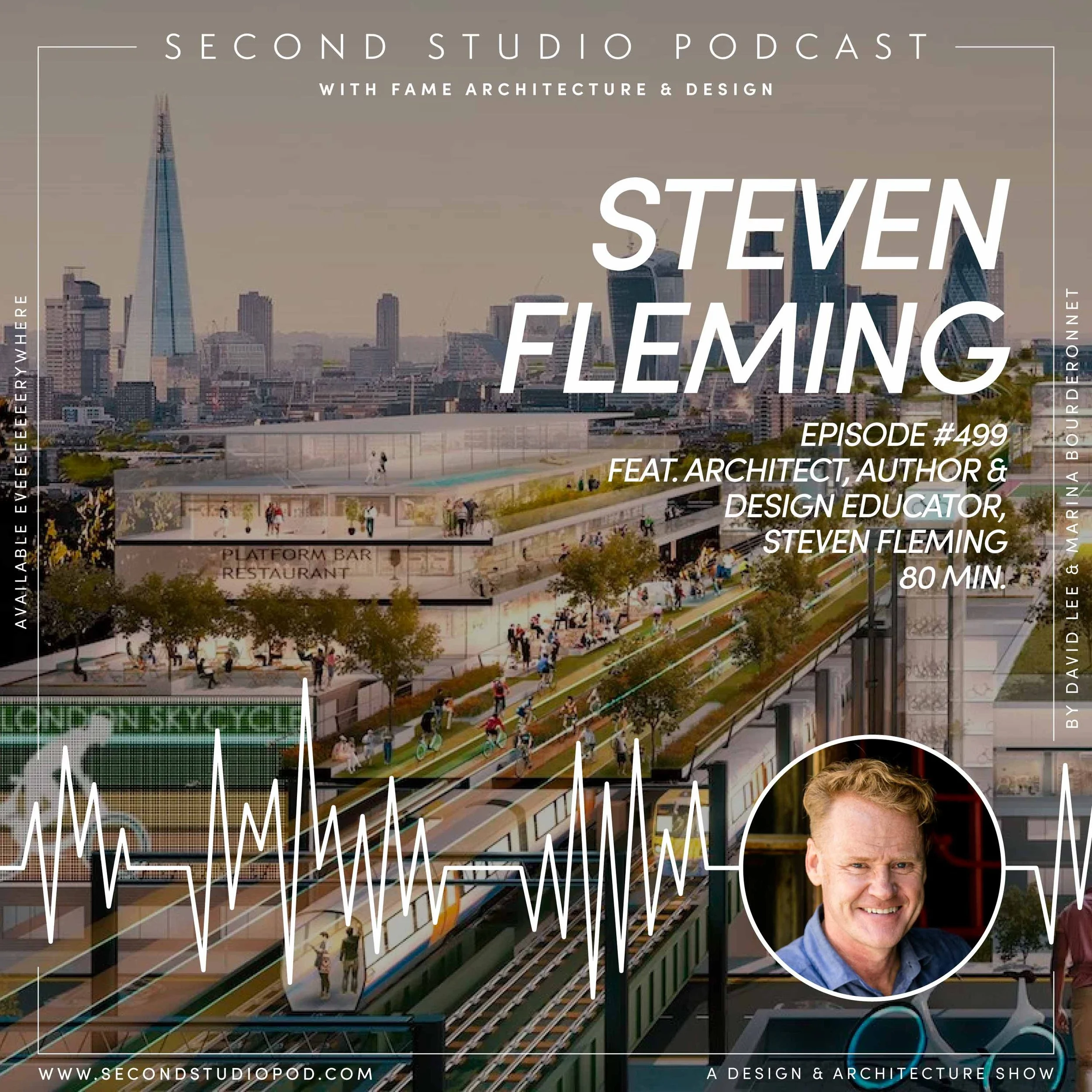
#499 - STEVEN FLEMING, Architect, Author, and Design Educator
SUMMARY
This week David and Marina of FAME Architecture & Design are joined by Steven Fleming, architect, author, and design educator. The three discussed Steven’s background, Platonist & utopian architecture, architects & visionary work, famous architects’ commissions and client relationships, issue with architecture teachers, Steven’s career journey, books & bikes, mission as a teacher, architecture tutor, teaching high schoolers design thinking, and more. Enjoy!
ABOUT STEVEN
Dr. Steven Fleming is an architect, author and design educator. He began his career in Singapore in the 1990s, contributing to public housing projects and the design of a major public park. In the 2000s he was an academic in architecture and urban design, teaching and researching design education, including a funded project in 2006 observing design critiques in architecture schools in New York and Australia.
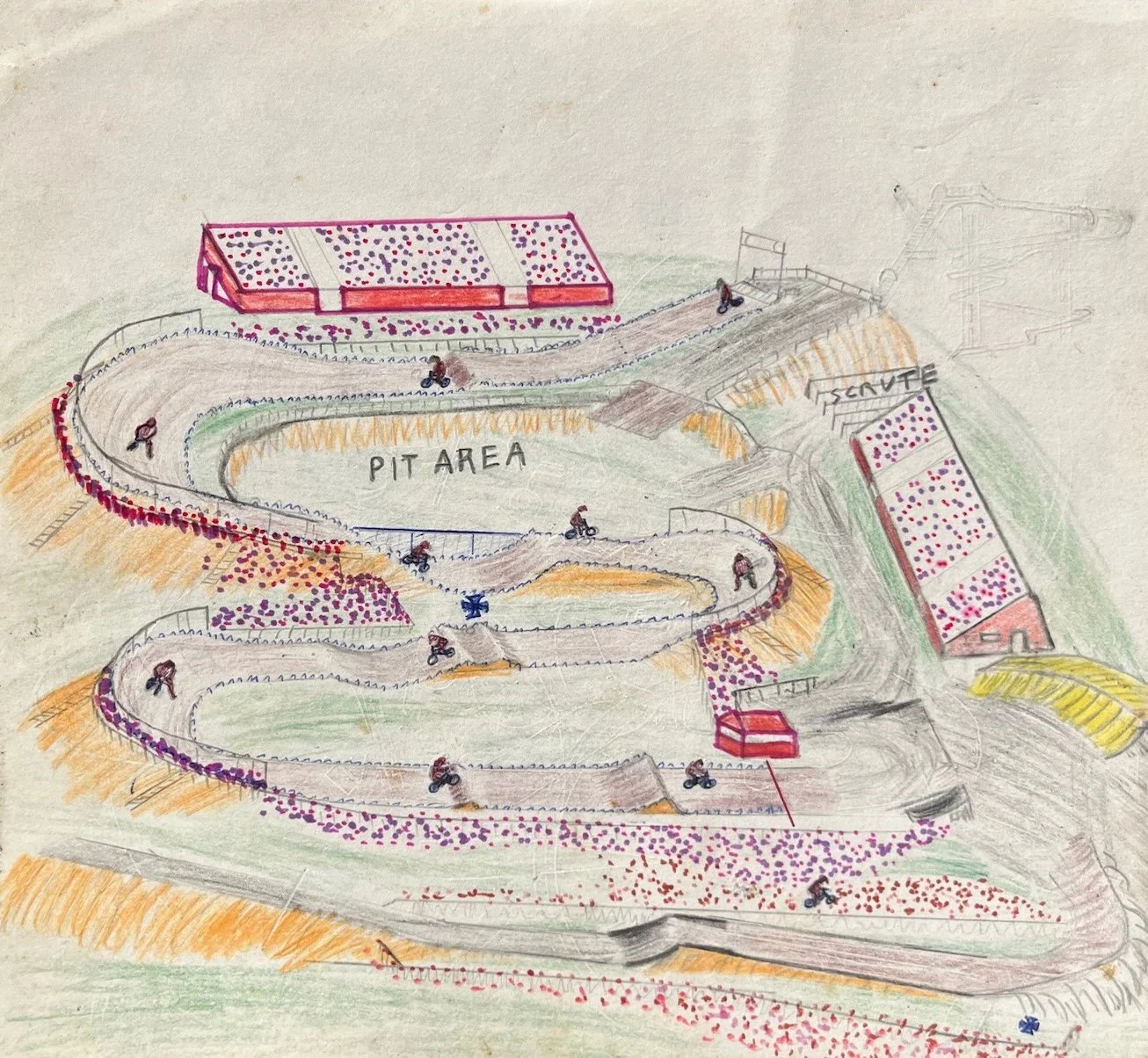
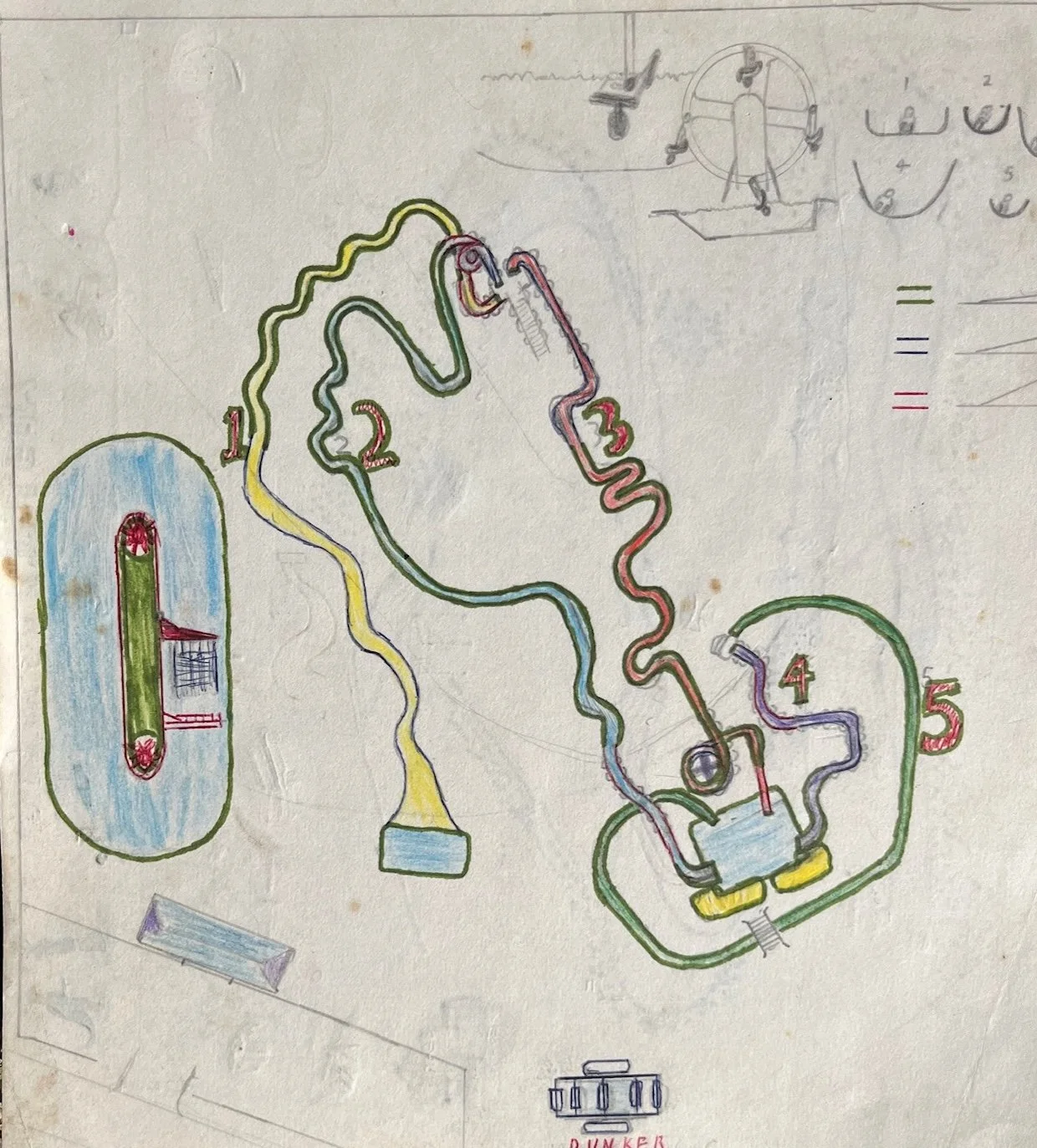
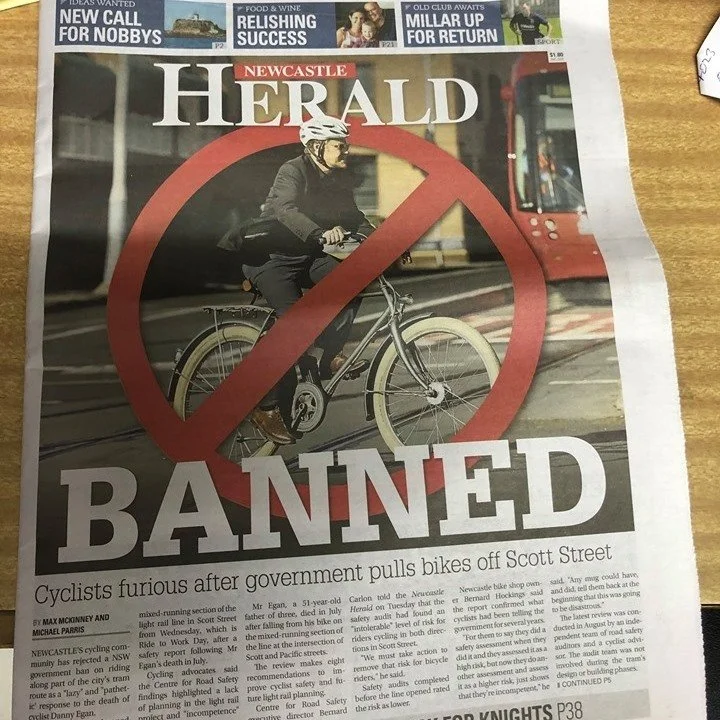
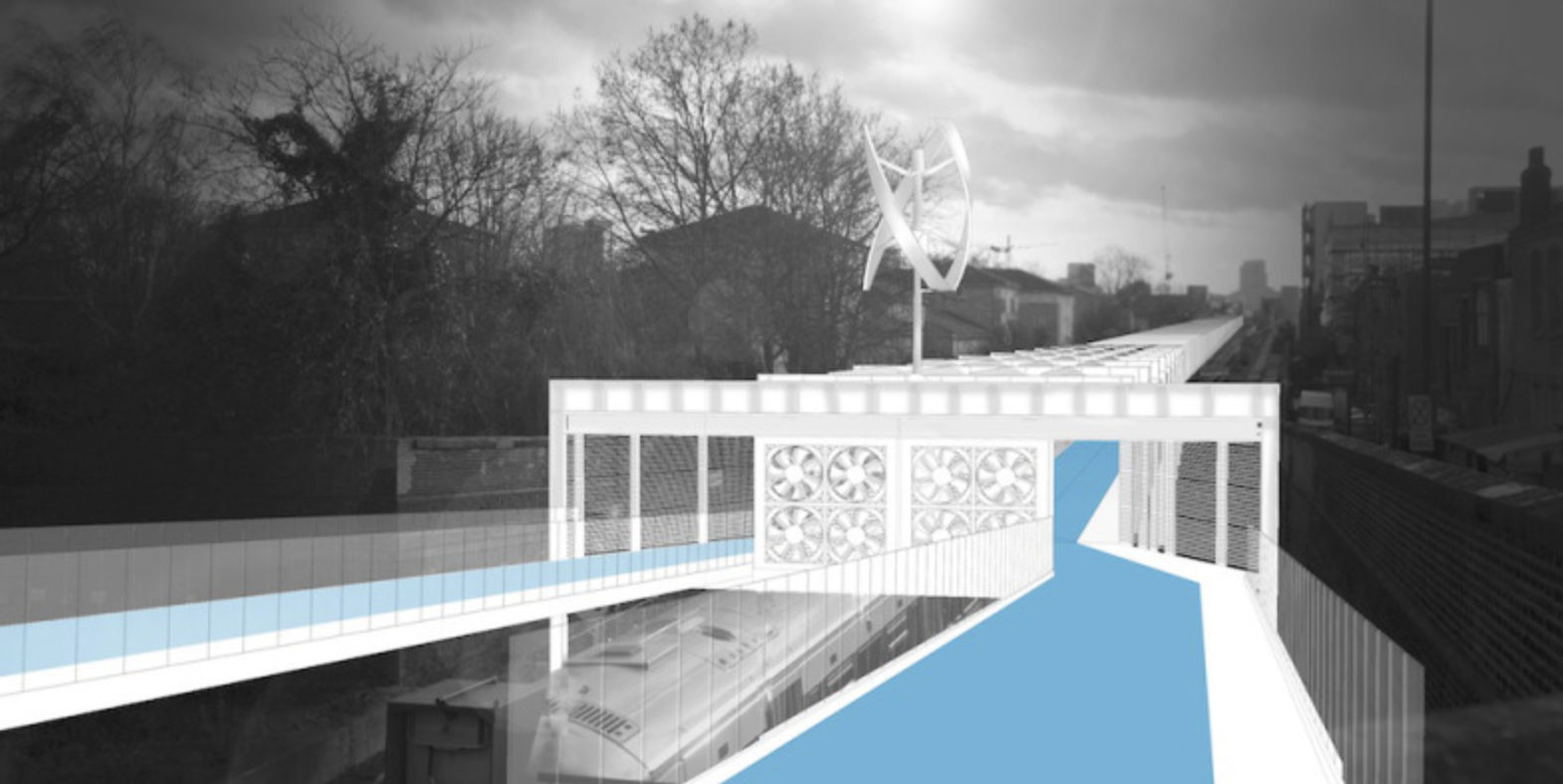
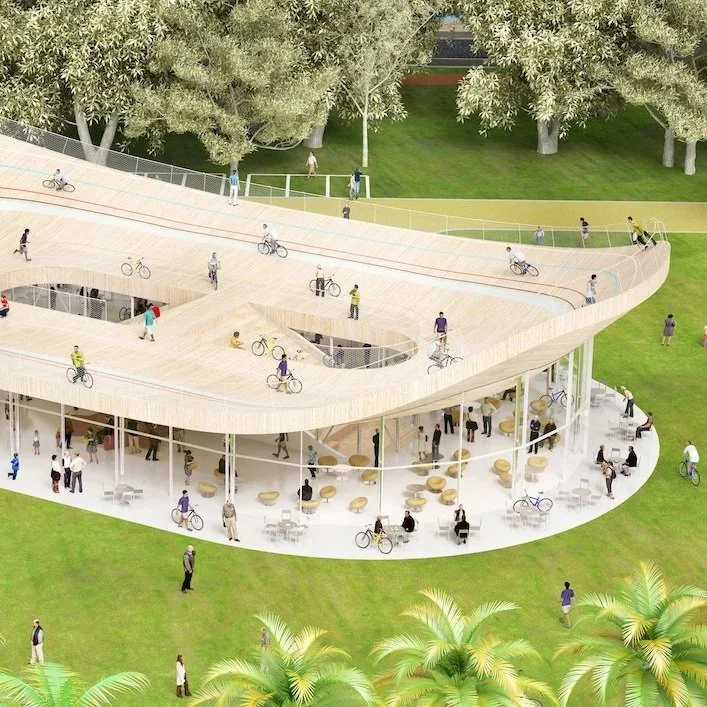
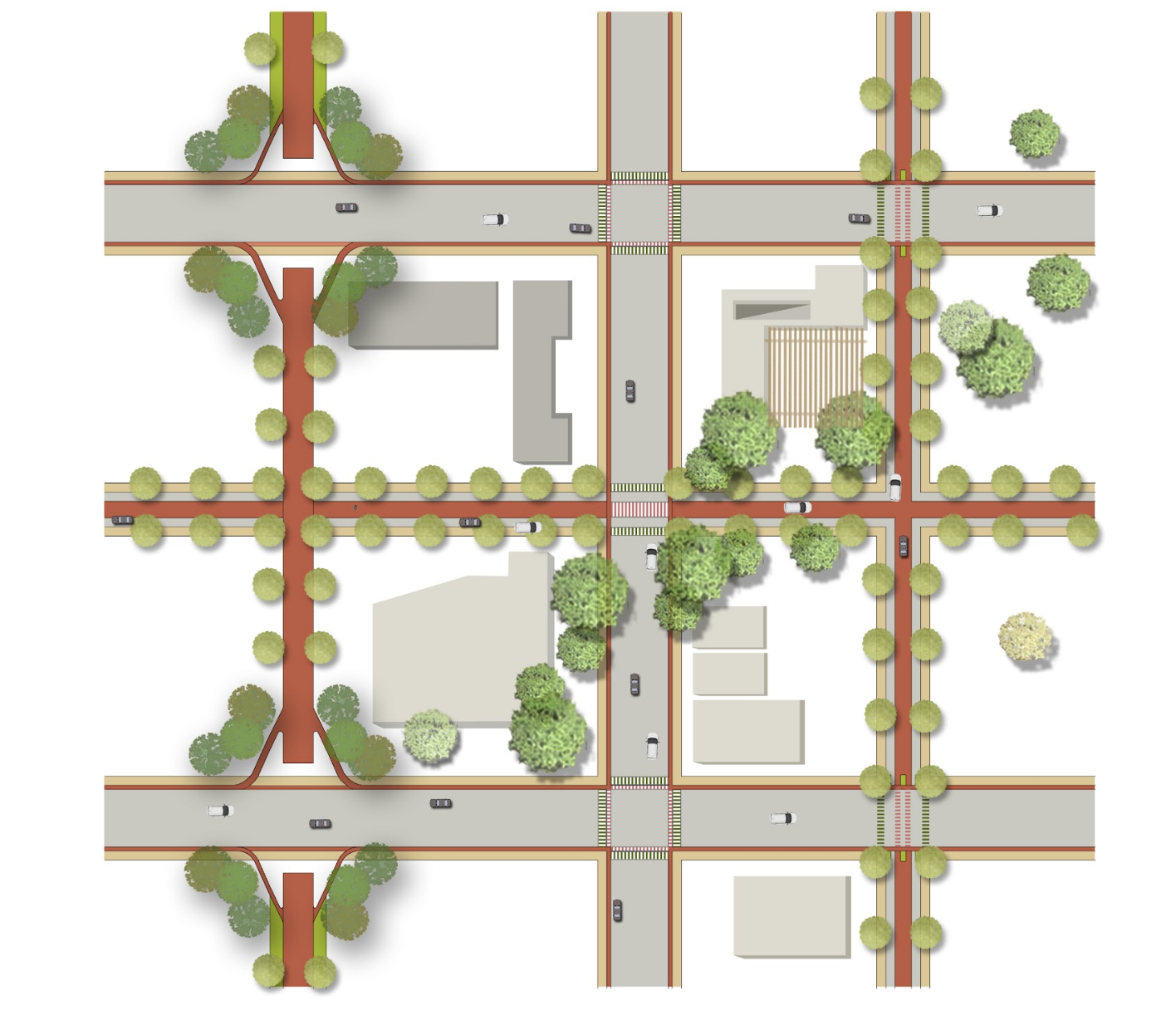
In the 2010s his books Cycle Space and Velotopia made him an international speaker and consultant, advising governments on how bicycle-oriented development and architecture can increase cycling without provoking the political backlash often associated with reallocating road space.
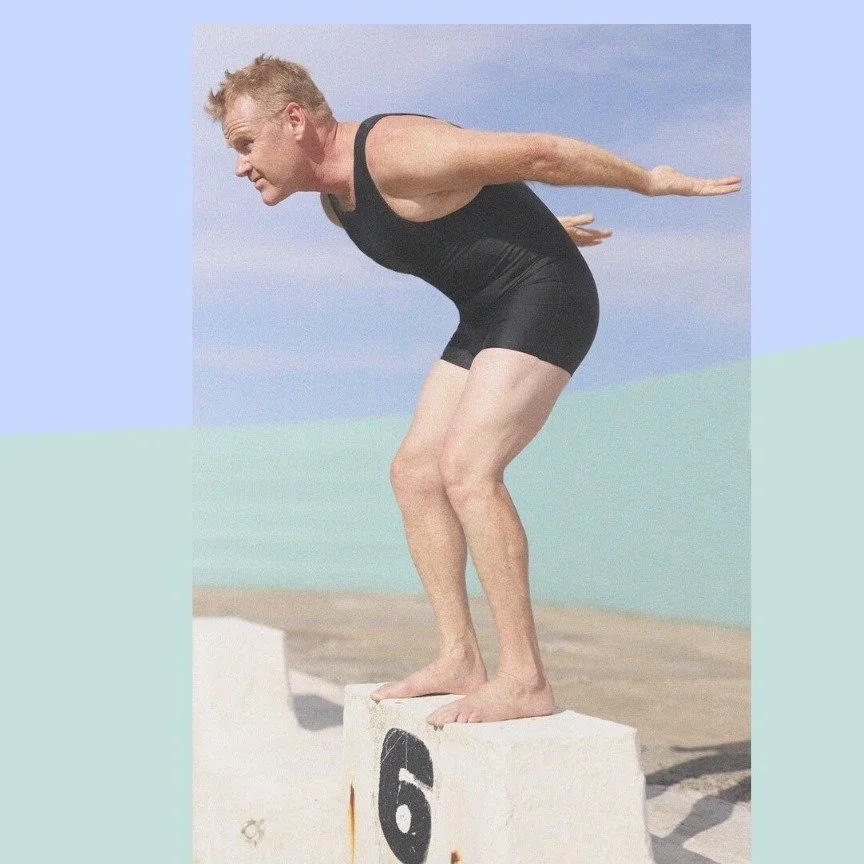
During the pandemic he launched a fashion label producing tailored, avant-garde swimwear in Australia.
The constant thread through his career, however, has been teaching. Fleming now tutors architecture students internationally and is completing a Master of Teaching, with the aim of becoming a secondary Design and Technology teacher and pursuing research into how designers are formed through education and culture.
TIMESTAMPS
(00:00) Steven's background.
(09:03) Platonist & utopian architecture.
“Sometimes, I joke that all architects are Platonists. Because in the back of our minds, whether we admit it or not, there’s a utopian vision, some idea about how the world could be and how this particular building is an installment in that world. The more you design a particular building type, a classic example is apartment buildings, you start to see generic or universal types. I think it's an inescapable part of the architecture discipline that we would see universals. The interesting part is when you start becoming an advocate or a lobbyist for different parameters, and you start trying to push those boundaries. Sadly, there's this reticence that has crept in where architects are really afraid to do anything lest we mess it up.” (10:13)
(16:07) Architects & visionary work.
(26:10) Famous architects' commissions & client relationships.
(32:11) Prominent architects as teachers.
“Students who were being asked to be creative and then just getting absolutely confounded with conflicting advice and very vague words that could all be dismissed. I think the right way to go is to fully understand the way an architect thinks, before you can actually come up with your own uniqueness. The particular problem in small schools of architecture is, on the one hand, students are asked to be conceptual and have their own idea to push through, but then they're going to be tortured for having that idea. That's why I always enjoyed running architecture studios as an architectural historian because I could recognize 3 or 4 different movements or styles from the past that a student was heading towards, and I could steer them into that. Then you get a diversity of different styles that come out of the studio.” (38:35)
(41:37) Issue with architecture teachers.
“Very few design studio teachers are prepared to talk about style. It is very hard to talk about, so they'll come up with these convoluted briefs that are all about function, and then ask students to be conceptual with their first line on paper about planning. How often do you see a design studio project where students are going around in circles and they've got their tutors still, at the 11th hour, talking about their goddamn plan, during the crit, looking at the plan. The computer is going to draw these plans for people within the next five years. Planning is the easy bit. Students are bogged down by the plan and sometimes the form too as though this is their contribution to the world. The whole time it's really because my colleagues are afraid to talk about style, because it's tricky to do. It's the hard part.” (42:16)
(53:29) Steven's career journey, books & bikes.
(01:03:08) Mission as a teacher.
(01:09:45) Architecture tutor.
“Educationally, what's happening is the students are getting problem based learning. They're also working in what's called the zone of proximal development. So they're working on the same project. He knows a bit more than them in some ways. They know things that he doesn't know. It's like a three year old learning from a five year old. But the three year old learn more from a five year old than they will from an adult who's just lecturing them that these are the facts. Working in the sand pit together with a master is a great way to learn. Accidentally, architectural education is very good. A lot of the time it's one of the best educations you can get because it is so involved. It might be bad or not pure motivation, but the teachers you're learning from are motivated.” (01:11:06)
(01:12:26) Teaching high schoolers design thinking.
(01:16:29) Michael Sorkin.
HAVE QUESTIONS OR SUGGESTIONS?
TEXT/CALL OUR HOTLINE
213-222-6950

#498 - ORGANIZERS, HUMANOID ROBOTS, AND SMALL DOGS
SUMMARY
This week, David and Marina have a casual chat about compulsive organizing habits, drafting tools, the humanoid robot, Neo, by 1X, BEEF, social enclaves, and small dogs. Enjoy!

HAVE QUESTIONS OR SUGGESTIONS?
TEXT/CALL OUR HOTLINE
213-222-6950
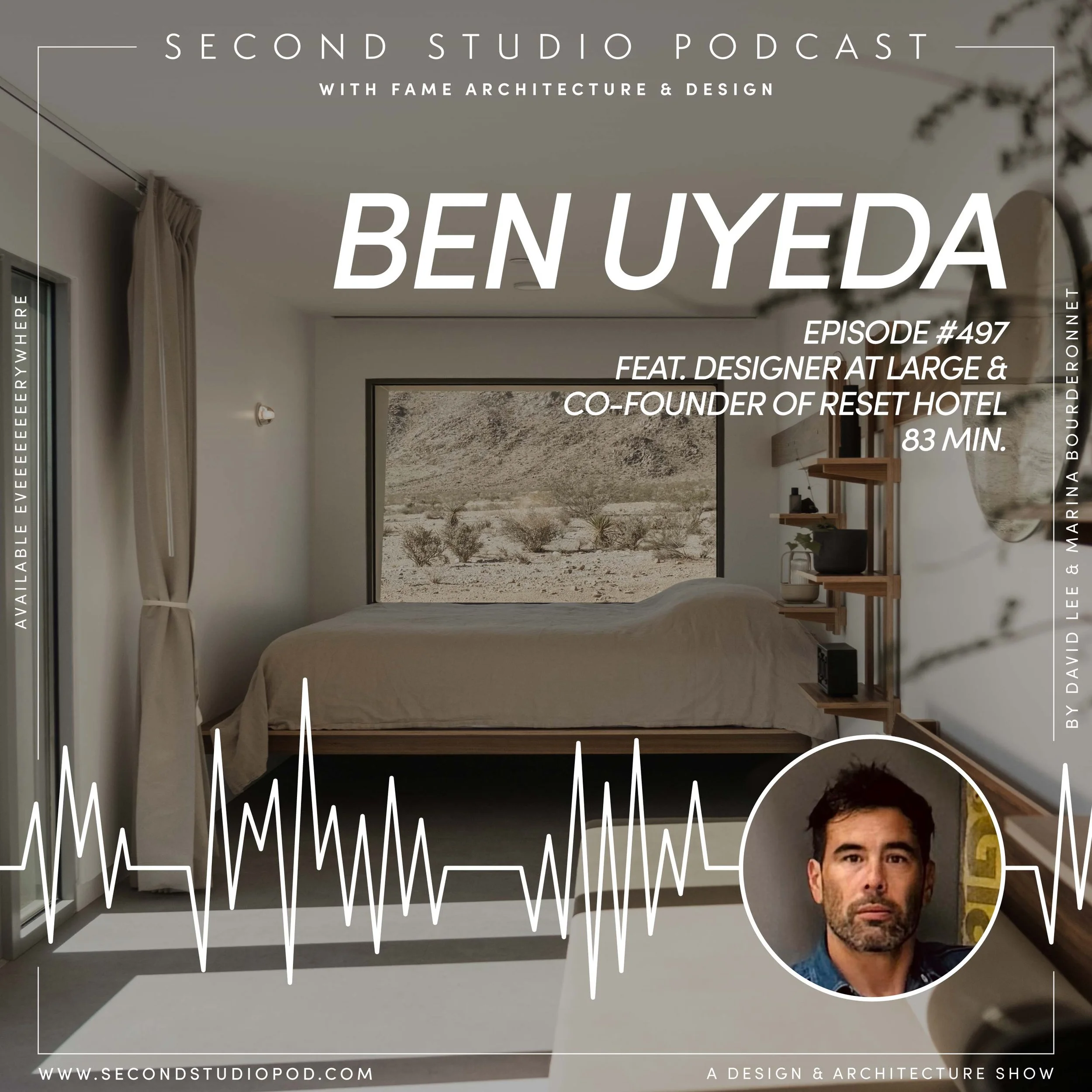
#497 - BENJAMIN UYEDA, Designer at Large & Co-Founder of Reset Hotel
SUMMARY
This week, David and Marina of FAME Architecture & Design are joined by Ben Uyeda, Designer at Large & Co-Founder of Reset Hotel. The three discussed Ben’s educational background, cost-effective modular homes, mediocre built environment as a point of inspiration, balancing conceptual & practical thinking, launching a successful firm, the business of architecture, why Ben left architecture, designing for the masses, a solution to wasted intellectual work, an alternative approach to affordable housing, and more. Enjoy!
ABOUT BEN
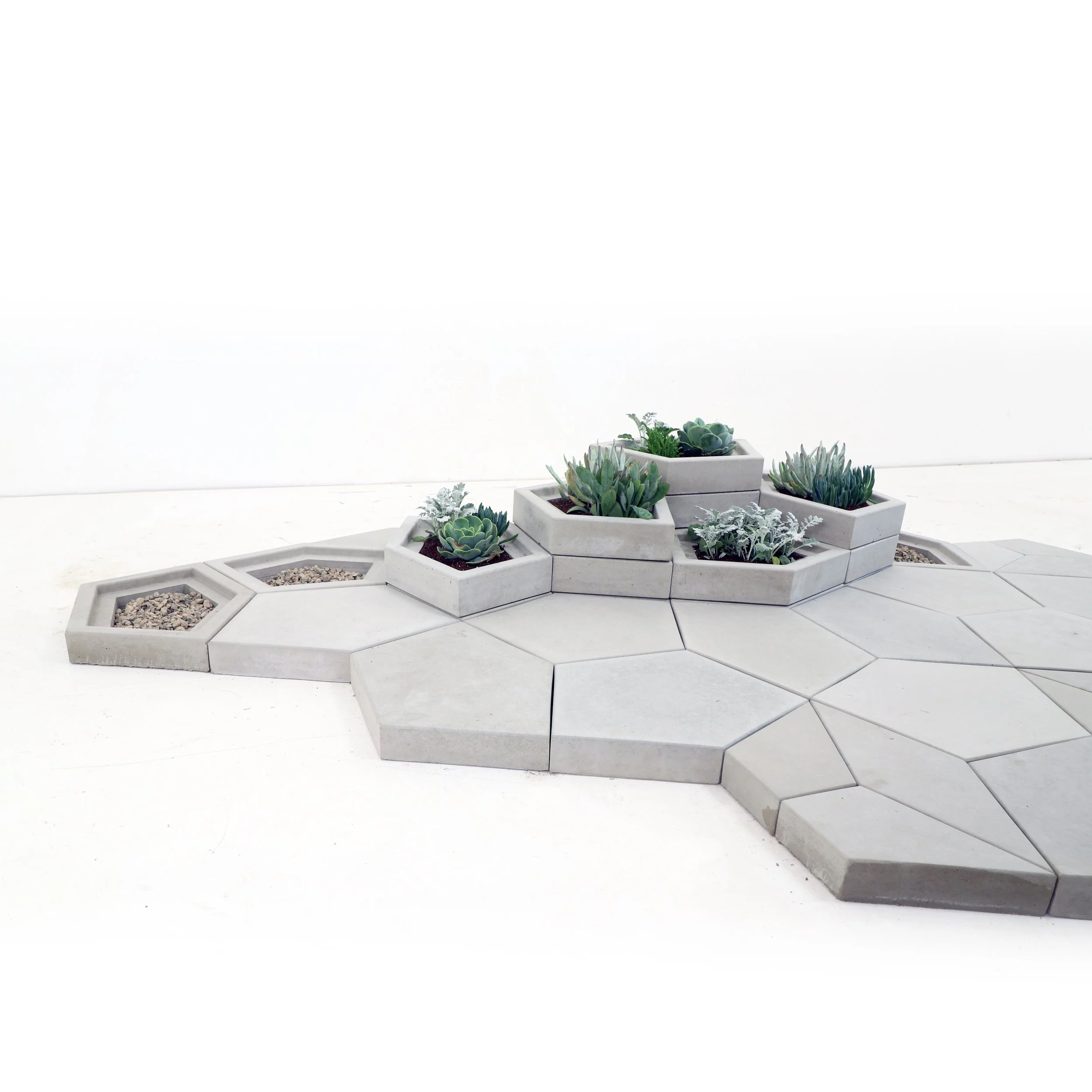
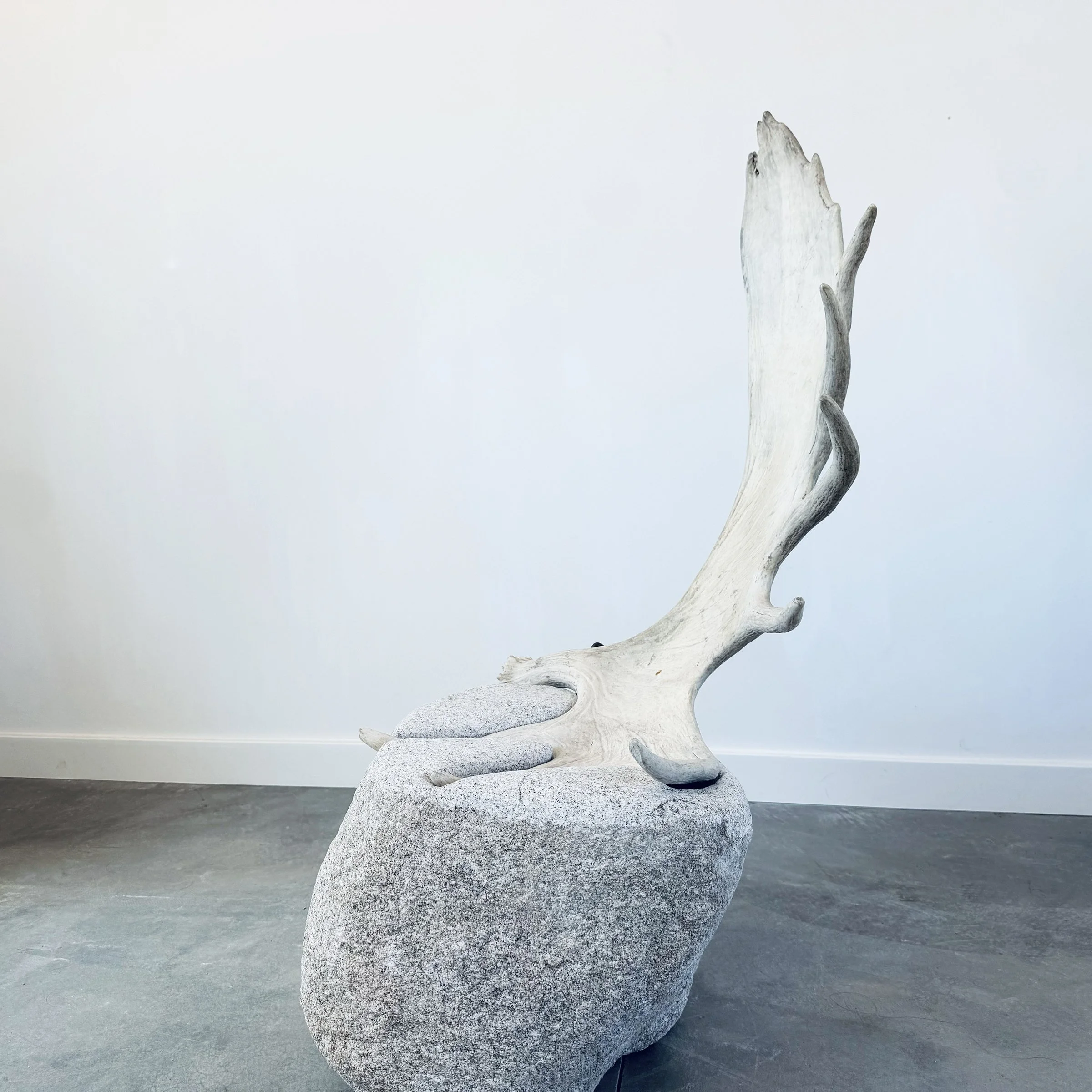
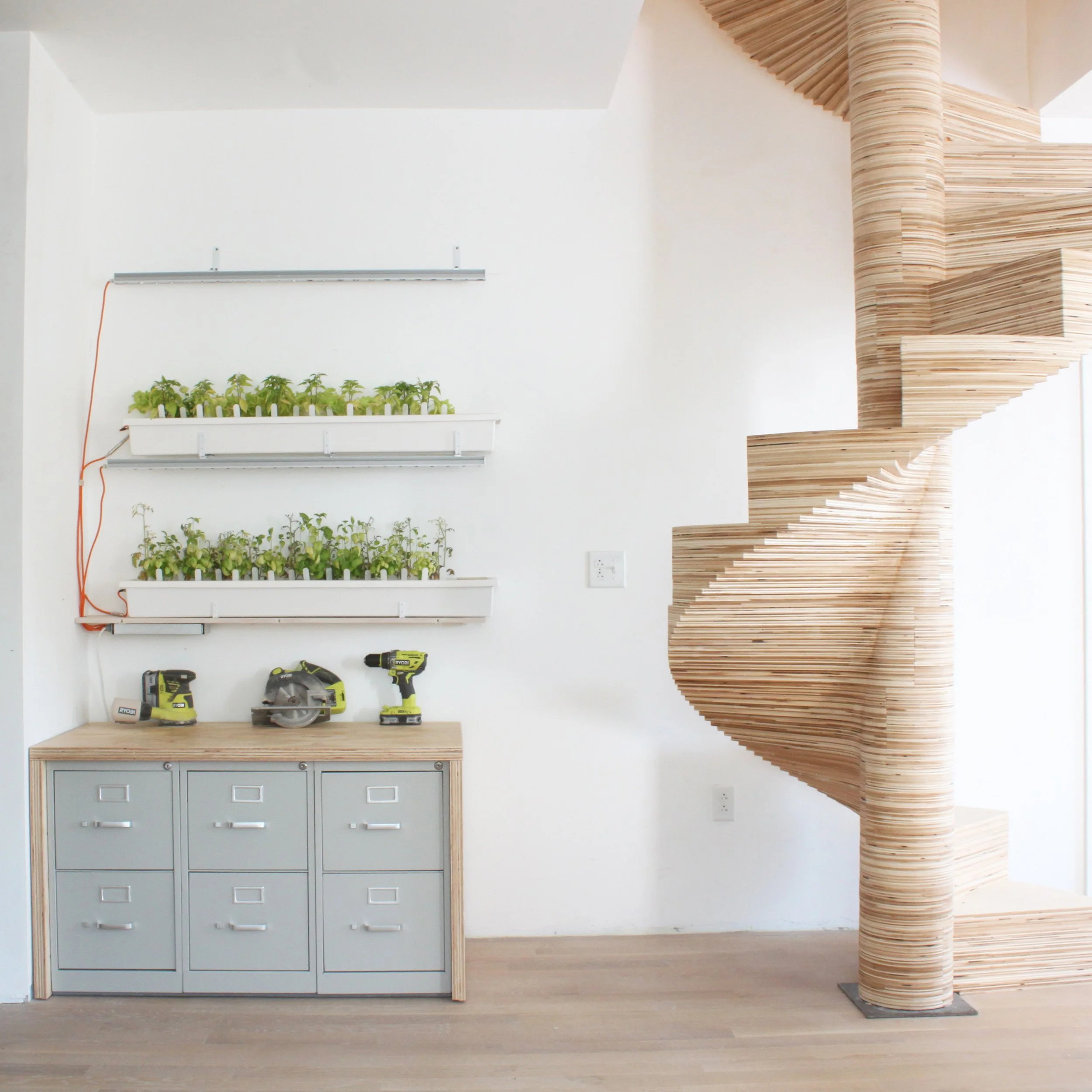
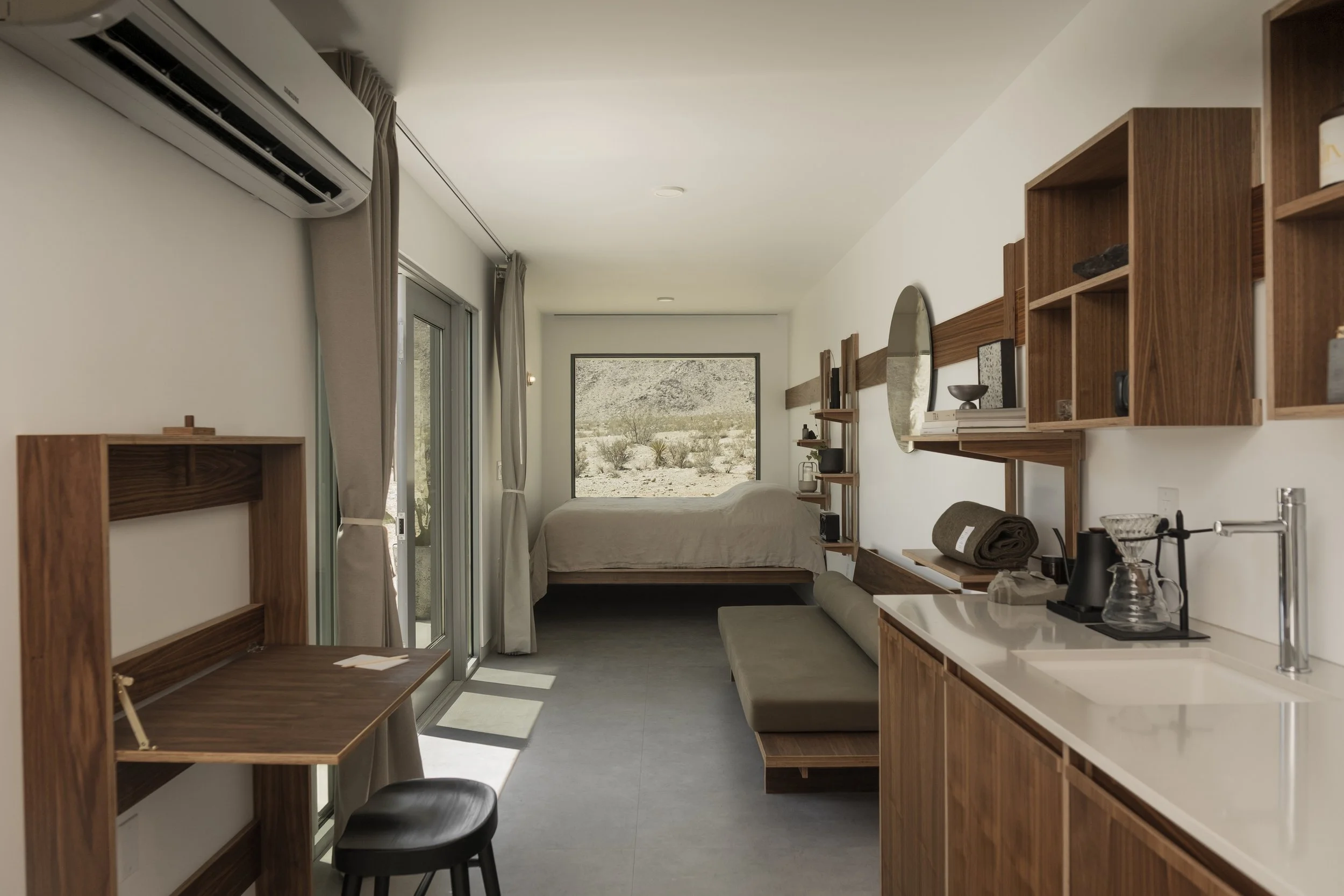
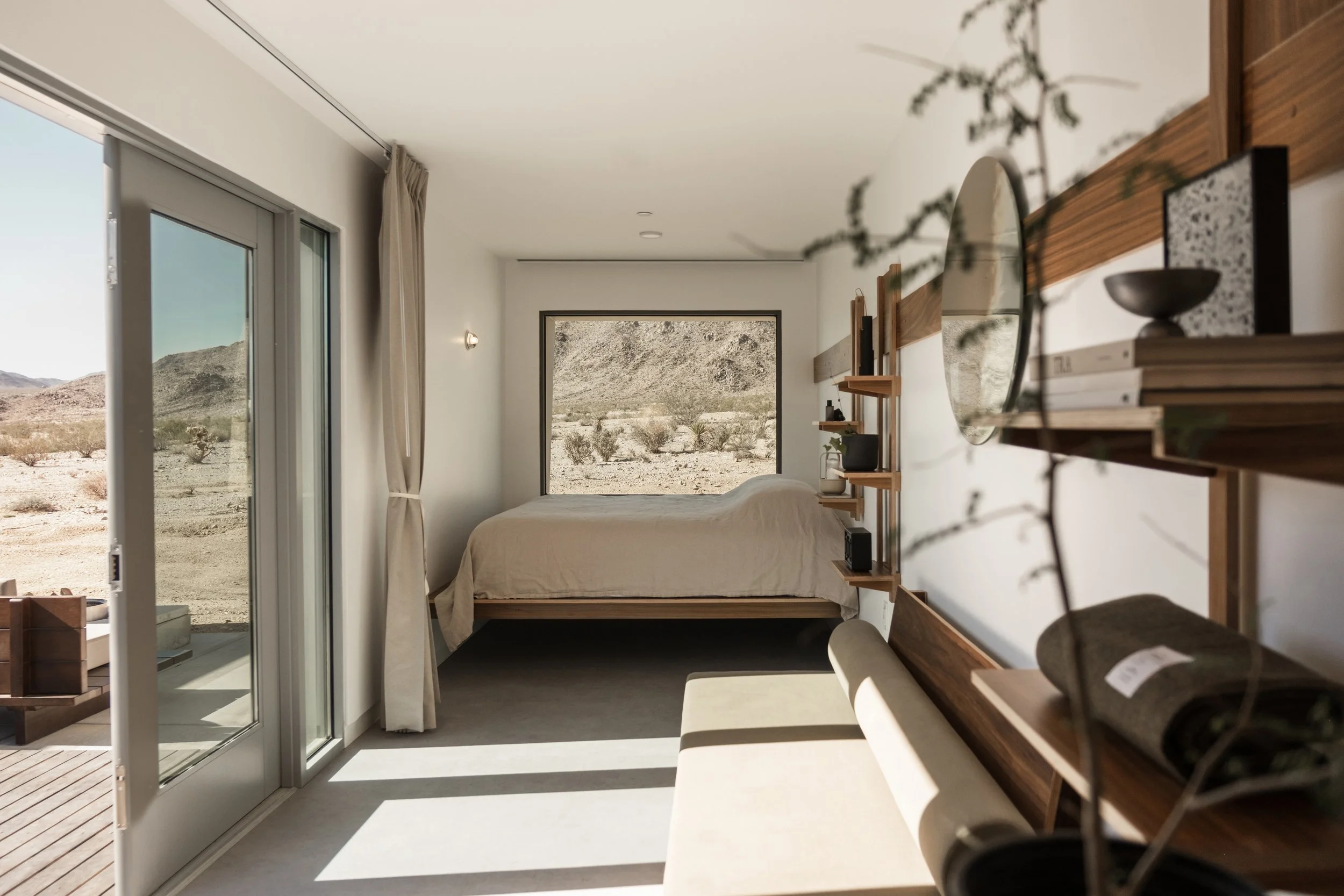
Ben Uyeda stepped away from the award-winning architecture firm he co-founded, as well as academic positions at Cornell and Northeastern Universities, to directly deliver affordable designs to the masses via digital media. In the last 10 years, Ben’s design ideas have reached more than 500 million people and the free designs he gives away have been built on six different continents. Despite the populist and affordable nature of his work, Ben’s designs have been featured in exhibitions at the Vitra Furniture Museum in Germany, the Anchorage Museum, and the Egyptian Museum in Tahir. Ben is a co-founder of the RESET Hotel which is a 65-room modular hotel right next to Joshua Tree National Park.

TIMESTAMPS
(00:00) Mediocre built environment as a point of inspiration.
“In architecture school, all of our case studies would be these magnificent pieces that were rare commissions. You're looking at success that was derived after the commission of a lifetime was given. I always felt that when you finished a building, you kind of want to be like, “Wow, this is amazing! We created this.” But you're not really factoring in that if our firm didn't exist, another firm would have gotten the project. Our actual impact is only how much better we are than the other firm. In some cases, they might have been better. Where we should look for inspiration is towards what's not being designed. I think less than 5% of the houses built in America have direct involvement from an architect. About 30% of them came from stock house plans. If you're looking for how to make the built environment better, you should look at where it's being neglected, not where there's this bottleneck of all these talented creative designers trying to compete for the same commission.” (01:55)
(05:43) Cost-effective modular homes.
(08:49) Ben's educational background.
(25:20) Practical vs theoretical focused universities.
(35:00) Balancing conceptual & practical thinking.
“The comparison for architecture that I really like is food, because when it comes to dining, we actually like all levels of conceptual ideas versus just craftsmanship that has very little coherent thought into it. We want all aspects of design. We just want them in different proportions at different times, and everybody's formulation of how esoteric they want their design world to be versus how practical and efficient, I think that all has a place. In the profession, I think sometimes we may take it as too zero-sum. If we think about the best experience we had with food or travel, I think that’s another type of inspiration for how we don't have to commit to one of these lanes. We actually might want to explore the esoteric thing once every couple months or years periodically, but not have to have it be the centerpiece of every project that we do. ” (37:56)
(40:37) Launching a successful firm.
(43:20) Business of architecture.
“Architecture is not an art form, it's a profession. It's classified as such so you have to think of it that way, especially if that's what you're going to do for a living. When we look at the history of art, design, and architecture, we often remove the business components that were essential to things happening. When we separate business from art and design in the past, we tend to be really frustrated with the present. But really, I think these dynamics are much more eternal.” (43:33)
“The unfairness of the systems in the world can be inspiring, but it can inspire more of a desperate survival kind of climb. You know someone’s smart when they can see a system as unjust but separate out the part that they disapprove of and not take any action because they're so upset by it. For me, I’ve always observed all these things as, “Okay. The rich kids are going to have an advantage because they're being supported while they can get their credentials polished by working for one of these prestigious firms. Great. Not good or bad. I just have to do something else.” As long as you take that mentality of eliminating options that aren't right for you, you don't have to judge them. You just have to say, “This isn't what I want to do. I'm going to do something else, and I'm going to try this. Oh, that doesn't work. Now I'm going to try this.” Because the more time you spend wallowing in the unfairness of it, the more you set yourself back.” (46:16)
(47:59) Why Ben left architecture.
“We produce so much intellectual waste with every design we create. Every time an architect designs a house, they actually design like 20 to 30 houses in various stages of completion. You may meet with a client, get their brief and interests, and present three different schematic designs. They pick the one that they like the best, or they always want to combine things from both. Then you do another three options to develop that, and you're trying to steer it and get more of that intellectual purity back in there. So over the months of meeting with them and getting a design that they're comfortable with, you've actually produced all these fragments of designs that were actually probably more conceptually pure and focused than the resulting project that was picked by their specific lifestyle. So, you have a ton of intellectual waste.” (49:28)
(52:05) Designing for the masses.
(59:15) Solution to wasted intellectual work.
(01:06:55) Alternative approach to affordable housing.
“One of the fundamental challenges that architecture has as a profession is that at the residential level, people think they're paying for a house plan. They think they're paying for the drawings and not for the service. Architecture is a professional-grade service that helps you manage one of the most important investments you're ever going to make, your residence. Having that kind of check and balance so you don't get taken advantage of, quality control, helping you deal with the administrative bureaucracy of permitting, etc, that is a comprehensive, valuable service that deserves compensation. All of those things add up to a level of care that's not affordable for the vast majority of people. If you put the burden on architects to make that cheaper, they're in a really tough place where they want to maintain their ethics and quality of service, but for a fraction of the price. If you try to scale everything down, everything gets diluted, and the pressure and constraint build. When you try to value-engineer an expensive building into a cheap building. I almost feel like you should start from scratch and just design a cheaper building, because the value engineering of the expensive thing into nothing is exhausting, and it's painful because all of those things are in there for a good reason, and you're better off starting from scratch.” (01:09:33)
(01:18:33) Ben's favorite building.
HAVE QUESTIONS OR SUGGESTIONS?
TEXT/CALL OUR HOTLINE
213-222-6950
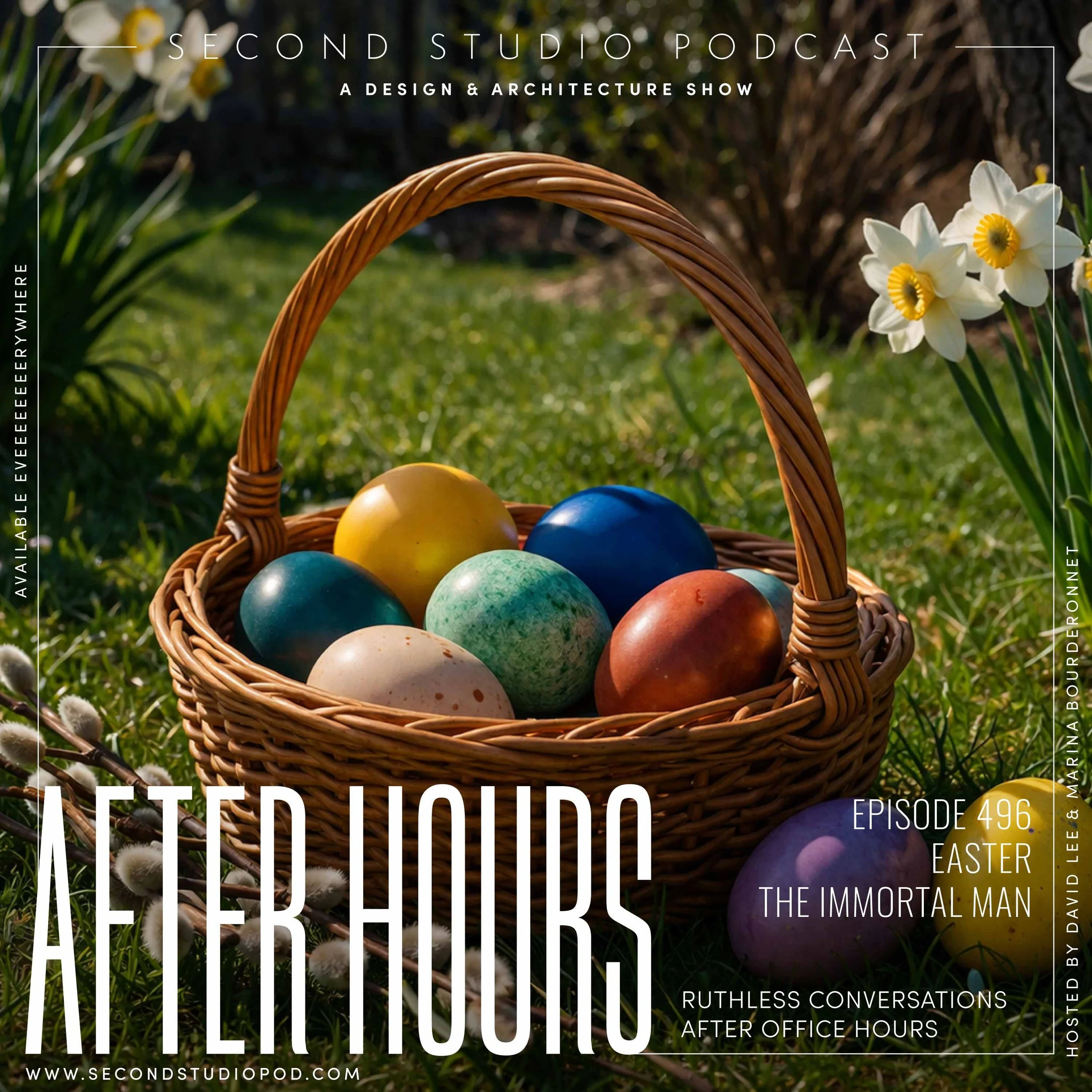
#496 - EASTER AND THE IMMORTAL MAN
SUMMARY
This week, David and Marina have a casual chat about Easter and The Immortal Man. Enjoy!
HAVE QUESTIONS OR SUGGESTIONS?
TEXT/CALL OUR HOTLINE
213-222-6950
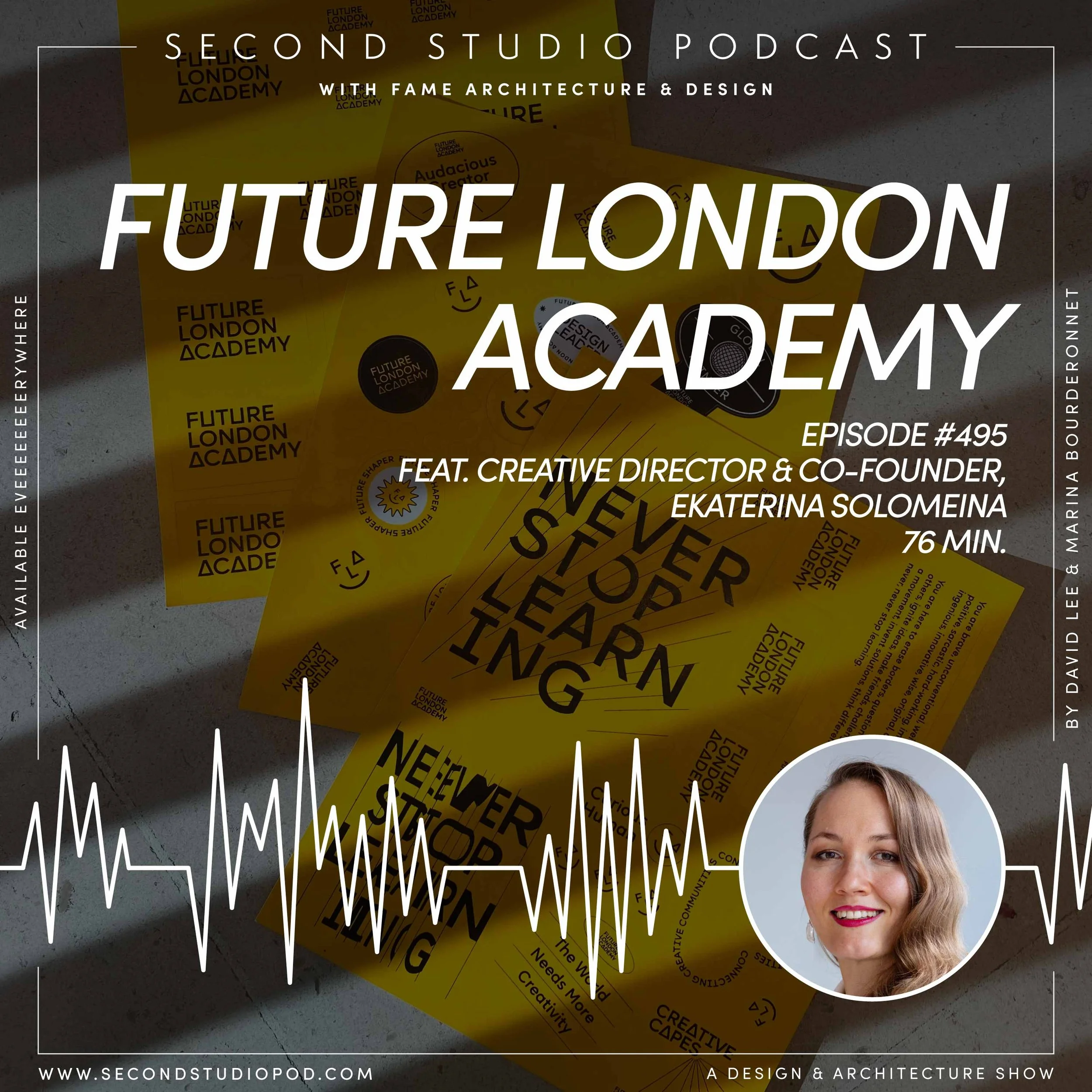
#495 - EKATERINA SOLOMEINA, Creative Director & Co-founder of Future London Academy
SUMMARY
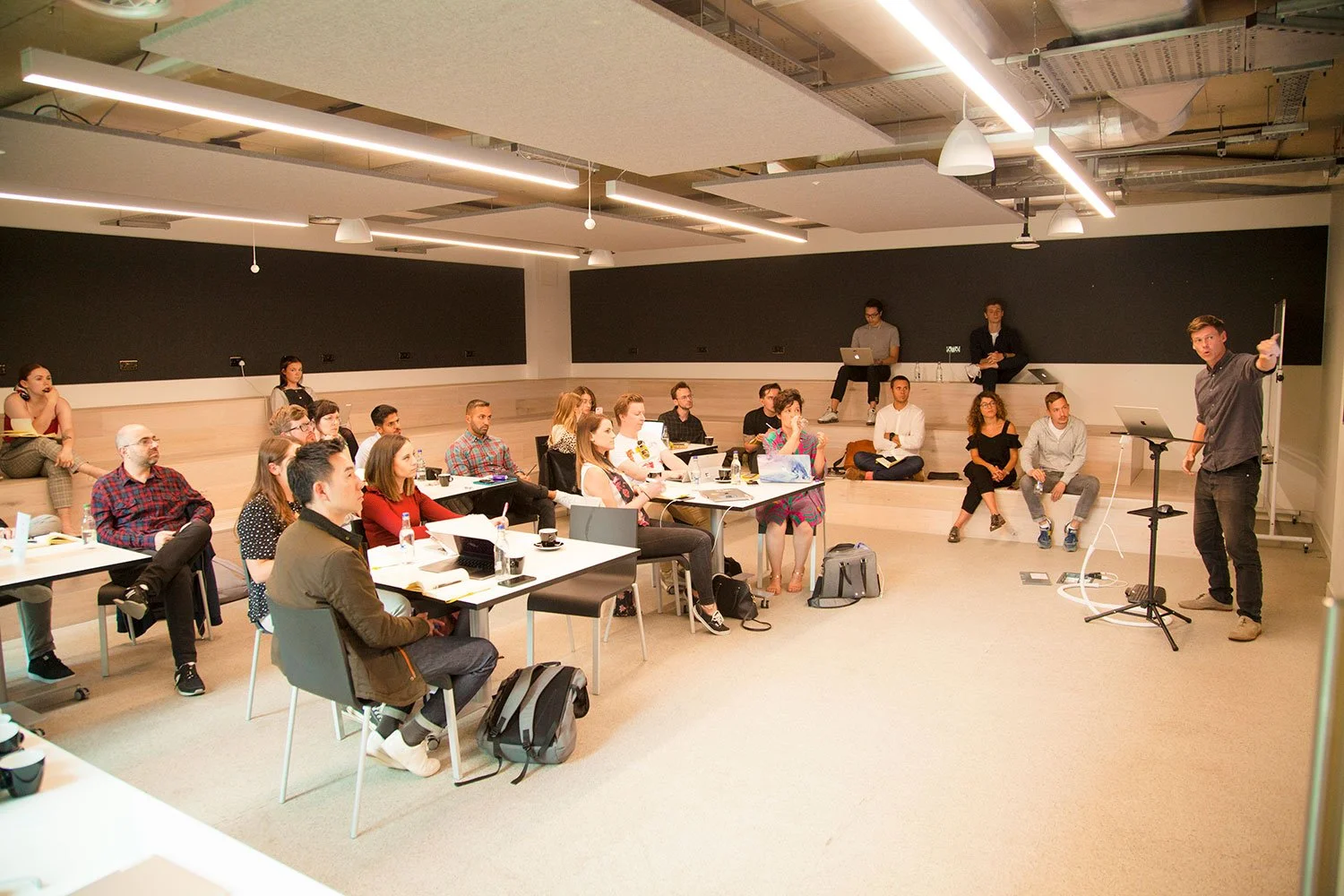
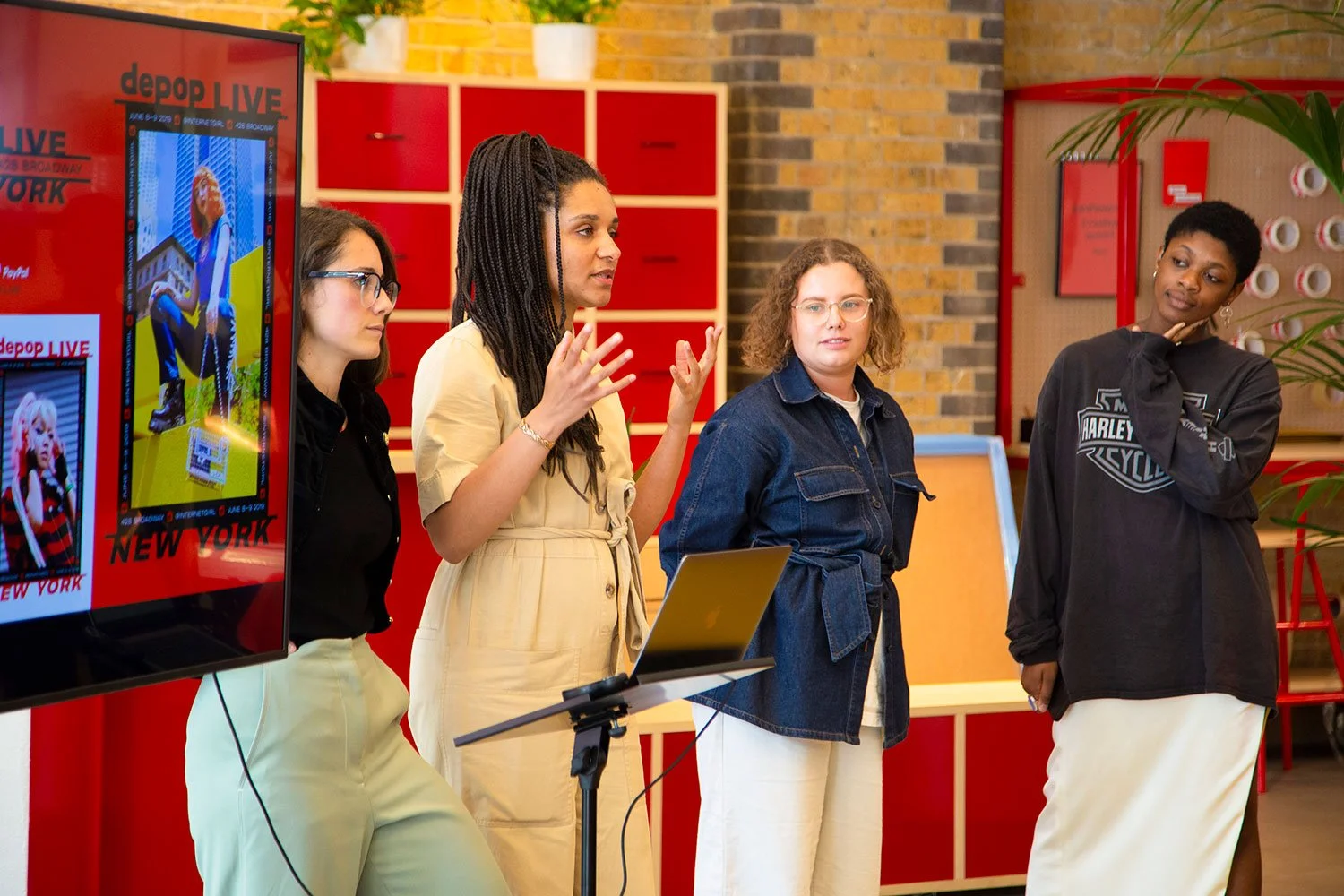
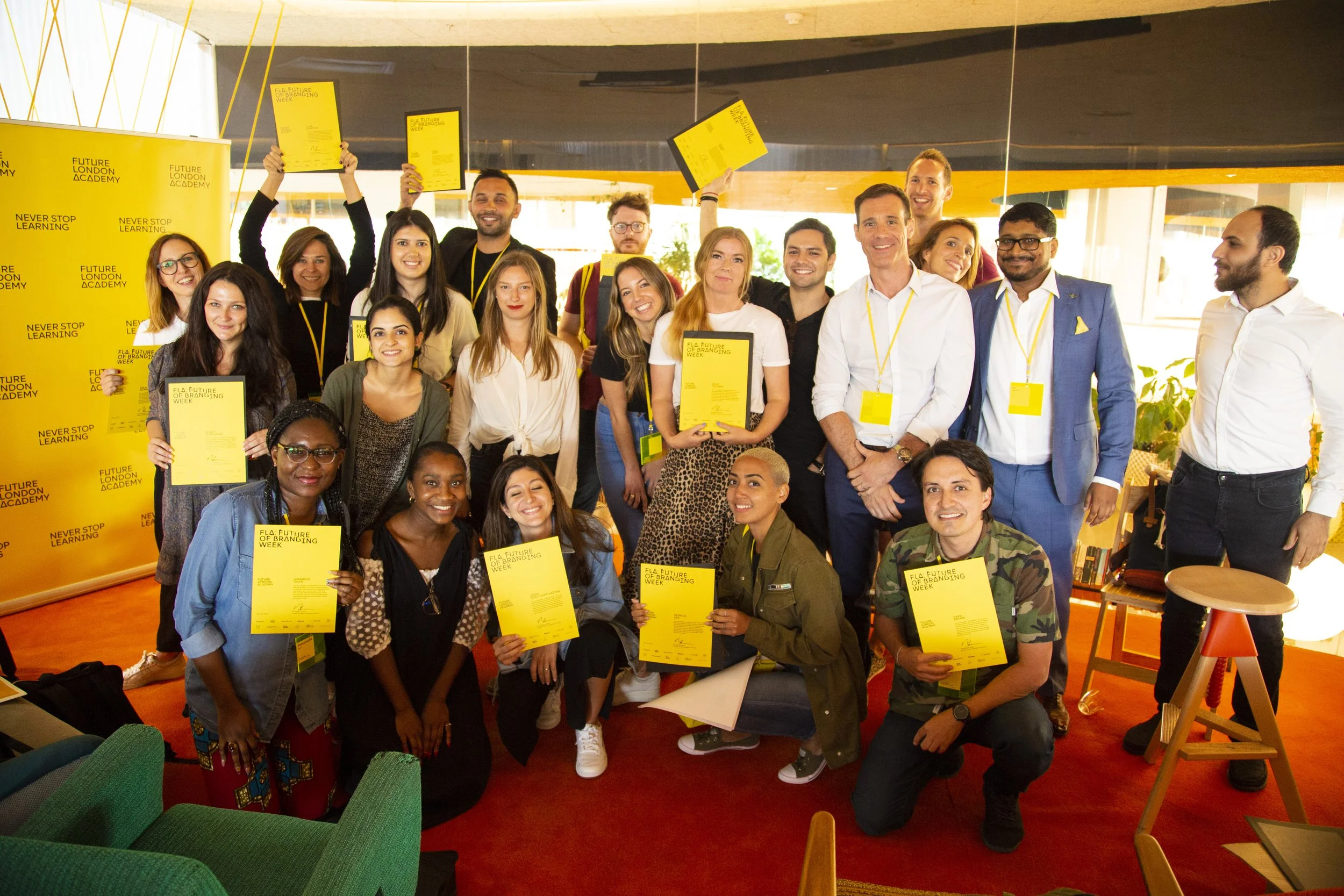
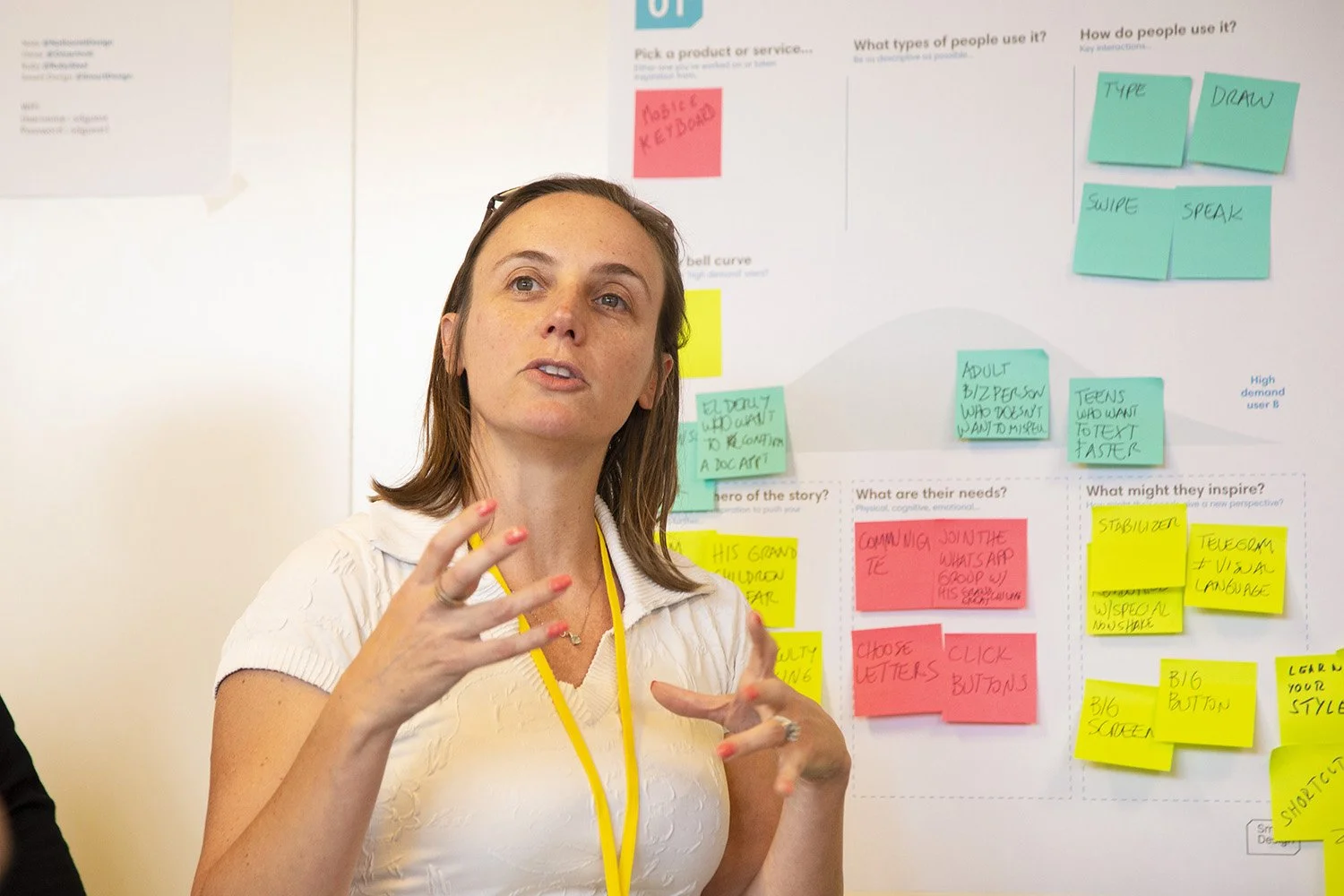
This week, David and Marina of FAME Architecture & Design are joined by Ekaterina Solomeina, Creative Director & Co-founder of Future London Academy. The three discussed Ekaterina’s background, the creative vs logical brain, working with Michael Wolff, talent vs learning, entrepreneurship as creatives, starting Future London Academy, FLA programs, participant selection process, designing a learning program that works, AI & adaptability of the program, and more. Enjoy!
ABOUT EKATERINA
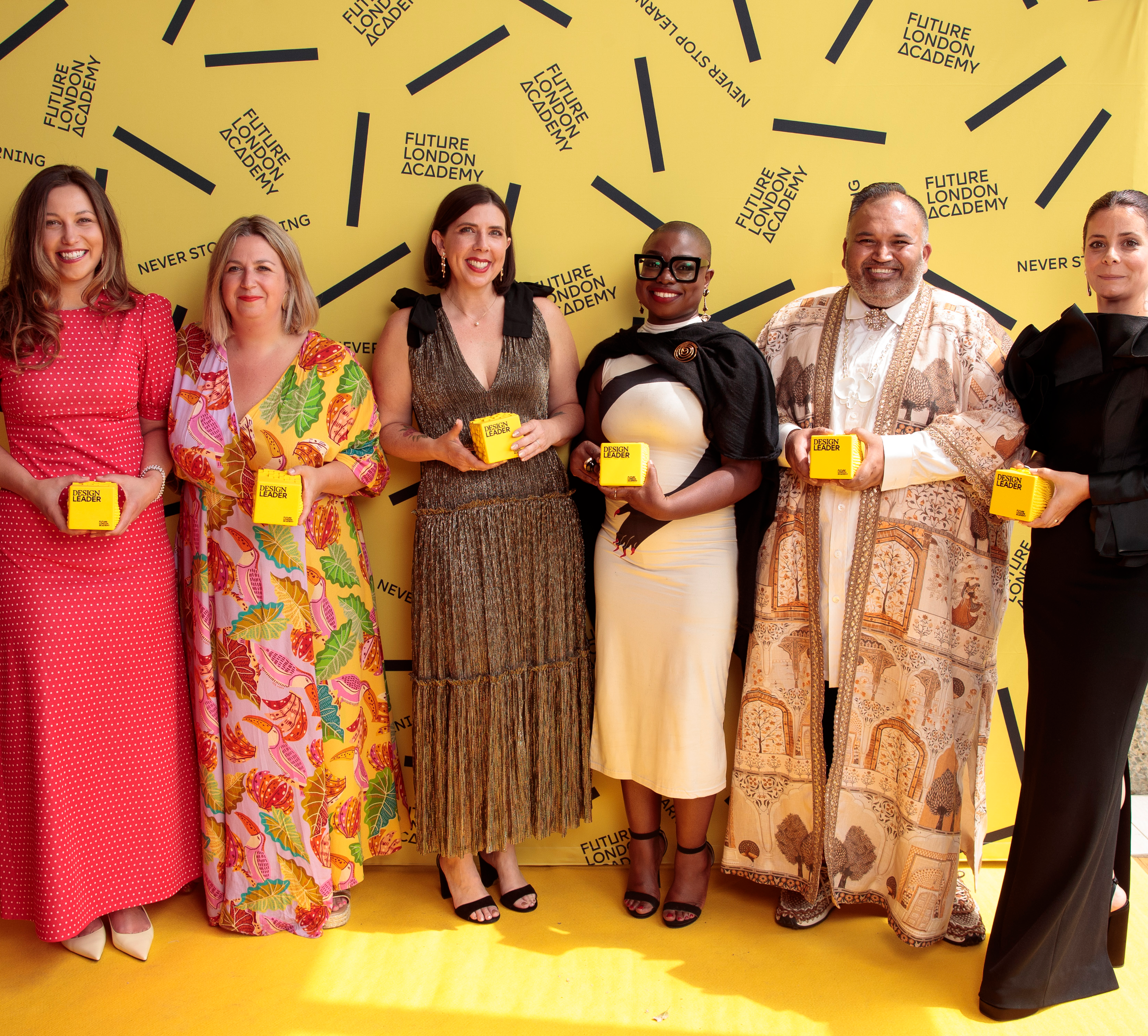
Ekaterina Solomeina is a creative director, TEDx speaker and co-founder of Future London Academy - an executive school for creatives recognised by Don Norman Design Award, It's Nice That, Dezeen and AIGA.
For 20 years, she worked as a creative director with icons like Michael Wolff and Donatella Versace and co-wrote a book about British Design.
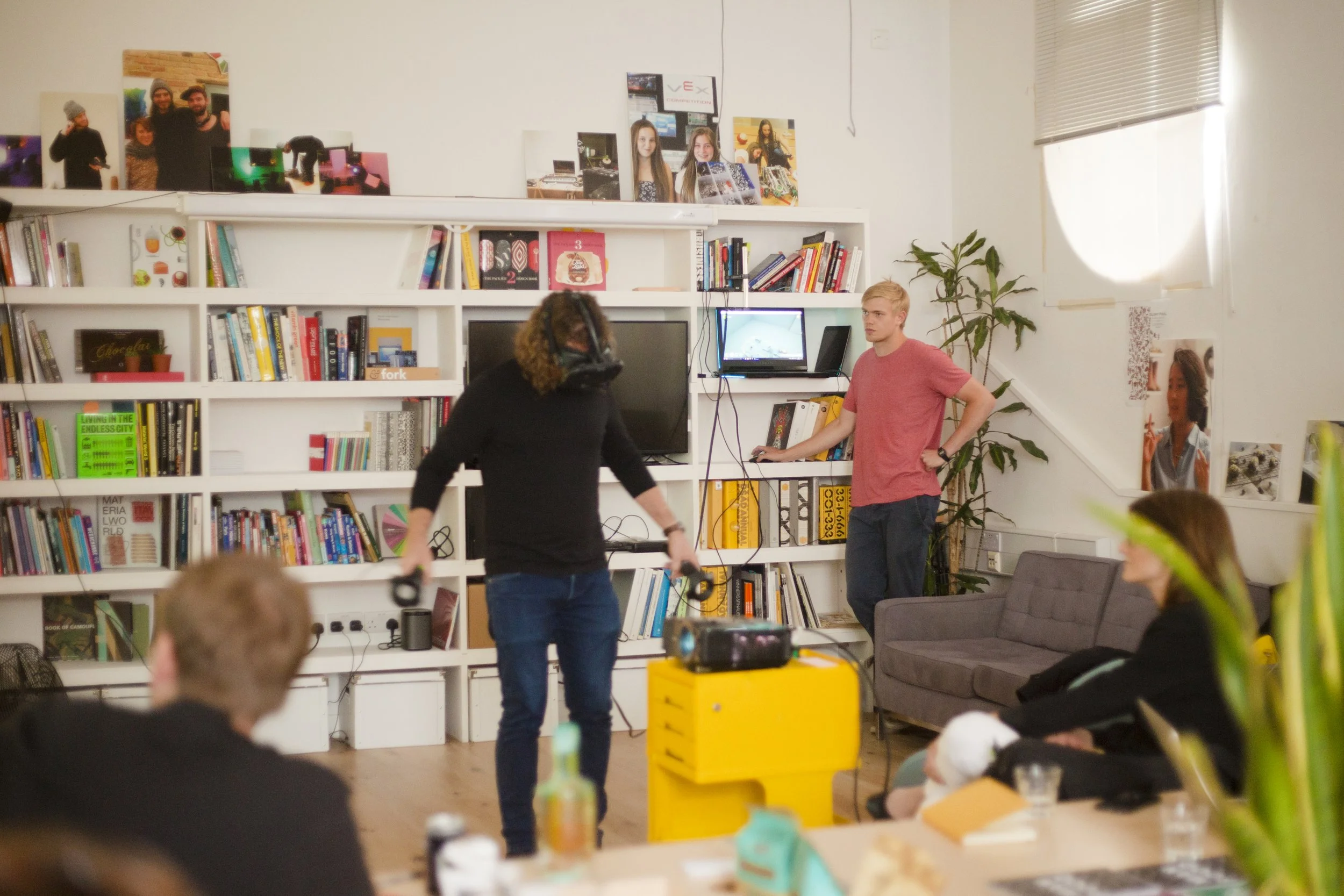
In 2013, she co-founded Future London Academy, revolutionising how creatives connect, learn and lead – uniting thousands worldwide and inspiring them to scale their impact. Future London Academy's alumni lead design at the most iconic companies, including Apple, Nike, Netflix and BMW.
She also hosts Creative Capes, named top design podcast by Wallpaper and Smashing Mag, where she interviews icons like Don Norman, John Maeda, Maria Giudice, Kate Stanners and Stefan Sagmeister.
TIMESTAMPS
(00:00) Ekaterina's background.
(04:09) Creative vs logical brain.
“In architecture, you need a combination of creative and analytical skills, and I believe that is the best combination for any job. You’ll have situations where you need to come up with new ideas and solve problems creatively and non-linearly, and you have to have this ability not to be afraid of something that is so fuzzy and unknown. On the other hand, you have to have these divergent thinking where you can analyze ideas, decide on things, and come up with solutions. The best people out there have some sort of combination of both. That translates into entrepreneurship as well. When you are a founder, you have to be very creative in many situations because there are problems that you've never solved before. But you also need to have some sort of structure and system.” (04:37)
(10:46) Working with Michael Wolff and Versace.
“Michael Wolff said that, “The number one muscle you need to train as a creative is curiosity.” When you sit in a restaurant with him, he will notice 5 million things that you didn't. That ceiling, that window has this color; that waiter’s earrings are so beautiful. He would constantly notice things everywhere. He always said that every time he leaves his house, he sees the world for the first time because he has never seen this version of the world before. I think it's so incredible to have this mindset of never being bored of what you see, even if you're taking the same route, even if you live in the same house. To constantly be surprised by something you haven't seen, because yesterday was a different day. He still has this mentality, even when he's over 90, he cannot be bored. I think that's how we should live our life, to be creative at any age.” (16:09)
(19:22) Storytelling skills talent vs learnt.
(25:19) Entrepreneurship as creatives.
“There is this extra set of skills that is needed when you reach a certain point in your career. Roughly 15 plus years in, you’ve nailed your craft and succeeded within your creative field, but then you feel like you’ve hit the ceiling. Knowing more design skills are not going to take you anywhere further. But you also don't know what you don't know. What do I even need to learn to get to the next level, whether it is to become a Chief Design Officer, or whether it is to scale my company? That was the question that I had in my mind and I didn't have an answer. So I went and spoke to the top CEOs and CFOs, understanding how they got to where they are, what did they need to learn? I also talked to the top academic institutions, understanding what MBAs are, and what is actually helpful and what is not important. It was very helpful to understand what a more holistic approach to design leadership, scale, and next level career looks like.” (27:21)
(37:46) Starting Future London Academy.
“We had a few people who did MBAs and then went to study our program. They basically said that everything you learn on a traditional MBA can be Googled. In any traditional MBA, you are given case studies from 20 years ago, you are given frameworks from books that you could read and download, it's all out there, there’s nothing new. But the thing that's missing is how does it apply to real life? How do you use these things to grow your business, or to run your team, or to hire people? That's why everyone who goes through our program says that it is actually incredible to see real CEOs teaching you how they look at metrics, or what their day to day life looks like, how they make decisions, and how they frame everything to make sure that they prepare for growth or different seasons in the company. That knowledge can't be found anywhere, because these people are not really interested in sharing or writing blogs and books about it.” (41:10)
(43:13) Future London Academy program.
(50:26) Future London Academy participant selection process.
(57:01) Designing a learning program that delivers results.
(01:04:06) Future London Academy cohort size.
(01:07:14) Relationships built in the academy.
(01:10:56) AI & adaptability of the program.
(01:12:51) Ekaterina's favorite building.
HAVE QUESTIONS OR SUGGESTIONS?
TEXT/CALL OUR HOTLINE
213-222-6950
#494 - SNOHETTA AND BIG’S LAYOFFS AND ARCHITECTURe’S WORKPLACE CHALLENGES
SUMMARY
This week, David and Marina have a casual chat about unions in architecture, internships, workplace culture, architects' salaries, the starchitect era, preparing students for the profession, Marina's acting audition, tv shows, and more. Enjoy!
HAVE QUESTIONS OR SUGGESTIONS?
TEXT/CALL OUR HOTLINE
213-222-6950
#493 - RODERICK BATES, Senior Director & Product Operations at Chaos
SUMMARY
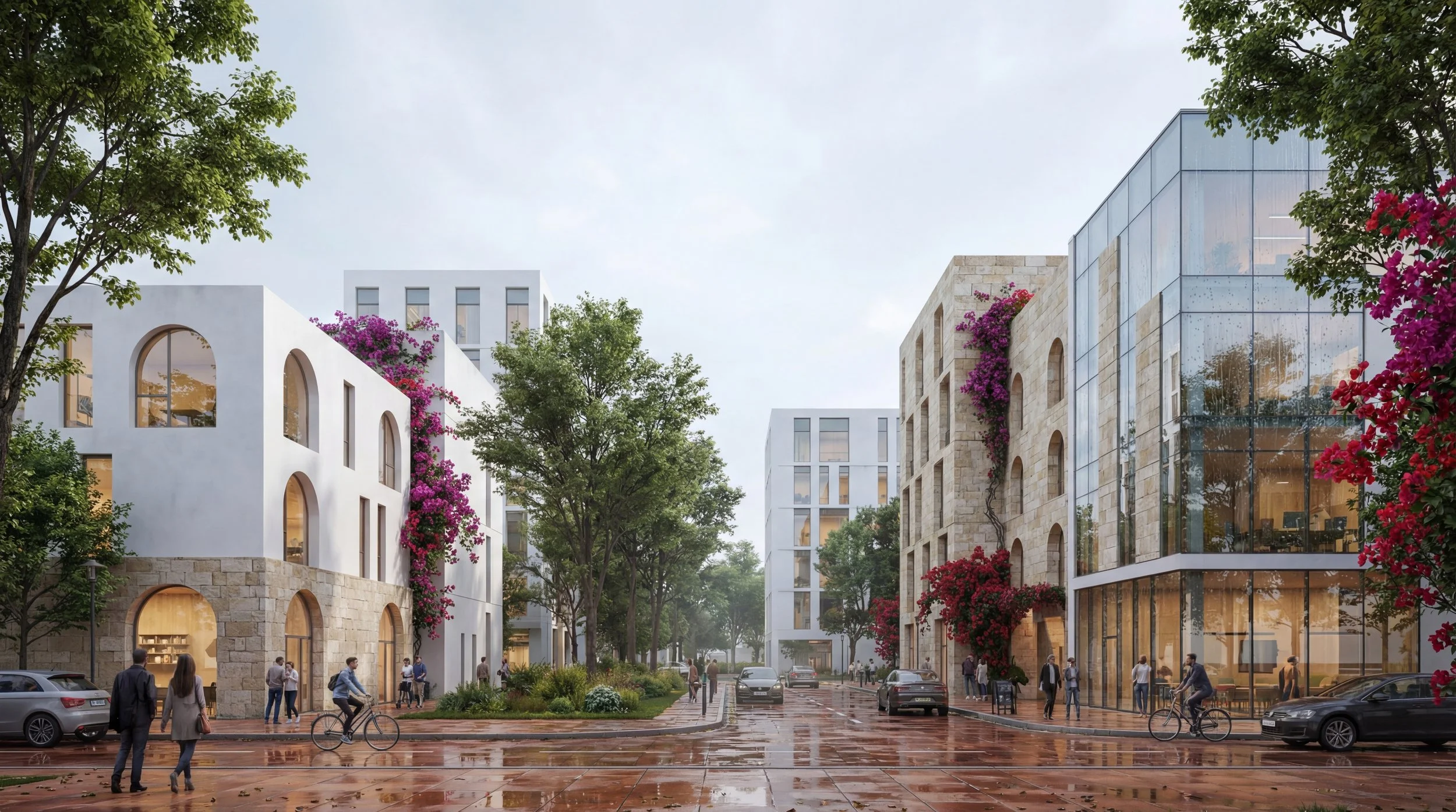
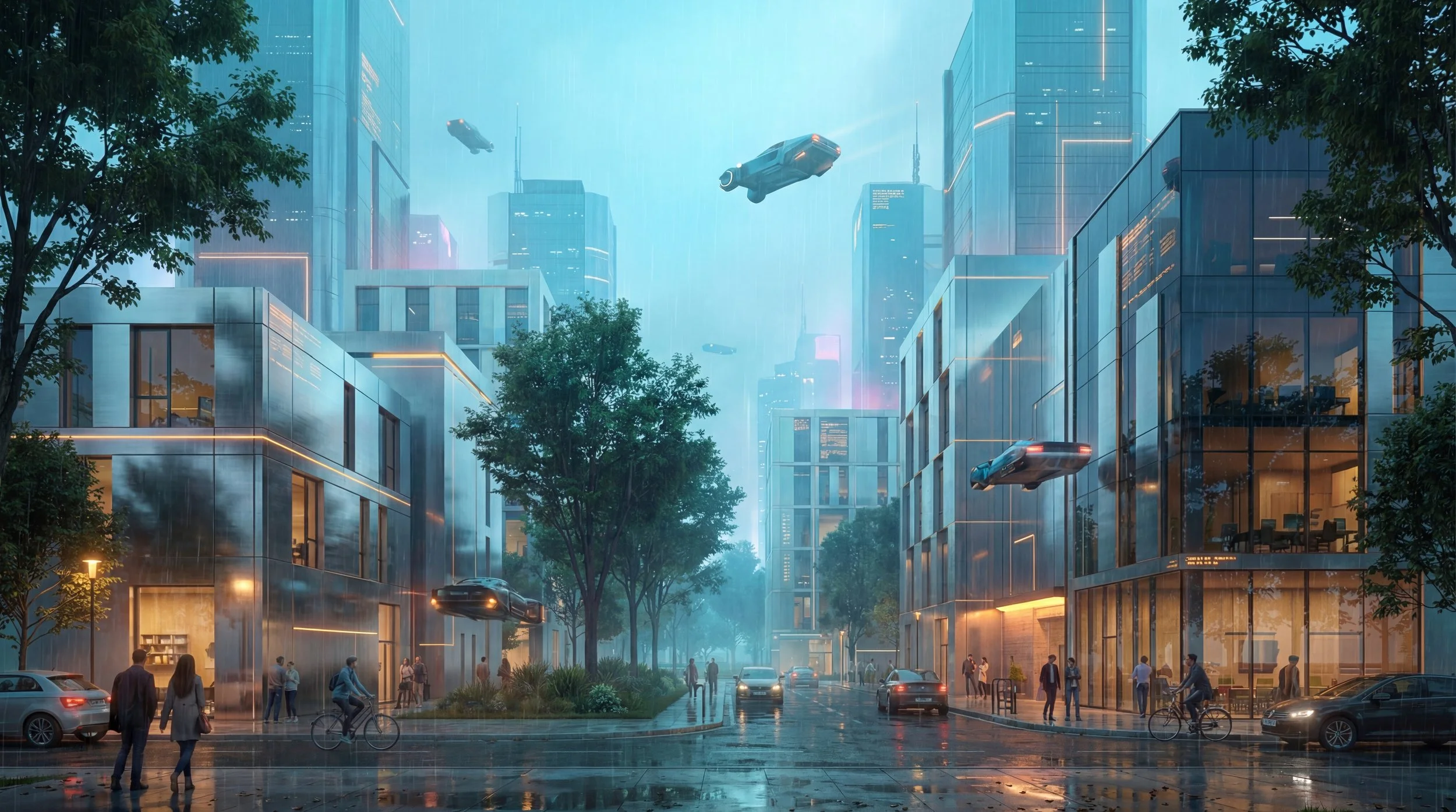
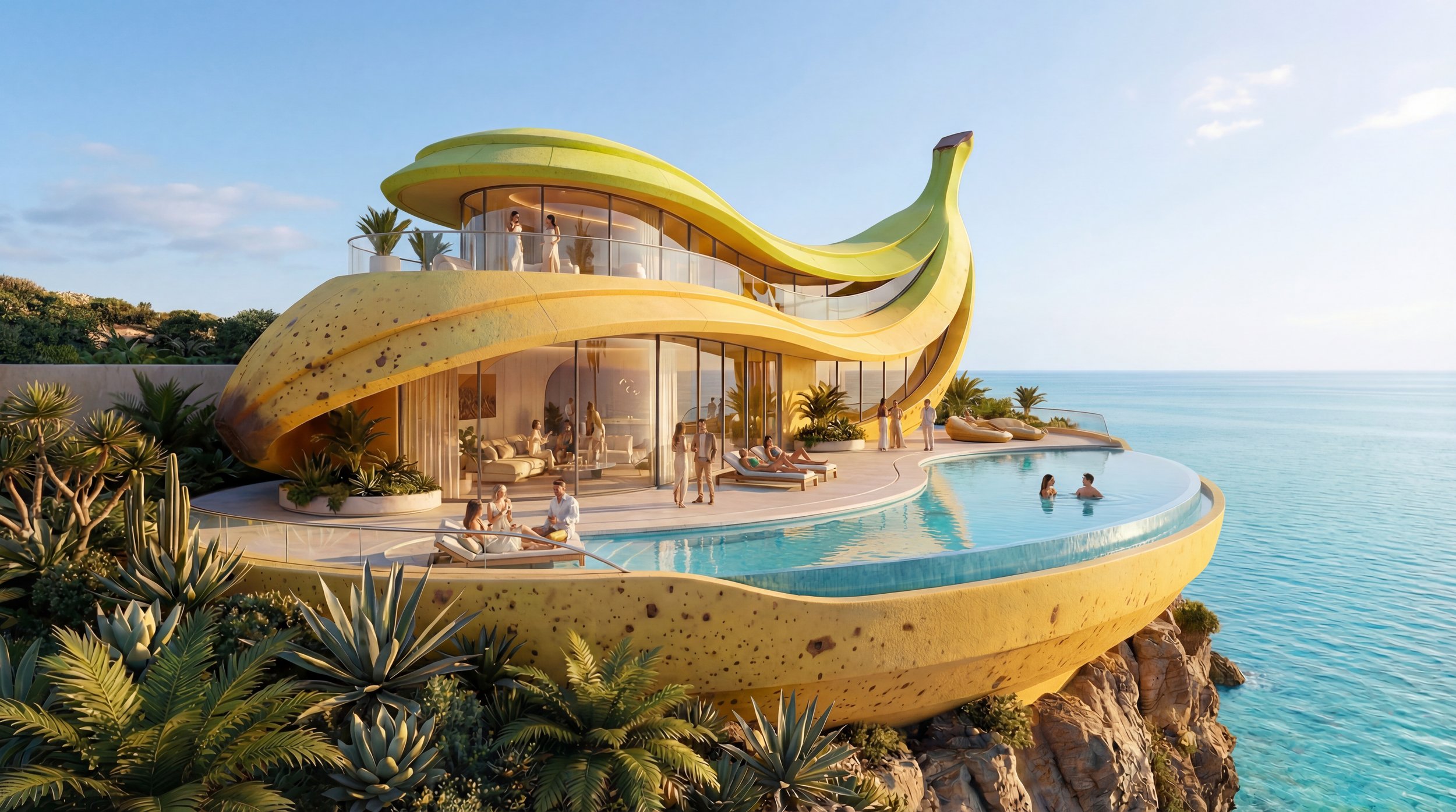
This week, David and Marina of FAME Architecture & Design are joined by Roderick Bates, Senior Director & Product Operations at Chaos. The three discussed AI and the future of Architecture, adapting & adopting AI tools, how Chaos is working with AI (material generating, render enhancing, building performance analyzing, and as a collaboration tool), construction documentation, client experience, AI 3D vs 2D capabilities, pre and post AI render workflow, the fragility of the architecture profession & how AI can help, and more. Enjoy!
ABOUT RODERICK
Roderick Bates has made a career out of seeking and developing solutions to complex design challenges. As the Senior Director of Product Operations at Chaos, he is responsible for tracking the industry and market trends shaping the way Chaos customers work, both today and in the future. He collaborates with technology partners, customers, and Chaos product and R&D leaders to assess new product opportunities that will shape the future design.
Previously, as a Principal at KieranTimberlake, he led the efforts to develop and commercialize software and hardware tools used by the greater AEC community to improve the environmental and operational performance of buildings.


TIMESTAMPS
(00:00) AI in Architecture.
(06:32) Adapting and adopting AI.
“Organizations just have to dive in and face their fear of emerging technology. I think there's a lot of concern that these things can be overly intimidating. Our CEO actually vibe coded her own website and presented it the other week. She's not going to win a design award, but it does show that if you are willing, someone who has zero knowledge of coding was able to actually create and deploy a website using AI tools. That's the kind of capability that's really remarkable in the sense of what it means for practices. You can actually take these AI tools and do very sophisticated things, as long as you have an idea of what you want to do. But for a company, it's also a lesson that you just have to do it. You have to move fast and not be afraid to jump in with these tools to try and experiment.” (09:27)
(14:07) How Chaos is working with AI.
“I really don't want AI features that are tacked on. Everything that we're doing with our AI features has to be part of a workflow. We have an ecosystem of tools, and within the context of that ecosystem, AI needs to function across all of our various software and accelerate workflows between them. We have 30 years of history within the industry. That means that we understand visualization probably better than anyone. If we're releasing an AI feature, it's going to reflect that legacy of knowledge. We're making updates every month, and we're constantly finding ways to improve them so that these AI tools really do serve the needs of the true professional. There are a lot of AI tools, and a lot of them are okay, but there are not many that really make people give up their traditional workflow because it's so much better.” (14:59)
(17:21) Chaos AI material generator.
(22:23) AI render enhancer.
(26:53) Building performance analysis.
(33:33) Collaboration tool.
(36:53) Client experience.
“We're hearing about clients coming to the architect with something that they've generated via AI, for better or worse. They're coming with a house that they rendered according to what they want. They are also starting to take a render or visuals that’s shared by the architect, and they're adjusting it via AI to reflect what they imagine in their mind, and then sharing that as part of their feedback. So it's a very different review process. Part of this is that we're also looking at a shift in who the client is. That client is getting younger, and they grew up in a different digital environment and expectation of how communication should work. Perhaps nowadays people expect a lot more rapid and frequent communication.” (38:19)
(42:16) How AI will change Architecture.
“If you look at where AI is going, you are starting to see more opportunities for automation in architecture processes. You know that an AI-generated building is coming. Autodesk invested $200 million in World Labs, which basically creates a Gaussian splat from a prompt, and it looks like a world that you can navigate. AI capabilities are starting to erode other aspects in architecture, like visualization. Then what is the architect doing? Architects are providing a fundamental service that is going to give a superior experience to the client. I think you need to be very sympathetic about what that client wants if you're going to be providing a superior service versus your bottom-feeder, full AI firm, which you know is coming. Then you're going to have really high-end stuff, and probably a lot of people having to compete in the middle for clients. I think that competing on service is going to be huge, and part of that service is you let the client explore, have fun, and let it be a little bit of a design negotiation with them.” (42:21)
(47:16) AI site enhancer.
(50:48) AI 3D vs 2D capabilities.
(54:05) AI-generated construction documentation.
(55:57) Pre and post AI render workflow.
“The ability for a lot of these AI tools to function as a very, very patient teacher is nice. I think it can present a whole new way for people to learn how to use various tools, and how to visualize by essentially interacting with and asking AI how to achieve your vision. You're not finding a person who can teach you; you can just ask AI, and you can get your answers. It's a very different way of learning and understanding how to use the software.” (01:01:28)
(01:02:18) How different-sized firms are adopting AI.
(01:06:26) Experiment with AI.
“Any major shift in the industry induces strong reactions. When BIM came about, it was a big deal. When parametric architecture came about, people thought it was going to ruin architecture, and we're going to do the same types of buildings. And look at where we are years later. I think any time there is something new that’s disrupting the flow of things, there is a reaction to it, which is usually rejection and fear. But I think once we get to understand it, play with it, and try it, we are each going to find our own way of using it. That's what's going to create the new wave of architecture, and I think that's going to be super interesting.” (01:06:27)
(01:09:31) AI expediting production of good architecture.
(01:12:34) The fragility of the architecture profession & how AI can help.
HAVE QUESTIONS OR SUGGESTIONS?
TEXT/CALL OUR HOTLINE
213-222-6950
#492 - COPENHAGEN ARCHITECTURE: OMA, Jørn Utzon, BIG, and more
SUMMARY
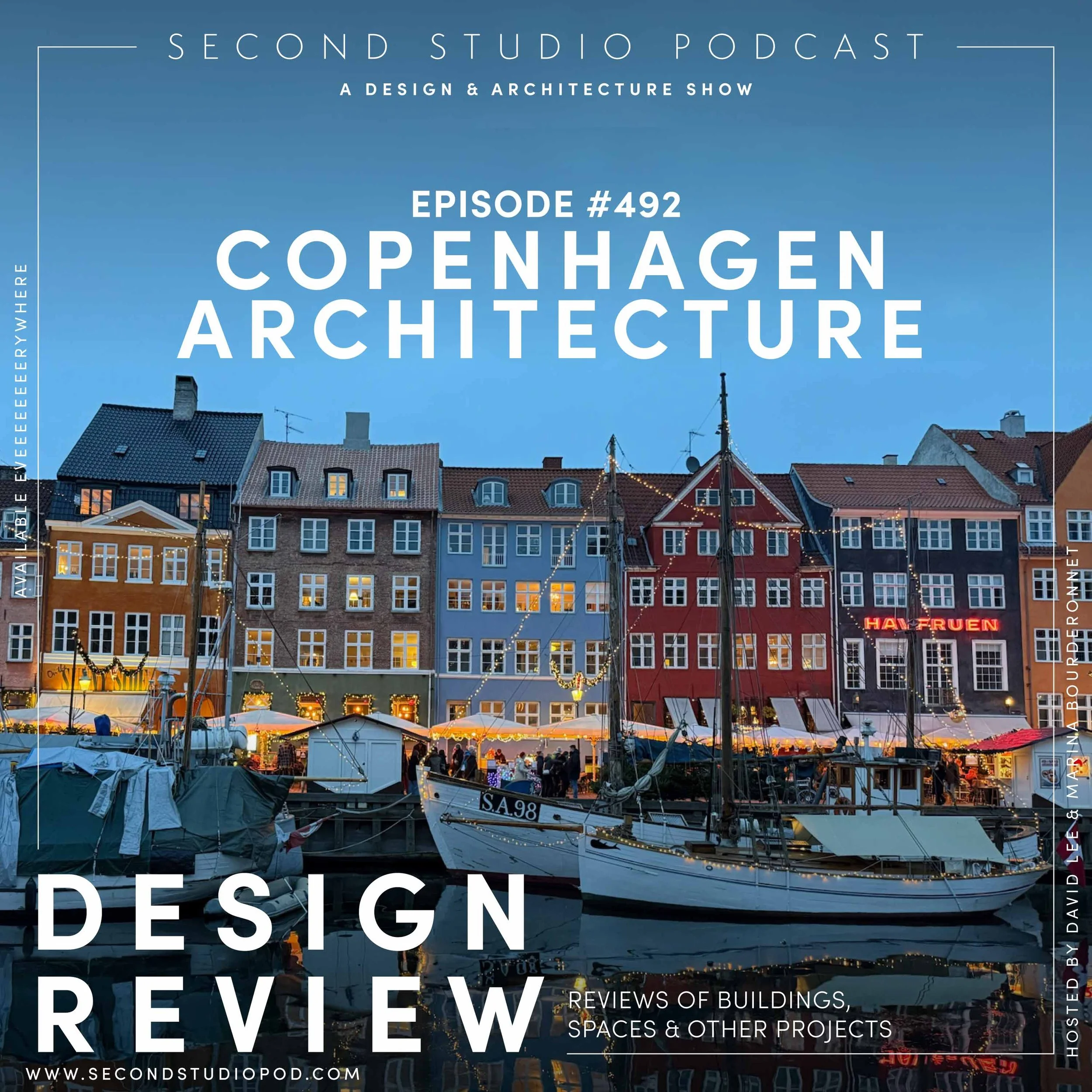
This week, David and Marina of FAME Architecture & Design review the architecture of Copenhagen. They discussed local apartment developments, modern and old neighborhoods, infrastructure & civic design, facade design, building details, Blox building by OMA, the Bagsværd Church by Jørn Utzon, BIG’s 8 House, The Mountain, and VM Houses, the Black Diamond building, the Grundtvig Church, and more. Enjoy!
TIMESTAMPS
(01:41) Copenhagen apartment design.
“The area where most architects fail is the outdoor space. It drives me nuts because arguably the most important part about creating a community is that negative space, the public space to share experience. I think it points to when you have 3 or 4 different developers on a giant lot with each doing their own building, who is the person and the trade that ties it all together? Everyone wants to buy a piece of land and build their thing, but no one wants to spend the time or money to hire a coordinator to make sure that the whole neighborhood actually works together.” (07:00)
(07:49) Modern vs old neighbourhood design.
“The reason why a lot of people dislike modern architecture is, I think, partly valid, and it's the lack of decoration. More specifically, it's a lack of depth, texture, and soul to the building. When you have a building that's mostly flat with just punched openings, it's minimal, and it's hard to feel comfortable at all. Most historical buildings in historical districts have this layer of decoration or ornamentation, and it just helps everyone feel like they're more connected to the environment.” (12:15)
“A lot of contemporary work focuses too much on the form of things and how it looks as a decorative sculpture rather than thinking about the experience that the structure is creating for people. I don't mean experience as in experiencing the structural gymnastics of the building. I mean the experience that the architecture is framing or outlining to take place. It goes back to the idea of architecture as a stage or a platform of sorts. I feel like a lot of contemporary work needs to think more about that.” (21:54)
(23:09) Subway station wayfinding.
(25:38) Infrastructure & civic design.
“This is the type of thing where someone's at a lecture hall [giving a super cool presentation of the project’s concept & diagram], but when you go there, there's nothing amazing about the aesthetics, which is the majority of how we experience things. There is this weird thing in contemporary architecture where we all get super jazzed up about the concept of something, and diagrams with lines that don't exist in real life. Meanwhile, the actual thing in real life is almost nothing because it doesn't present anything of aesthetic or experiential, spatial value.” (28:44)
(36:18) Random patterns on buildings.
(40:53) Modern & historic buildings juxtaposition.
(46:15) Markets & Amusement Park.
“It's almost like when we design cities, we don't dream enough. All of the stuff you would want in a city was in this amusement park, but in some parts of the city, you couldn't even get to that level. I think it goes back to the conversation about zoning regulations and codes, etc. We collectively just follow the rules too much and forget about the fun.” (48:33)
(50:13) Execution of building details.
(55:31) Blox building OMA.
(01:01:10) Churches in Copenhagen.
“An aspect of what makes some architecture so amazing is the abandonment of being so conservative and stingy with space. How much of the built environment has to be efficient with space? I know that sounds crazy, like why would you not be efficient with space? That's because you should use space for quality. You shouldn't use space just for dollar signs.” (01:04:30)
(01:13:00) BIG Projects.
(01:24:04) Black Diamond Building.
(01:26:54) Grundtvig Church.
HAVE QUESTIONS OR SUGGESTIONS?
TEXT/CALL OUR HOTLINE
213-222-6950

#491 - CHARLES DURRETT, Principal Architect of The Cohousing Company
SUMMARY
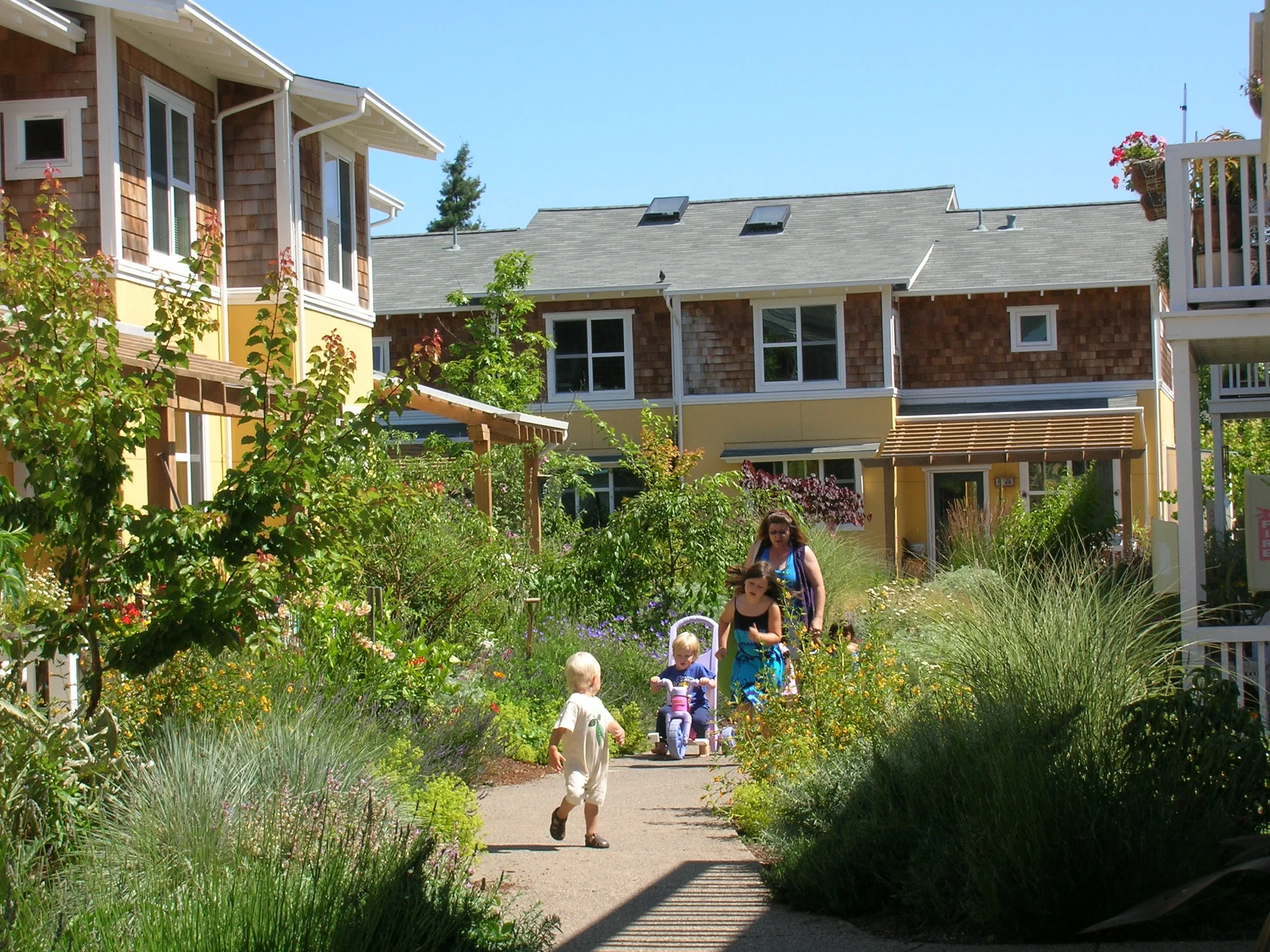
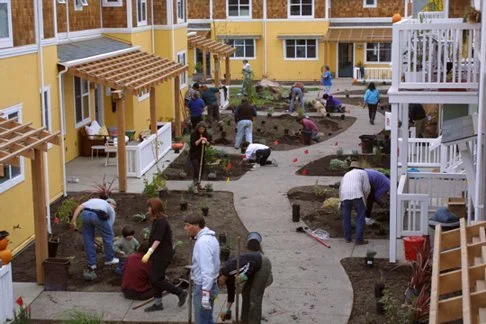
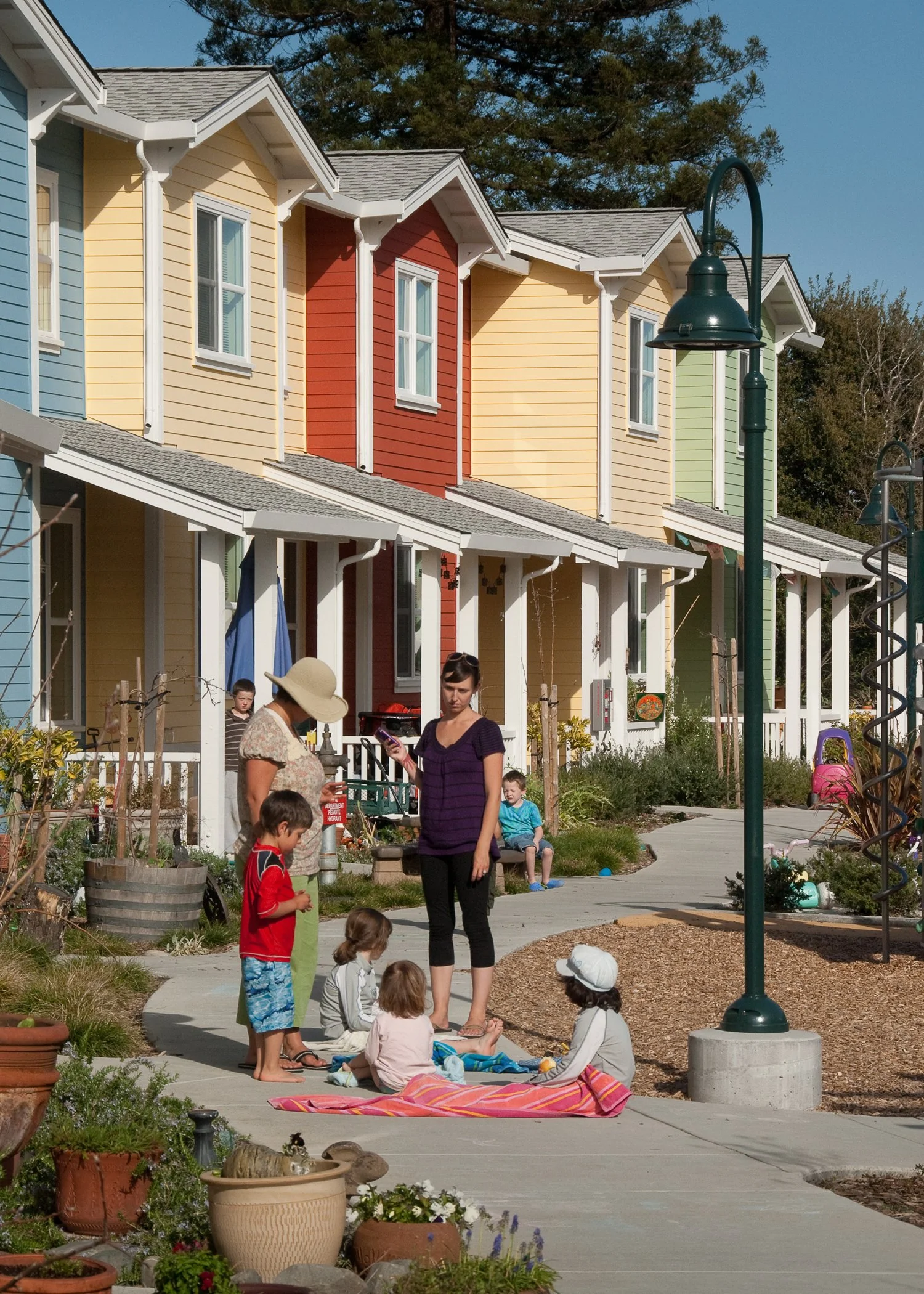
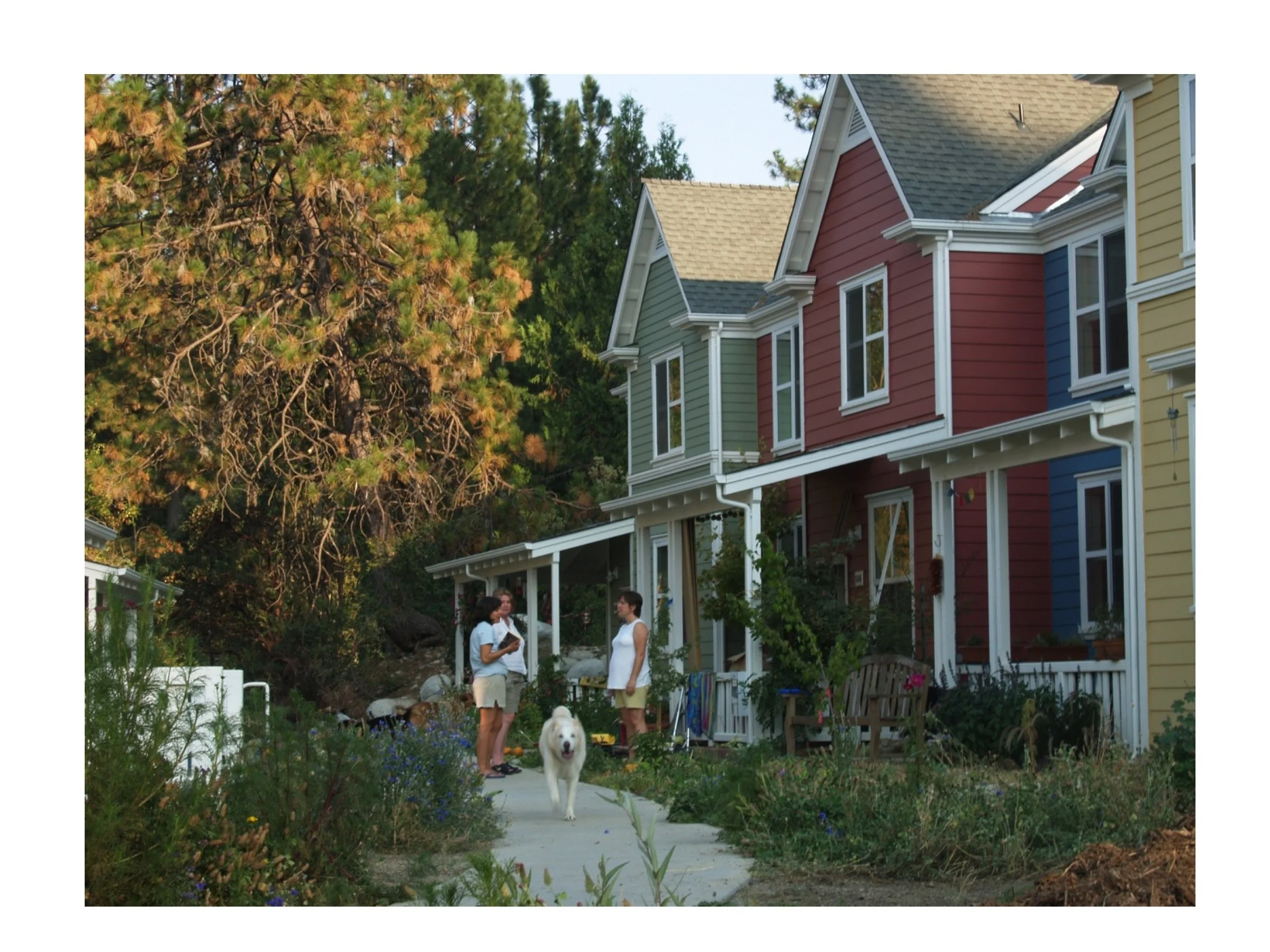
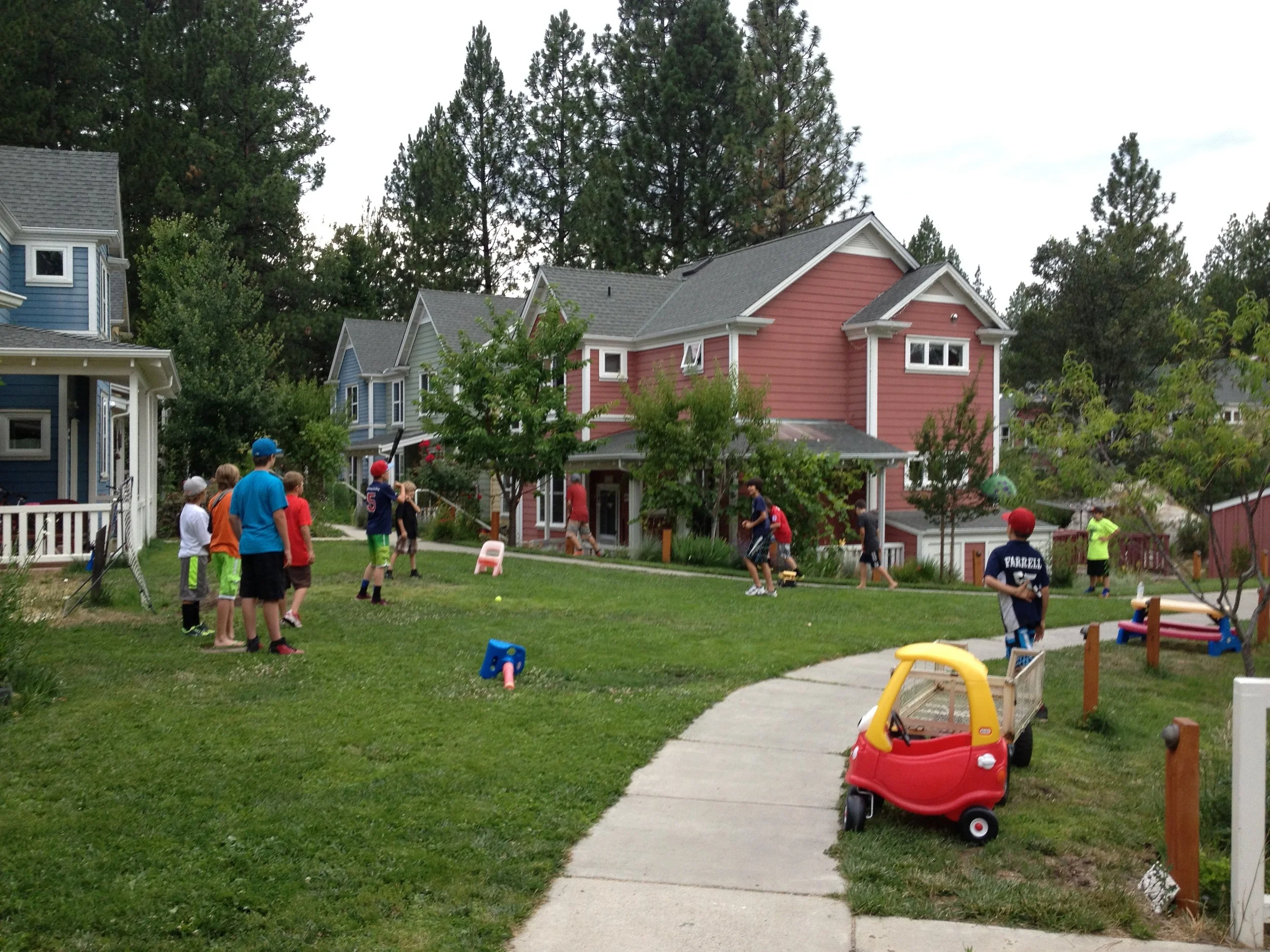
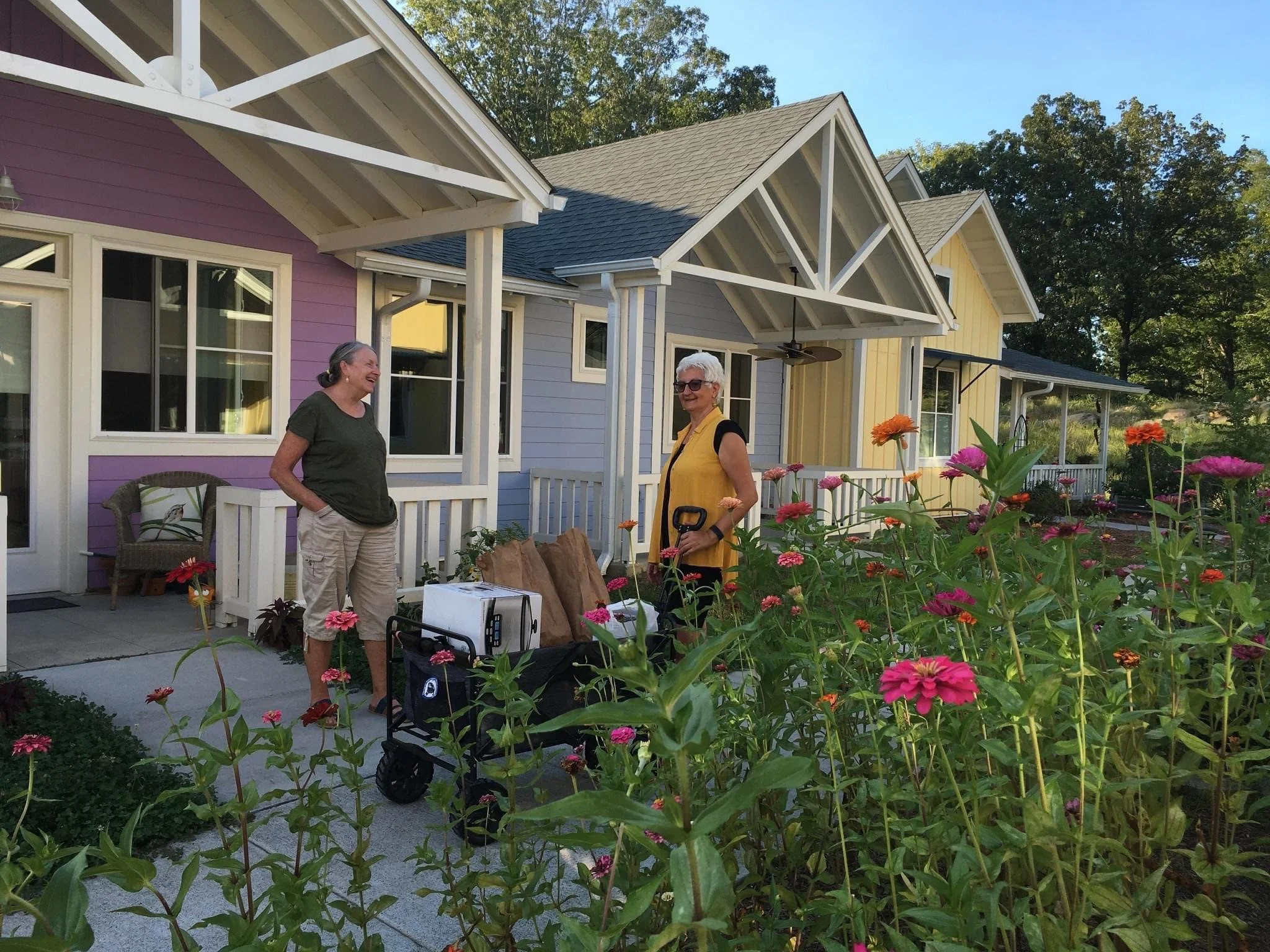
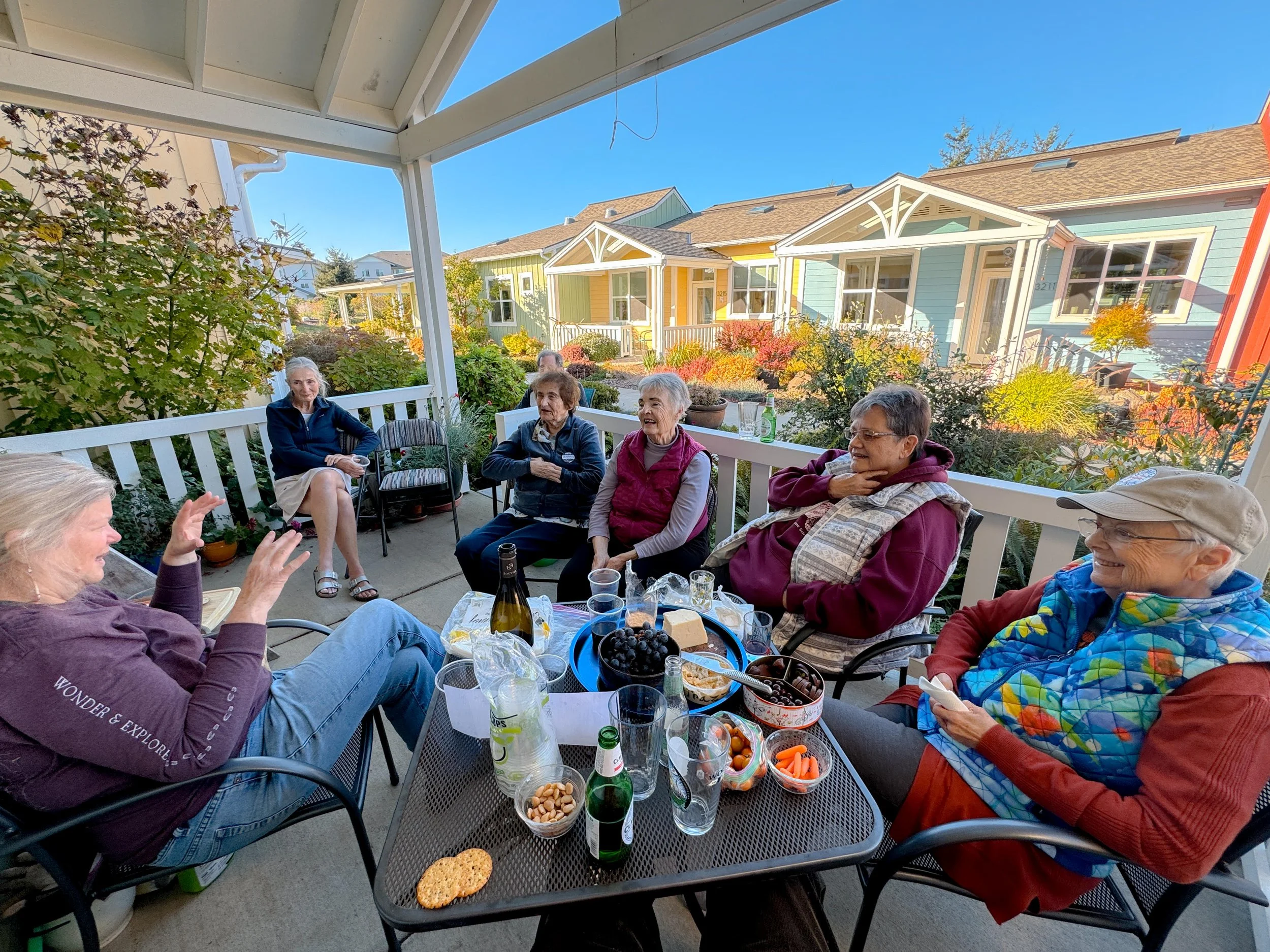
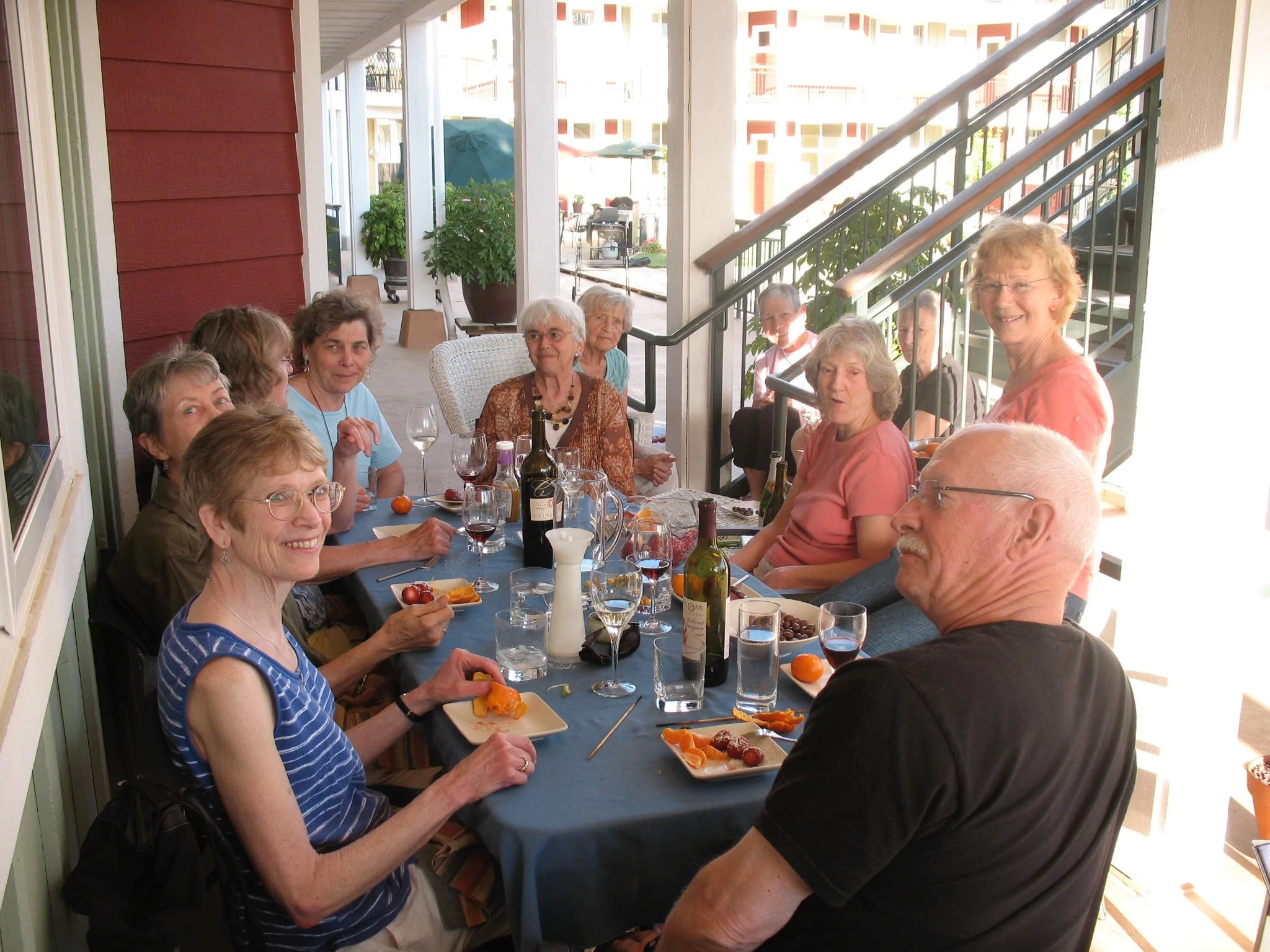
This week, David and Marina of FAME Architecture & Design are joined by Charles Durrett, Principal Architect of The Cohousing Company. The three discussed Charles’ education background & research project, influencing culture change through co-housing, what is co-housing, how does a co-housing project start, leading a co-housing project as an architect, what draws people to co-housing, building community, cost of construction, how to increase no. of co-housing projects, maximum and minimum of co-housing residents, and more. Enjoy!
ABOUT CHARLES
With a career dedicated to designing sustainable, community-oriented spaces, Durrett is widely recognized for his contributions to cohousing and collaborative living environments. His expertise merges architectural excellence with socially responsible design, making him a leader in shaping inclusive and sustainable communities.
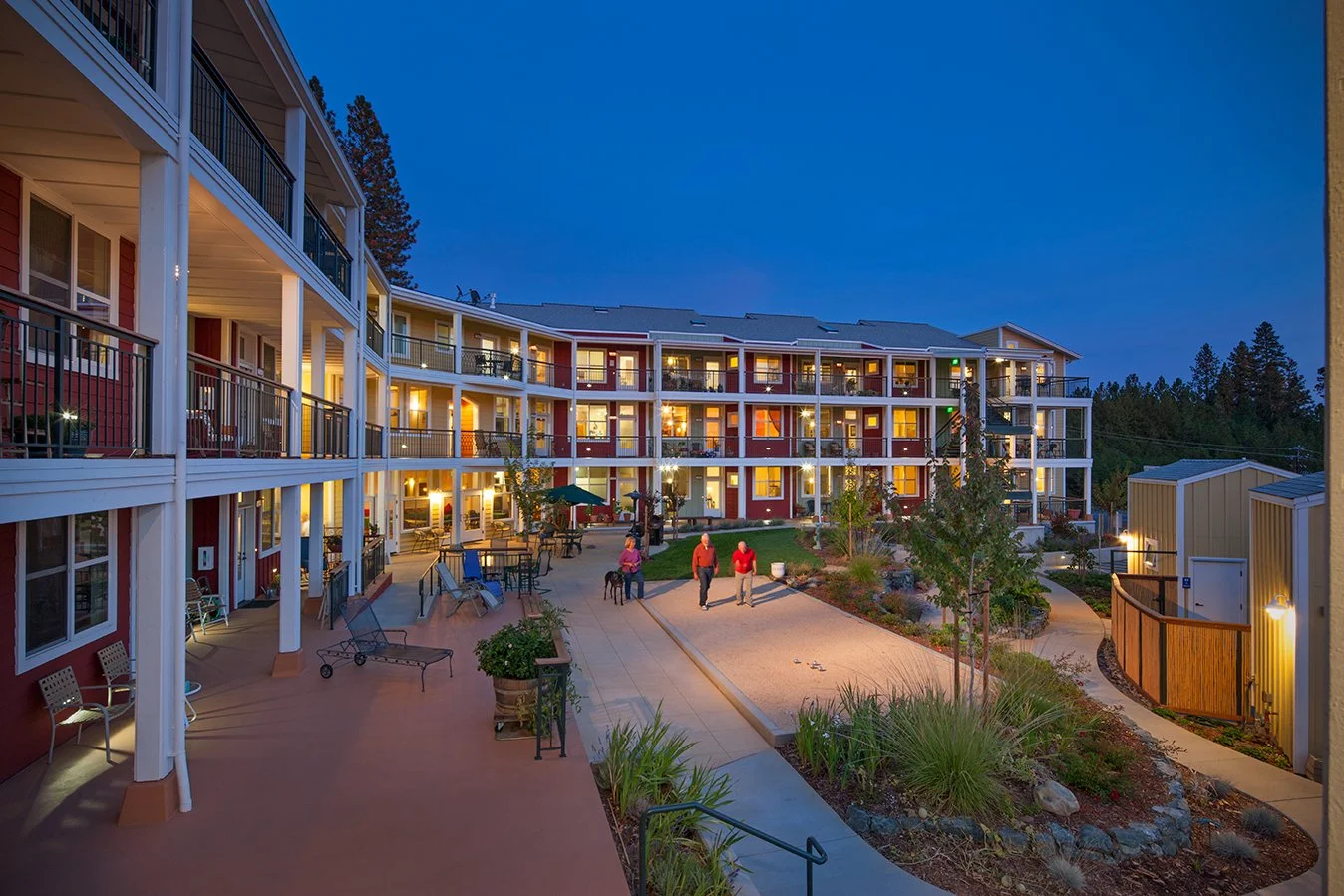
In 1985, Charles Durrett coined the term “cohousing” based on the Danish concept of bofællesskaber, which translates to "living communities." After dedicating years of research in Denmark, Charles Durrett, with Kathryn McCamant, introduced the concept of cohousing to the United States with the seminal book Cohousing: A Contemporary Approach to Housing Ourselves. Now with 40 years of experience, Durrett is dedicated to supporting the growth of new and diverse community-orientated housing projects. As an architect, he realized long ago that developing healthy environments requires starting with the culture and seeking a much wider array of issues than just the sticks and bricks.
Durrett and his team at The Cohousing Company have designed over 55 cohousing communities around the world, including Muir Commons in Davis, California, the first cohousing community in North America. His work has been featured in Time Magazine, The New York Times, The Los Angeles Times, The San Francisco Chronicle, The Guardian, Architecture, The Wall Street Journal, The Economist, and many other publications.
Charles Durrett has received numerous awards, some of which include the World Habitat Award presented by the United Nations, the Silver Achievement Award for Active Adult Community by the National Association of Home Builders (NAHB) 50+ Housing Council, the Silver Energy Value Housing Award by NAHB, the Mixed Use/Mixed Income Development Award presented jointly by the American Institute of Architects and the United States Department of Housing and Urban Development and a recipient of the Global Over 50’s Housing/Healthcare award. He was also recently declared as a “visionary of the Sierras” by the Sierra Business Council, and the International Property Awards.
In 2023 Charles had the honor of personally meeting with the President of Iceland, Guꝺni Thorlacius Jóhannesson, to present his book One Life, Live It! He continues to devote his efforts to public presentations including two to the United States Congress and the American Institute of Architects. Along with scores of presentations to universities such as Princeton; Stanford; UC Berkeley; University of Oregon; University of Wisconsin-Milwaukee; University of Minnesota; Oklahoma State University; and his alma mater, California Polytechnic University. The Royal Danish University, School of Architecture, The University of Lund in Sweden; The Art and Architecture Institute of Iceland in Reykjavik; Simon Fraiser in Canada, and a dozen universities in Germany, and many more.
Continuing his commitment to education, Charles Durrett shares his expertise in architecture and affordable housing developments through teaching and presenting as a keynote speaker. His academic focus on community architecture and participatory design encompassing the development of affordable housing, mixed-use projects, public buildings, institutional and educational infrastructures, cohousing communities for neurotypical individuals, neurodiverse individuals, seniors, families, and facilities designed for children. All while addressing socio-economic and environmental challenges.
TIMESTAMPS
(00:00) Charles' background.
(06:23) Charles' education & research project.
(11:57) Influence culture change with co-housing.
“I believe everybody has a little bit of Architect in them, and everybody comes to the table with values and experiences. So, my job is to get that to resonate with each other. They learn so much about themselves during a project, but what they mostly learn is how they manifest their beholding goals around living in a more sustainable place. We had finished a project where 23 out of 26 people were first-time homebuyers. We're constantly in the position of beer budget, champagne taste, and the champagne usually runs around sustainability. They had it in them; all it took was a little conversation about, “Has anybody been to a clear-cut forest lately and seen what it does to the habitat, watershed, and air quality?” Then all of a sudden the conversation was in short order. I offer them all sustainably grown lumber, and it costs about $2,500 a house, but they consent to that and we saved money on so many other things.” (14:20)
(16:50) What is Co-Housing?
“By definition, co-housing is about knowing your neighbor, caring about your neighbor, and supporting your neighbor. We have 3 acres for 34 houses, and we park all the cars on one side. Everybody has to walk some distance to get to their house, and the older people live closer to the common house. But we had an elderly woman who moved further away from the car park, and I asked her why she had moved. She said, “I find that my life is better if I know my neighbors, and I know my neighbors because I walk home.” There are also extensive common facilities to supplement the private houses, like we have two guestrooms, and we have dinners 4 or 5 times a week. Moreover, it is entirely self-managed. There's no management and every adult is on the board. Every decision is made by consensus. We meet two hours a month to accomplish that.” (18:44)
(23:33) How does a co-housing project start?
(30:45) Leading a co-housing project as an architect.
(36:06) What draws people to co-housing?
(47:17) Building community.
(51:00) Building co-housing through community cooperation.
“The only way you're going to be able to afford housing is if you get organized. And if you get organized, you'll get things done so much easier, so much better than if you go it alone. We have so much pull yourself up by the bootstraps in this culture that we make it harder, a lot harder than we have to be. When we started that project, the average house in Vancouver was $778,000. We had to make houses for 2 or $300,000. We could only accomplish that by cooperating and being super organized. What they did was buy two single-family houses and had it rezoned. Rezoning is challenging. Co-houses do it a lot, but it's very, very complex. This was a very old traditional single-family house neighborhood. We had 0.61 acres, and we had to make 31 houses on it. And, we did, it's affordable, lively, and beautiful. But they only did that by lobbying politicians, etc., because they knew how to organize. Most people don't even know how to begin to get organized.” (52:10)
(57:32) How co-housing members are replaced.
(01:00:12) Cost of construction.
(01:05:23) Distance between work and home.
(01:10:35) How to increase the number of co-housing projects.
(01:16:47) Maximum & minimum of co-housing residents.
“Don't build a co-housing community with more than 50 adults. You don't want to try to get a consensus with over 50 adults. But at the same time, try to get as close to 50 adults as you can, because that way every individual living there has 4 or 5 really great friends over the years. In other words, it all comes down to probability. The second reason is that, if you don't cap it at 50, the responsibilities get delegated a little bit too much and you start to feel like you have a mini city government. Of course, we have a lot of allocated responsibilities here, but the brainstorming and decisions happen a lot at the common meetings. The minimum no. of households should be 15. I’ve been to about 385 co-housing and any time there were less than 15 households, they would always say, I wish it was a little larger. It has to do with the probability of building close relationships. At 50 people, you're going to get that kind of probability working for you.” (01:17:35)
(01:19:37) Favorite building.
HAVE QUESTIONS OR SUGGESTIONS?
TEXT/CALL OUR HOTLINE
213-222-6950

#490 - AI IN HOLLYWOOD AND TV SHOWS
SUMMARY
This week, David and Marina have a casual chat about AI in hollywood and TV shows. Enjoy!

HAVE QUESTIONS OR SUGGESTIONS?
TEXT/CALL OUR HOTLINE
213-222-6950
#489 - ANTHONY LANEY, Architect & Founding Partner of Laney LA
SUMMARY
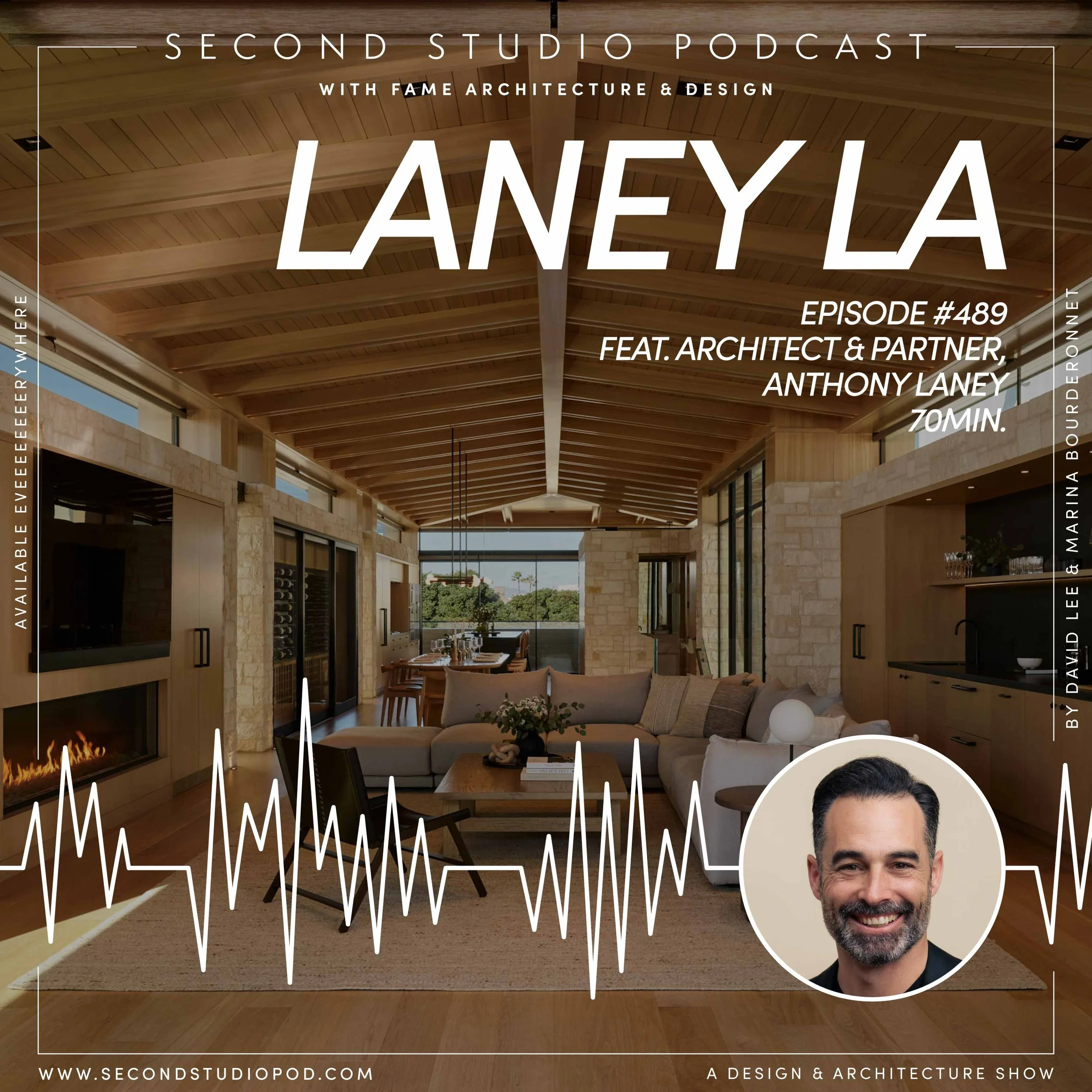
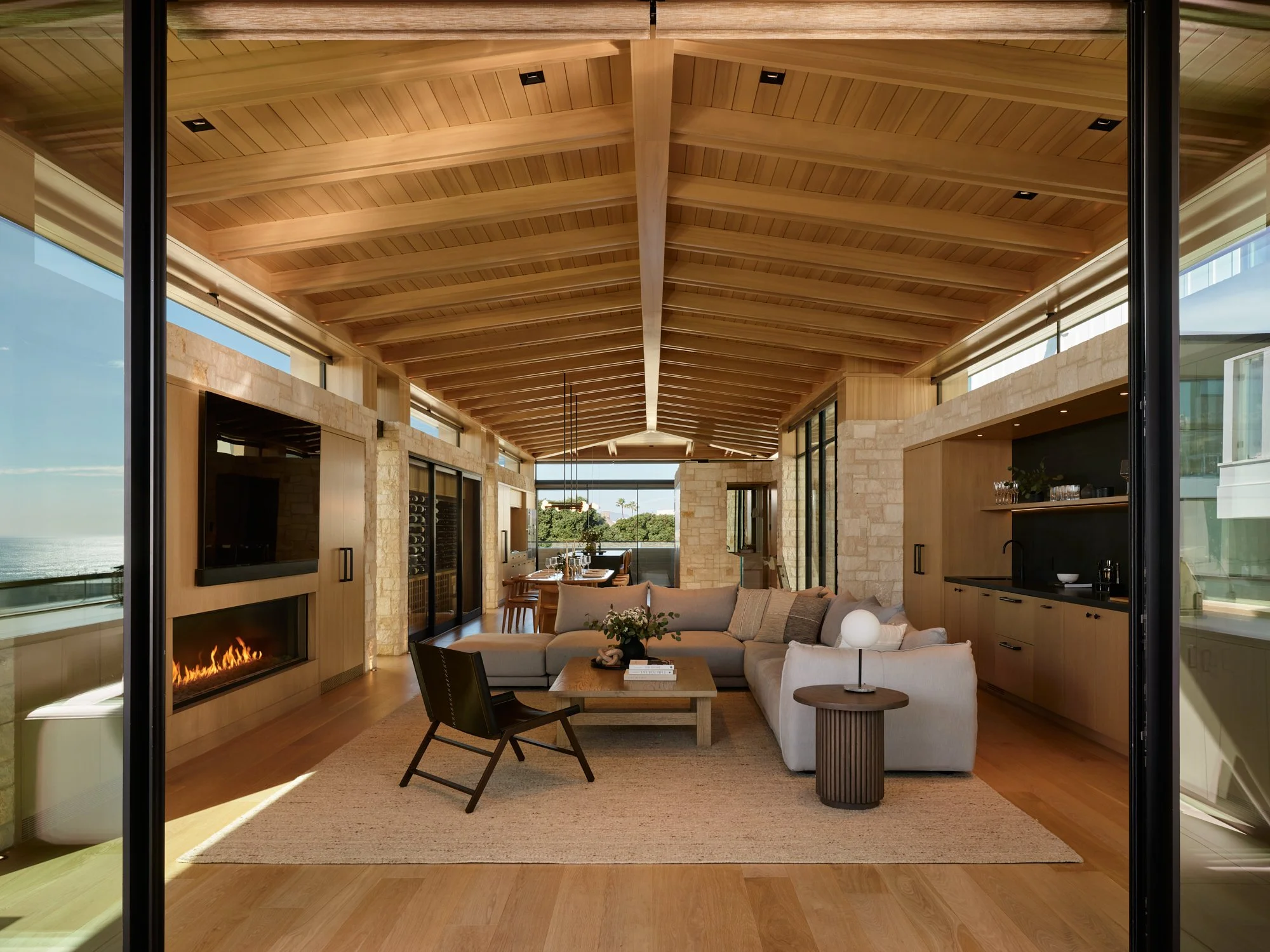
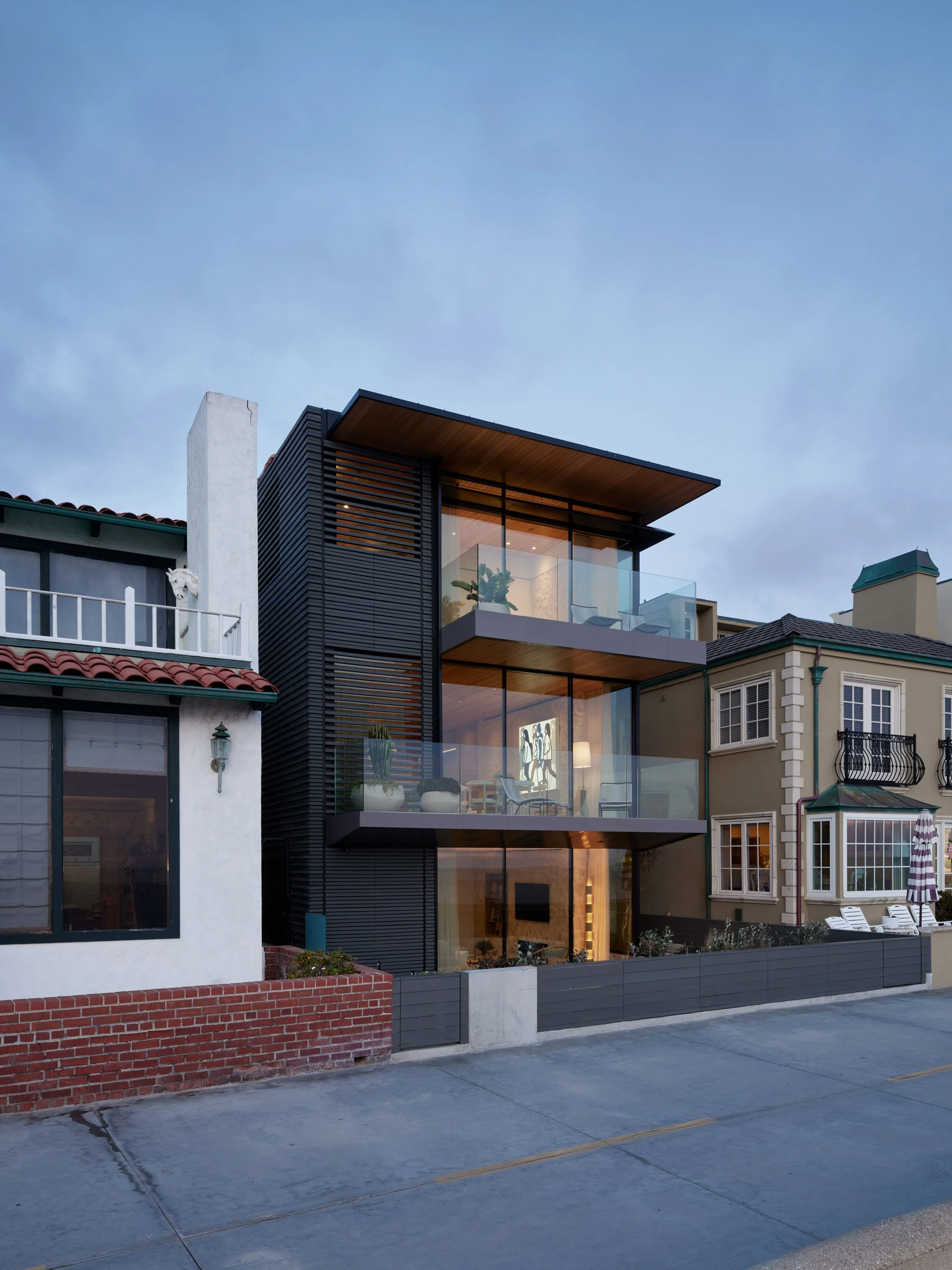
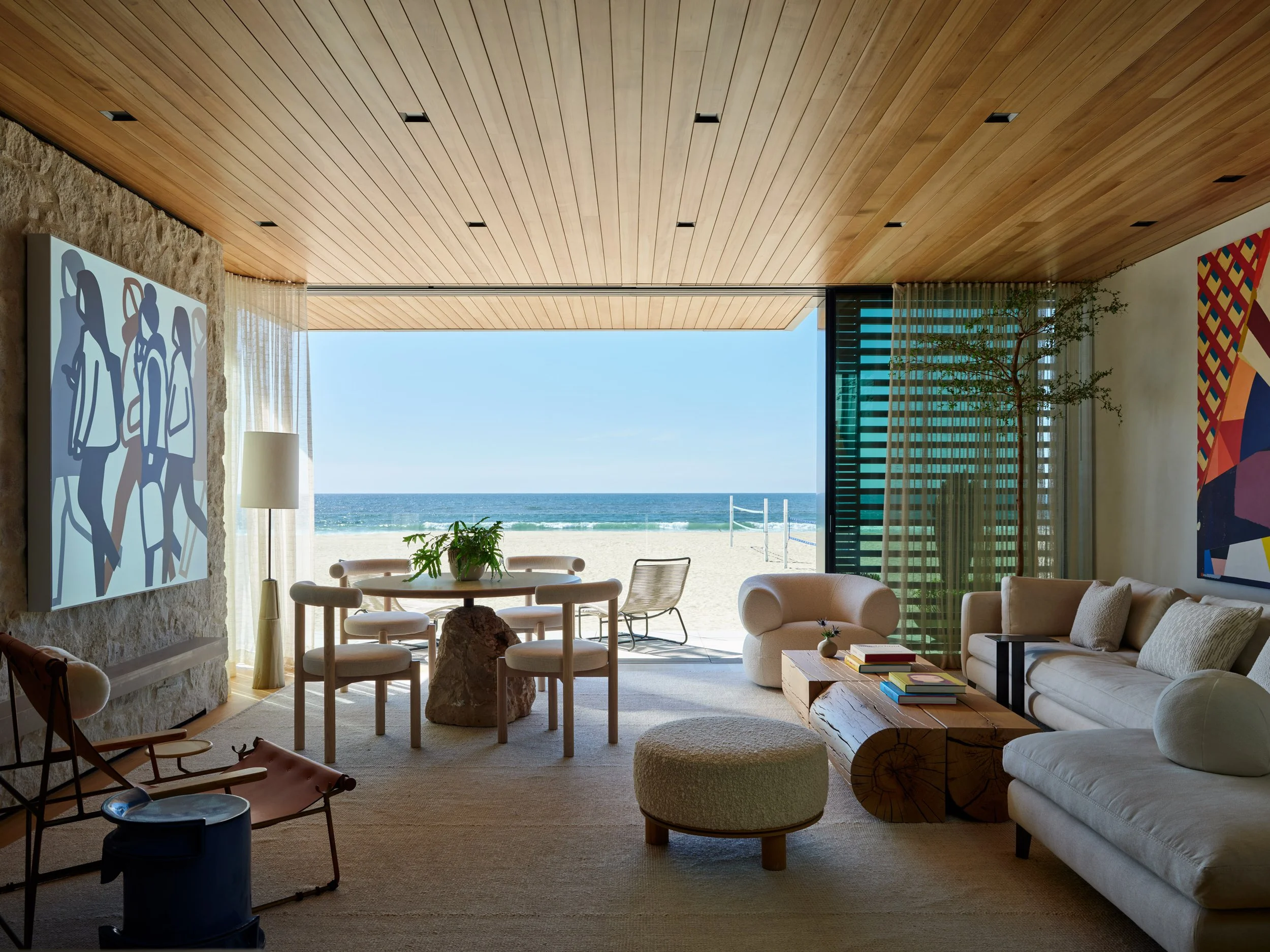
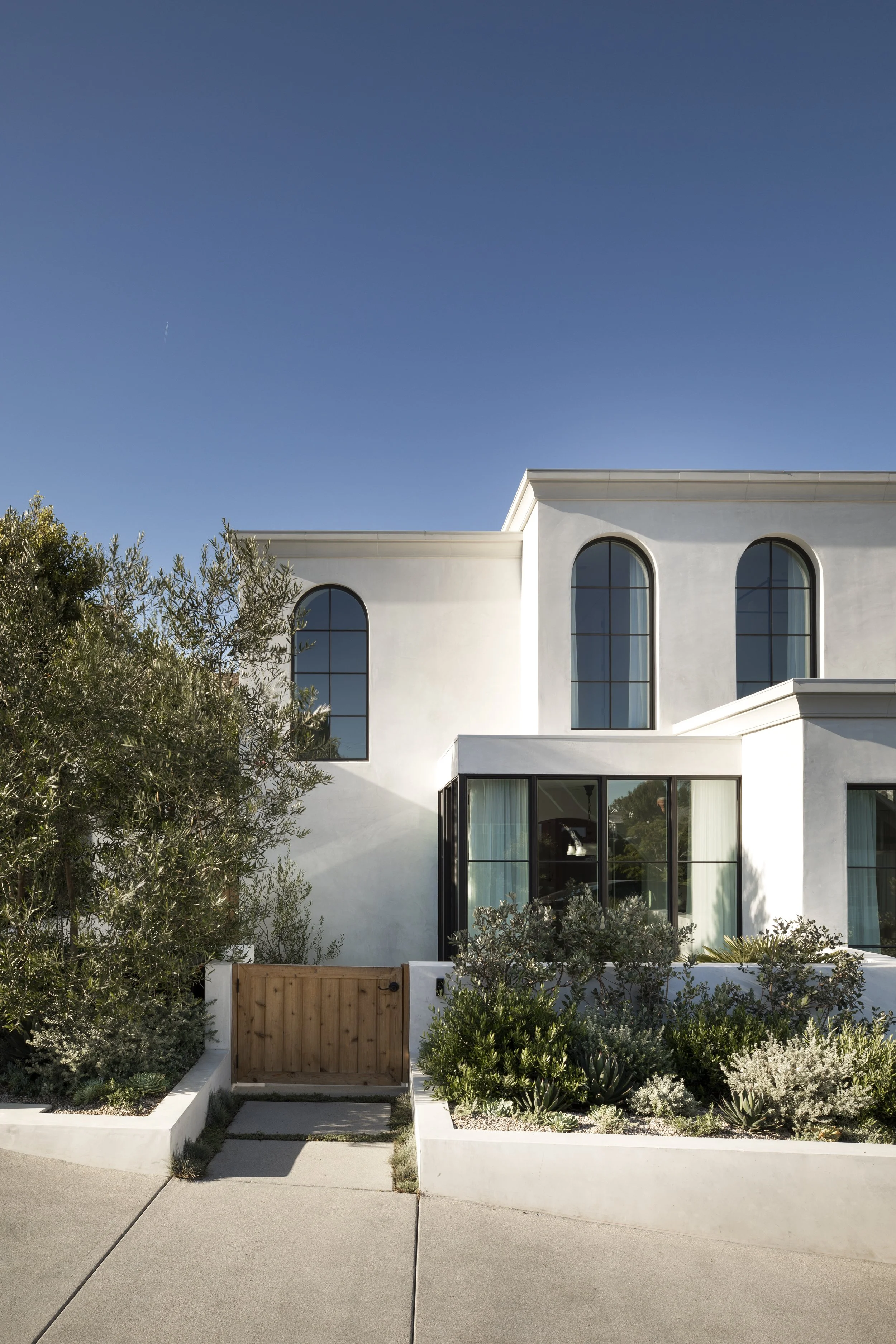
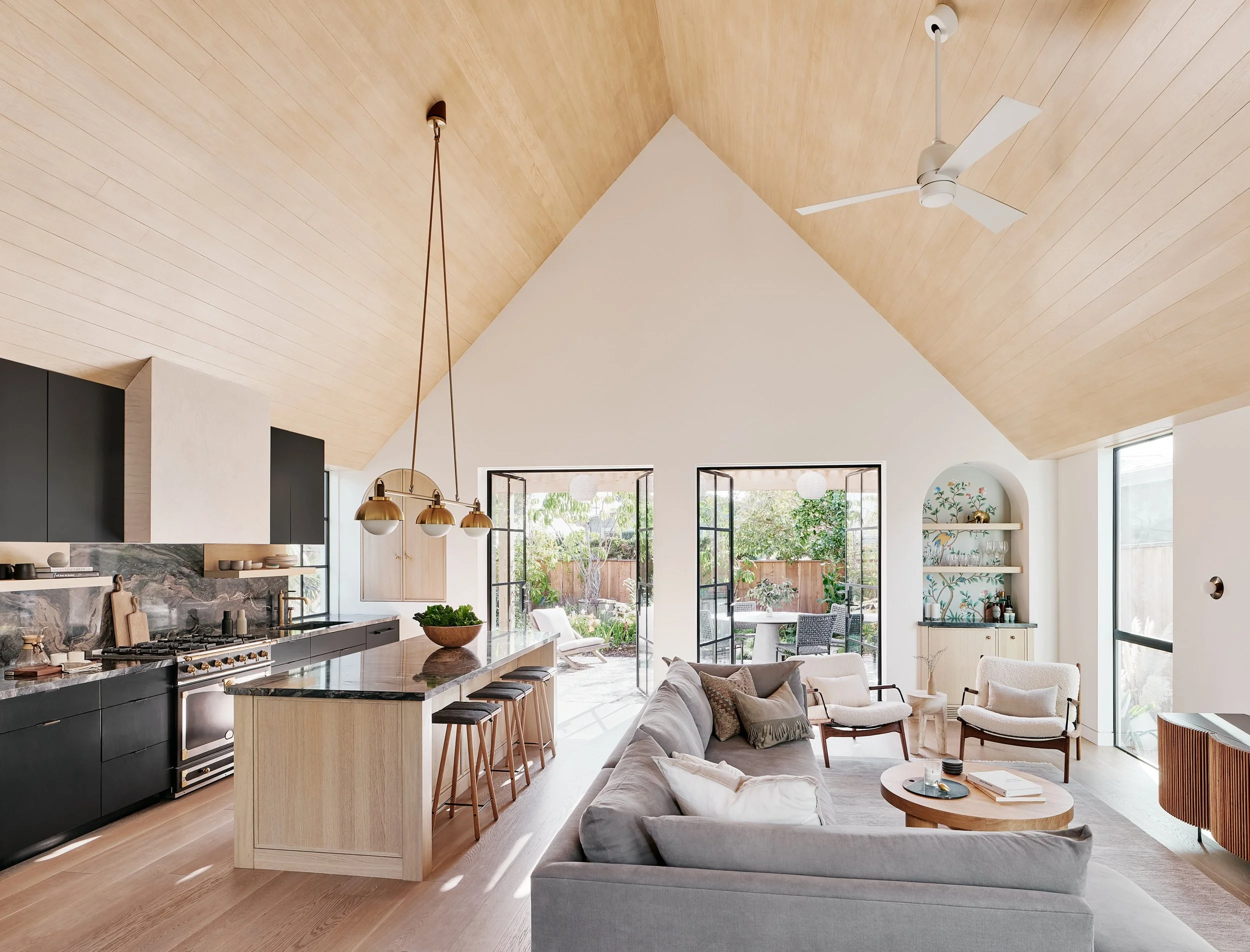
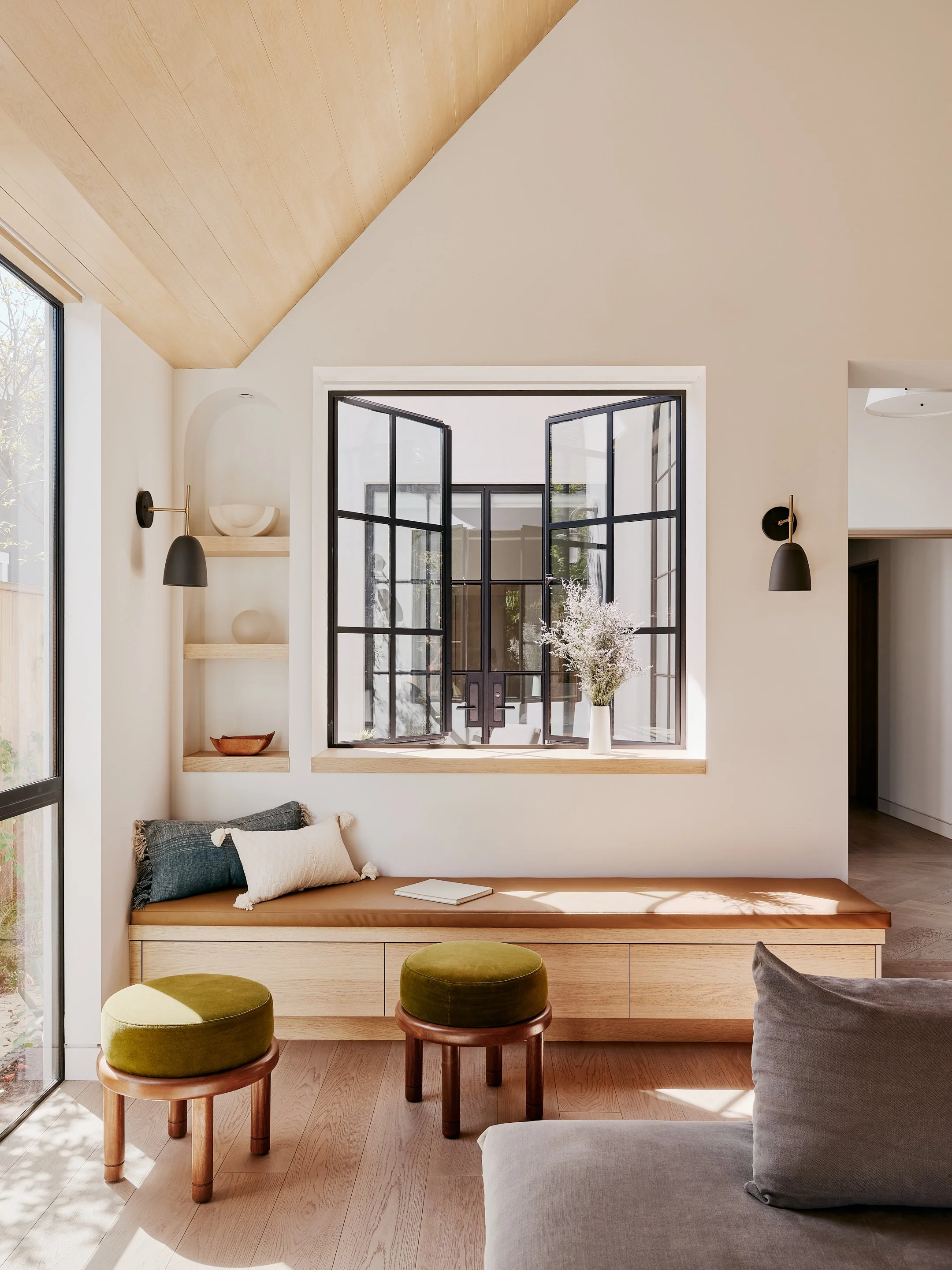
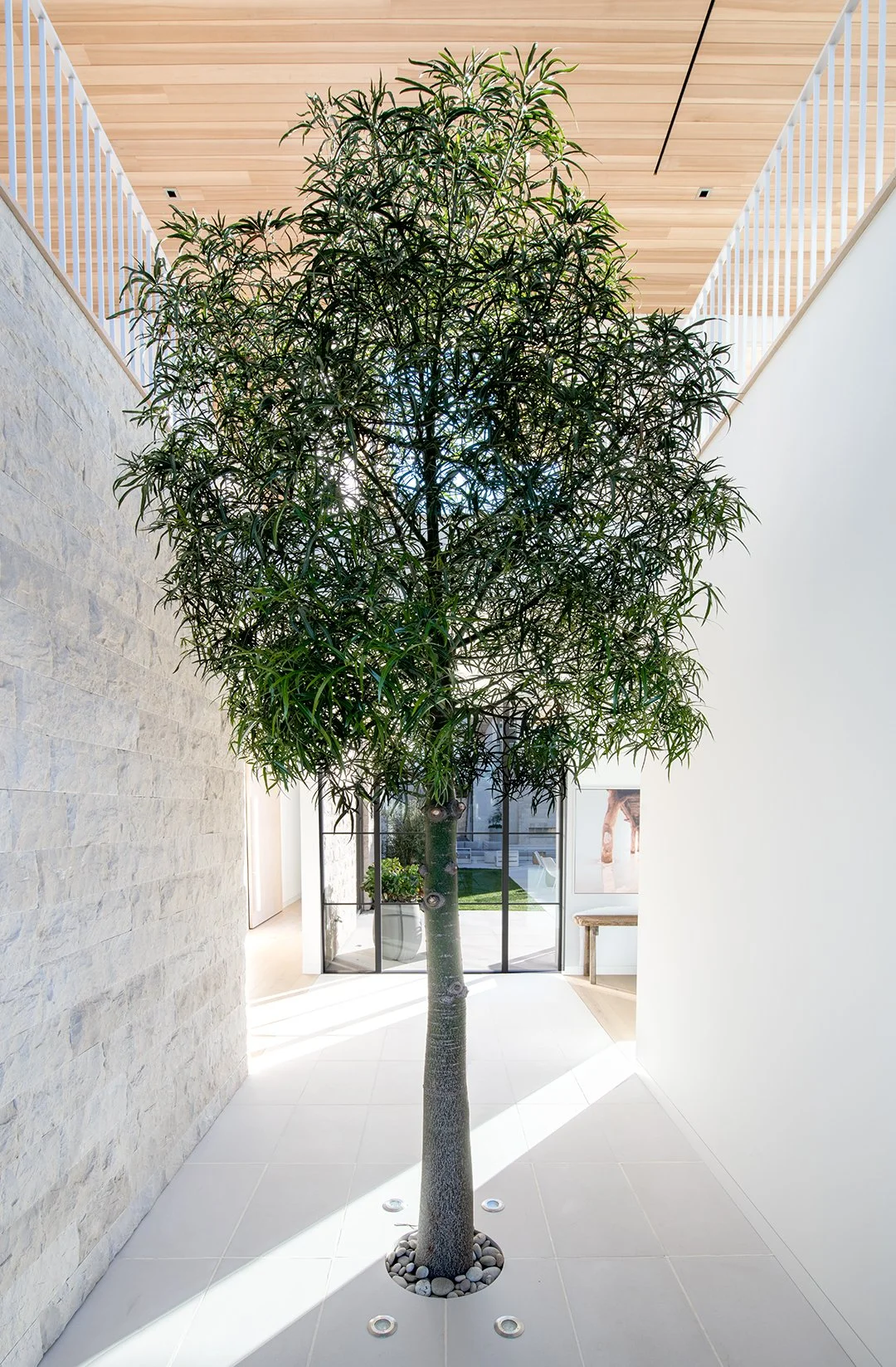
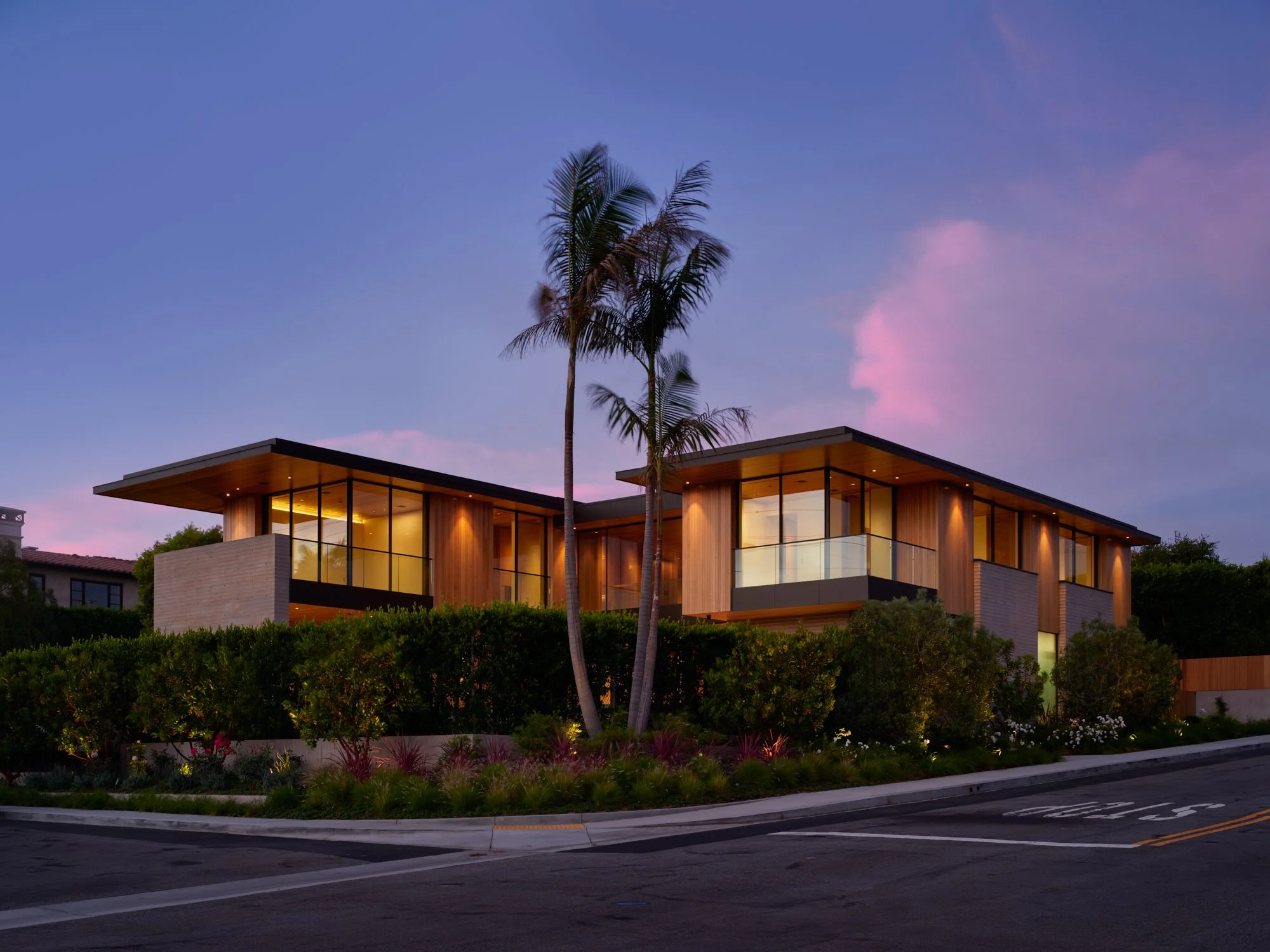
This week, David and Marina of FAME Architecture & Design are joined by Anthony Laney, Architect & Founding Partner of Laney LA. The three discussed the making of Laney LA’s monograph, Genius Loci vs Tabula Rasa, when to respond to context, Laney LA’s design process, convincing clients to trust the design process, concept vs schematic design, client & architect co-authorship, how producing a book impacts the design process, and more. Enjoy!
ABOUT ANTHONY
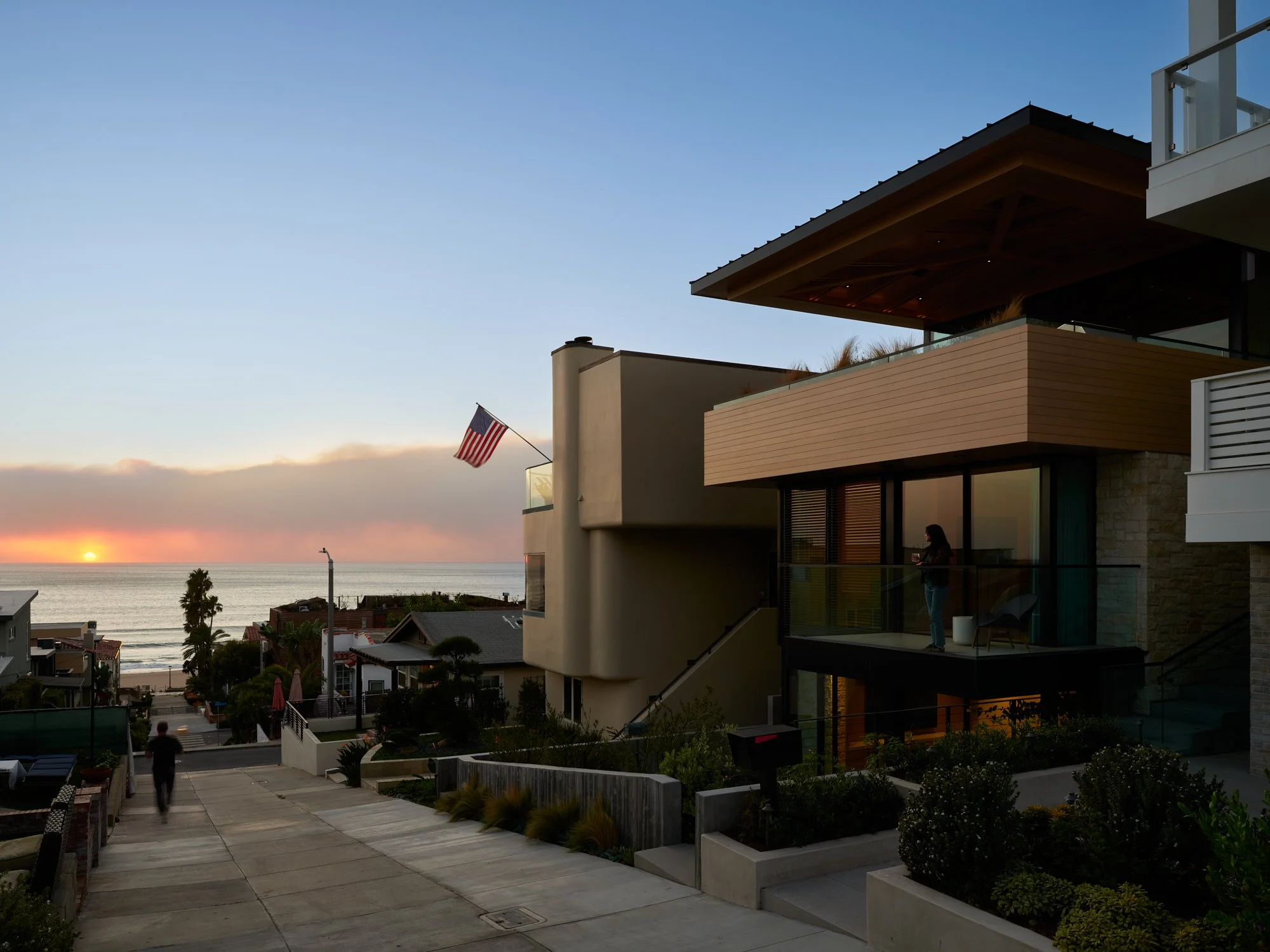
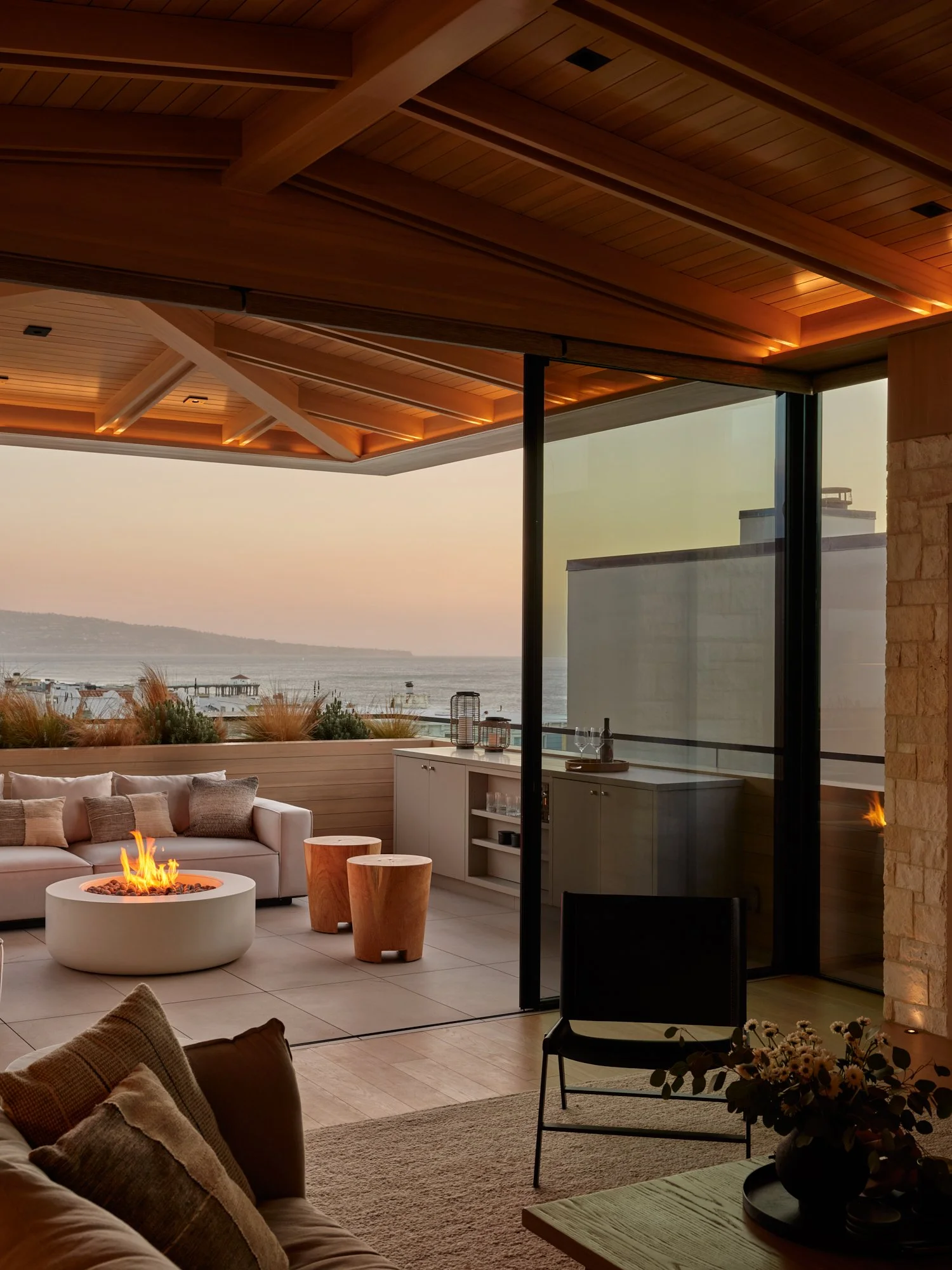
Anthony Laney is the founding partner of Laney LA, a Los Angeles–based architecture studio focused on designing thoughtful, enduring homes. His work explores how clarity, craft, and collaboration shape the experience of living, placing equal value on design rigor and human experience.
Anthony’s leadership also extends beyond design. He is a compelling voice on creative entrepreneurship and design process, frequently sharing insights about how rigorous thinking and empathetic collaboration drive enduring work. His recent monograph, Poetics of Home, offers a visual meditation on how architecture connects with identity, memory, and belonging.
Under his guidance, Laney LA’s work has been recognized with honors from the AIA and featured in Architectural Digest, Dwell, and Dezeen. A passionate advocate for design communication, Anthony has taught at the USC School of Architecture and through his practice, continues to inspire emerging designers to approach architecture as and exploration of clarity, craft, and human experience.
TIMESTAMPS
(00:00) Making a Monograph.
(09:43) Reflecting on previous projects.
(14:08) Genius Loci vs Tabula Rasa.
“In a suburban context, I'm not always proud of the place. So we are trying to erase or edit the context and create these little walled gardens. Because I don't know if the genius loci, the spirit of the place, in a true suburban context, is timeless and rich in a way that is worth always celebrating. Sometimes it is. But when you're in a natural environment, that's where I think the genius loci can be so palpable and often become one of the most relevant starting points for a design. I think the most interesting blend for us is where you have some significant natural feature, meeting an urban or semi-suburban context.” (18:45)
(22:44) Difficulty of responding to context vs not.
(26:10) Laney LA's design process & discussion.
“One of the books that inspired our monograph is called ‘The Poetics of Music’ by Igor Stravinsky. He has this wonderful quote that says, “My freedom will be so much greater and more meaningful the more narrowly I limit my field of action and the more I surround myself with obstacles. So in a renovation, those obstacles are visual and very clear. But when working with more of the Tabula Rasa, a blank slate, those can be present, but they might be harder to find, harder to see. They're more intuitive. That's where I think it's so important to pause and identify the constraints. Otherwise, we're designers, and we're happy to just start drawing.” (31:59)
(34:25) Convincing clients to trust the design process.
“The ‘knowledge attachment correlation’ means we tend to grow more attached to things that we understand well. In other words, as comprehension grows, appreciation and affection grow. Architectural concepts can sometimes be too esoteric, and we lose our clients. But if I can keep a client not only interested in the concept, but if they can fall in love with it because they understand every piece of logic behind it, they become such an invested partner in the creative process. We want to make sure that both in the discovery phase and the concept phase, our clients are growing in their attachment to the main ideas because there will be many forces; scheduled, budget, and practical forces, that are going to threaten it. So if we have a good idea, it will stand the test of time. If we don't, let that idea be killed and let a better one be discovered later on.” (35:21)
(38:07) Concept vs schematic design.
“I'm not going to be dogmatic about fighting for the original concept. I will be dogmatic about fighting for a good concept. Sometimes it comes in the middle of the project, sometimes it comes in the beginning, sometimes it comes later. But we want to find it eventually because, in my opinion, great architecture is both intellectually stimulating and meaningful in the embodied experience. In other words, my favorite homes have a great story, and I don't need to walk inside them to be inspired. I can be told about the premise and the process, and I can admire that.” (39:53)
(43:38) Client & architect co-authorship.
“It's a combination of discipline and flexibility. The discipline is to find something poetic. That's dogmatic. But the flexibility is the humility to say we think we know what it is, reality is going to test and confirm or change that, and we're going to learn more. You can't imagine a 500-page novel on the first day. There's going to be surprises along the way. So I feel like architects are in this dance with the reality of attempting to predict the future, but also, hopefully inventing when we don't get it right.” (44:17)
(49:28) Sense of home & book audience.
(52:24) Rhythm of Home.
(54:43) Process of creating a Monograph book.
(01:03:32) How producing a book impacts the design process.
(01:06:08) Feedback on book.
HAVE QUESTIONS OR SUGGESTIONS?
TEXT/CALL OUR HOTLINE
213-222-6950
#488 - WHAT IS MODERN ARCHITECTURE?
SUMMARY
This week, David and Marina of FAME Architecture & Design answer the question, "What is modern architecture?" They discuss the history of modern architecture, misconceptions about modern architecture, contemporary vs modern styles, why architecture styles are confusing, search for authenticity in architecture, ornamentation in architecture, and more. Enjoy!
TIMESTAMPS
(00:00) History of Modern Architecture.
(11:19) Contemporary vs modern architecture meaning.
“Modernism and the modern mentality is more important than the form it produces. What it means to be a modernist, is to think about the contemporary setting that you are in, to analyze it, digest it, and then channel that into the work, but also think about where we want to go as a society. All of us who are practicing and designing the built environment, that's actually what we're thinking about. What makes sense to have something, a sculpture and a structure, that's an expression of our principles and our belief system, and where we want to be going. I think that futurist mentality is very much what it means to be a modern architect. ” (13:21)
(21:23) Search for authenticity in architecture.
“The urge for creation and the idea that you could discover something super great that could potentially change how people live, change how other architects think about architecture. Designing for the people of your time. Any major building that was done in the past was modern for its time, because they were trying to push things in a new direction or forward. In a way, I do think if you are an architect, you kind of have to do that. It’s our responsibility.” (27:07)
“This is how architects think. When we produce something, it has to be forward looking because what are we doing otherwise? Buildings last for such a long time, especially when we talk about larger structures, we cannot afford to look backward. We are putting a permanent giant work of structure that costs a lot of money, that is now part of the city. It has to be appropriate and positive. It can't be backward looking. It's the wrong thing to do in my book if you are not pushing and evolving, because every building that we do is a drop in the bucket for where we're going as a species.” (28:21)
(29:36) Misconception about Modern Architecture.
“The misconception of the word ‘Modern Architecture’ is because the meaning of it has been associated with what it was when it first came out. When it first started, modern architecture was maybe cold and minimal. But architecture has evolved, and modern architecture can be many things. The thing that's not really being explained to people today is that modern architecture can take any shape or form. (31:11)
(35:03) Buildings with no style.
(39:35) Communicating architecture to clients without using styles.
(44:43) Right architect and client pairing.
“Balancing the parameters which guide and provide boundaries to what you can do as an architect. Balancing that with freedom is a really interesting problem that's always something that we are continually trying to work on because it's not easy. Oftentimes every project has a new client, new site, new place, so it's always a new context. The client have a goal in mind and we're hired to achieve that goal. But it's also our job to deviate from it slightly, to make sure that we can propose something that's even better than what the client already has in their preconceived notions. But not so much to where it's like, “Well, dude, you just blew my budget. This has nothing to do with the program.” We don't want to go so far outside of that path. But we do want to have wiggle room to venture off of that a little bit, to produce something that actually has meaning and is going to bring a great value to the client and to the property.” (57:51)
(59:55) Ornamentation & Modern Architecture.
(01:03:56) How to make sure architecture has meaning.
“How do you know if what you're drawing makes sense? In a project, you're driven by a lot of things like the site, the client, the program, the budget, etc. But they are not actually enough to make a final decision of where this wall should go or what shape that wall should be. There's an unlimited number of design options, so what is the right solution? Where does it come from? For our office, this really comes down to the concept. It is all about the concept behind the house. Another way to describe concepts could be the artistic statement behind the project. It is the narrative or the thesis behind the work.” (01:04:08)
(01:10:27) Ideal projects & clients for FAME Architects.
“Once you find the story of the project, the concept of the architecture, it kind of starts to write and draw itself. You end up almost simply being this conduit between the concepts and what's being put on paper. Your job is just to be a good conduit. You can sense naturally, once you get enough experience, when you draw something that you're screwing it up. It feels dishonest. It doesn't belong there. Or we need to add something, but you can feel when it's not right. It's almost like what's guiding the hand is not me. It's the story. It's the concept.There's always a moment in the project where that happens and things start to lock into place, and it becomes very clear as to what the design should and should not be.” (01:06:20)
(01:16:04) Summary.
“For clients who are listening to this, stop focusing so much on the labels [or styles] and focus more on the approach and what you're looking for as a client. Are you looking for a very prescribed creation that you're dictating in a way, or are you looking for a more loose process that's a bit more open ended? Try to understand the architect you're looking to hire. What is their approach {and design philosophy?]” (01:16:22)
HAVE QUESTIONS OR SUGGESTIONS?
TEXT/CALL OUR HOTLINE
213-222-6950
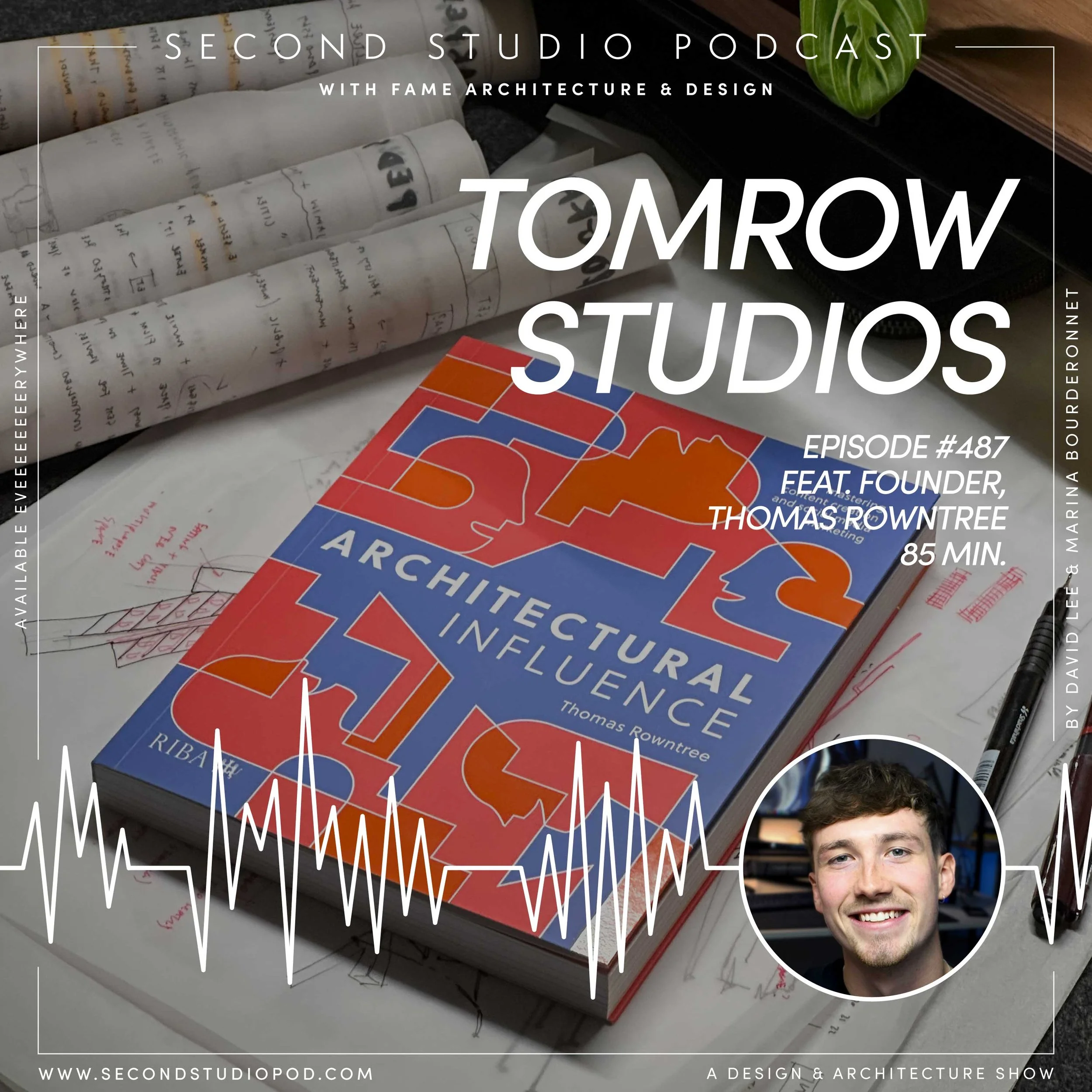
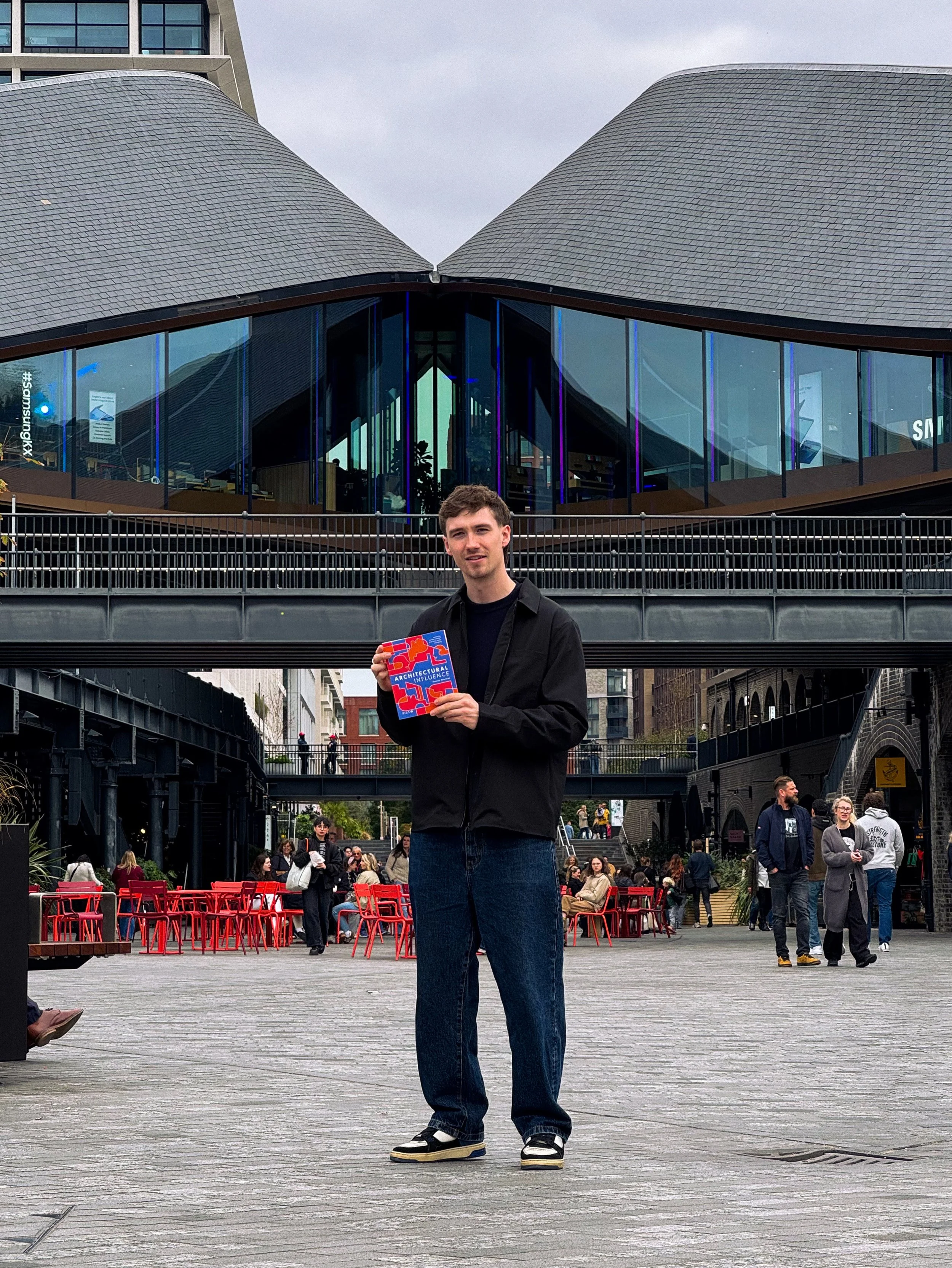
#487 - THOMAS ROWNTREE, Architect & Founder of Tomrowstudios
SUMMARY
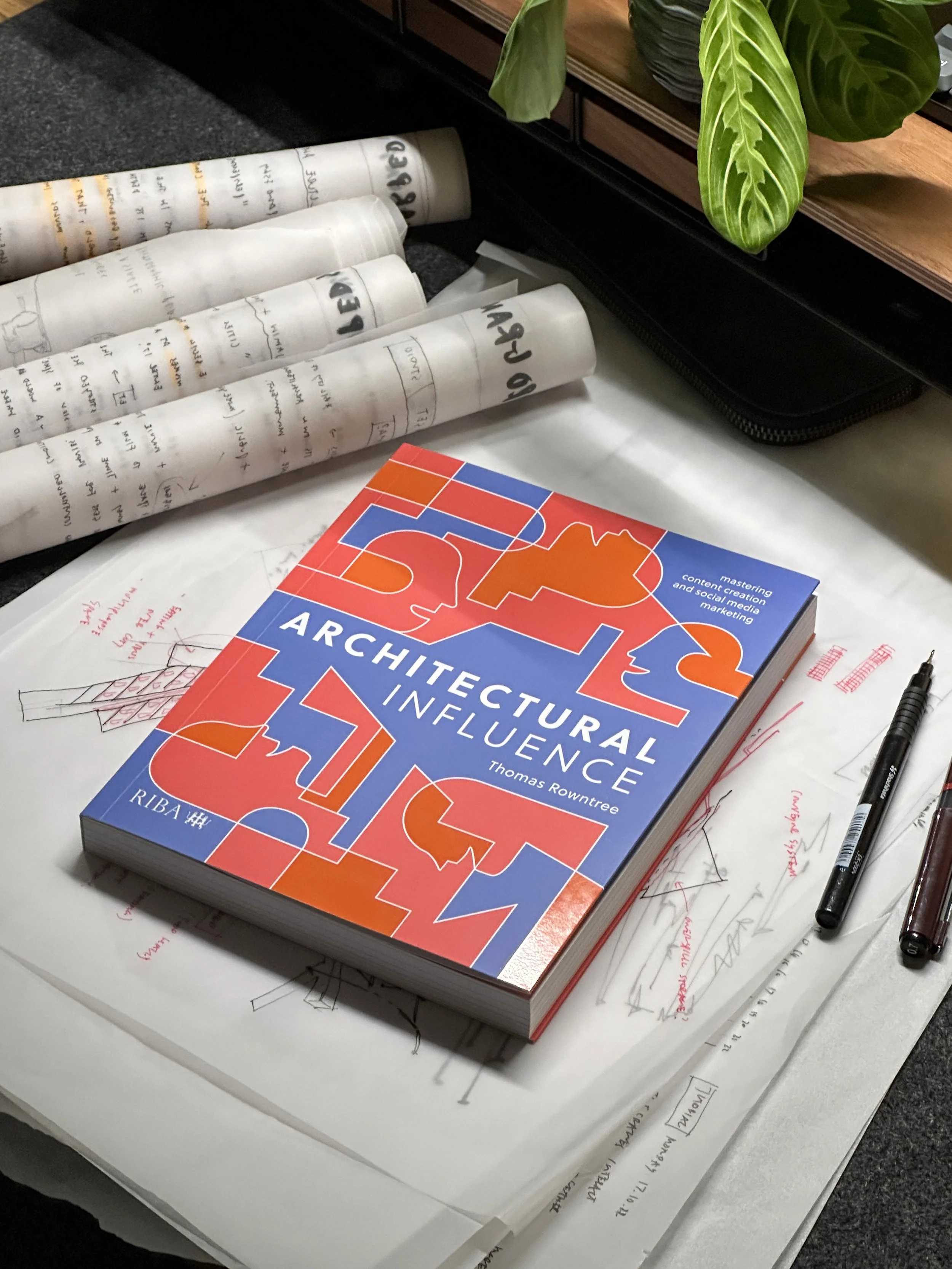
This week, David and Marina of FAME Architecture & Design are joined by Thomas Rowntree, architect & founder of Tomrowstudios. The three discussed how Thomas got into architecture, advice to prepare for architecture school, experience of architecture school & avoiding burnout, why Thomas started posting on social media, architecture marketing & social media presence, career timeline, Thomas’ book “Architectural Influence", why architecture profession is misunderstood, and more. Enjoy!
ABOUT THOMAS
Thomas Rowntree is an architect and the founder of tomrowstudios, and one of the first and largest architecture-focused personal brands on social media. He has produced viral content that has reached millions of views, using digital platforms to inspire, educate, and guide designers around the globe. Thomas is also the author of Architectural Influence, a strategic guide to building an effective online profile and communicating the value of architectural work in the digital age.

TIMESTAMPS
(00:00) How Thomas got into architecture.
“I went into architecture with no preconceived ideas. I could go into it fully open-minded and think with a clean slate, with no one telling me this is how it normally works in practice, this is how we design buildings. I went into it fully clean and not really knowing what I was getting into. In so many ways, it benefited me, and it made me want to be curious about the profession and curious about what architecture even is. I still ask that question to this day. What is architecture? What is the role of the architect? That is a real purpose to the work that I do, which is that I'm still trying to question that.” (05:36)
(07:20) First year of architecture school.
(12:47) Advice to prepare for architecture.
(18:30) Architecture school experience.
“In the first few months of architecture school, I developed insomnia. I'd struggled to sleep for about three months because I put so much pressure on myself to do well and to be successful. But also, I'd got so caught up in the whole machine of all-nighters and everyone spending time in the studio until really late in the morning. You want to spend time with people, and in the studio, you want to be a part of that culture. But I realised pretty quickly that I couldn't sustain it. I couldn't finish my degree and go into a master's degree with this kind of mentality and way of working. I realised that I'm going to have to start building some systems and routines for me to start studying at certain times of the day to make sure that I can get my work done, so I'm not working late. So literally after the first year of university, I didn't do a late night after 2 a.m. for the rest of my architecture career.” (20:52)
(24:27) Avoiding burnout in architecture school.
(32:40) Why Thomas started posting on social media.
(40:51) Architecture marketing & social media.
“Practices that are more developed and mature, they have their own ways of getting clients on board. They're used to doing that, they understand that process, and it works for them. But they could be doing so much more with the opportunity of a free tool like social media. You can reach almost anyone anywhere in the globe in an instant. Obviously, it's huge; there's billions and billions of active users on social media. But for some reason, practices don't necessarily lean into it to build their clientele and to build their portfolio. Instead, they almost use it as a portfolio piece and a repurposing of website content. They just publish images, rather than leaning into it as, we can show you our value and the service that we can offer you. What is your unique selling proposition is as a practice?” (41:36)
“Confidentiality. When I've been working in practice, they've been very careful not to show the process. We can't necessarily show the behind-the-scenes because this is a confidential project. They don't want to give away the secrets to what makes their projects unique. You almost have to do the content after the fact. So once the process and the project is done, you then go back in time and then you talk through the process and document the process. I do think it's a massive shame. You are confining something that is useful for a client to see and understand how you work and your processes. By building a brand identity and a brand reputation, what it does is it gives you not only exposure to your brand and to grow your brand, but also to encourage potential employees to work with you. So it can attract talent as well.” (46:06)
(49:30) Social media presence & working in a practice.
(54:15) Thomas' career timeline, social media vs practice.
(01:03:57) Thomas' book ‘Architectural Influence’.
(01:12:27) Lessons learnt from writing the book.
(01:16:09) Architecture profession being misunderstood.
“There is a real opportunity for the general public to have an interest in architecture and generally understand how buildings are, how they work, and how they impact people. Then you have architects who are struggling to communicate it. I find that sometimes it's about simplifying it and just putting it down to the bare bones of the process, how you would build something. For an individual who was trying to build their practice, if they stood in front of a construction site and talked through the process of how it was actually being built and certain elements of the design, the general public would understand and be interested in that. Then it gives them exposure and it shows their expertise and also proof that they're actually building something.” (01:19:51)
(01:22:48) Thomas' favorite building.
HAVE QUESTIONS OR SUGGESTIONS?
TEXT/CALL OUR HOTLINE
213-222-6950
#486 -WHINEY PEOPLE AND AFFORDABLE HOUSING
SUMMARY
This week, David and Marina have a casual chat about eating at Gladstone's, ways to make housing more affordable, whiney people, (un)reasonable demands of car drivers, airplane stories, and more. Enjoy!
HAVE QUESTIONS OR SUGGESTIONS?
TEXT/CALL OUR HOTLINE
213-222-6950
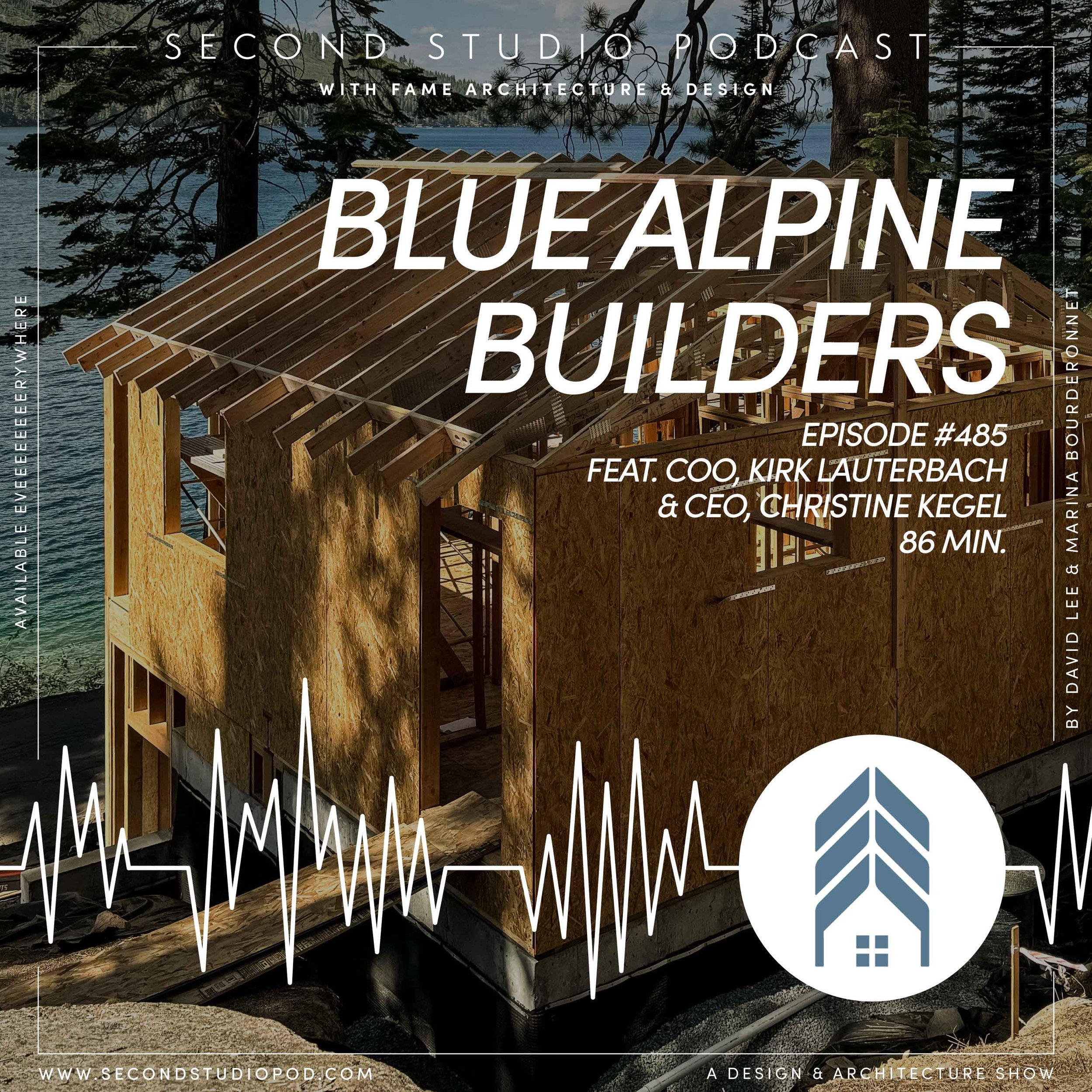
#485 - KIRK LAUTERBACH AND CHRISTINE KEGEL, COO and CEO of Blue Alpine Builders
SUMMARY
This week, David and Marina of FAME Architecture & Design are joined by Kirk Lauterbach and Christine Kegel, COO and CEO of Blue Alpine Builders. The four discussed Kirk & Christine’s background, how they met, working with your partner, good contractor & customer service, contractors & architects working relationships, ideal client, architect and contractor relationship, understanding everyone’s needs & communications, advice for clients working with contractors, favorite place in Tahoe and more. Enjoy!
ABOUT KIRK & CHRISTINE
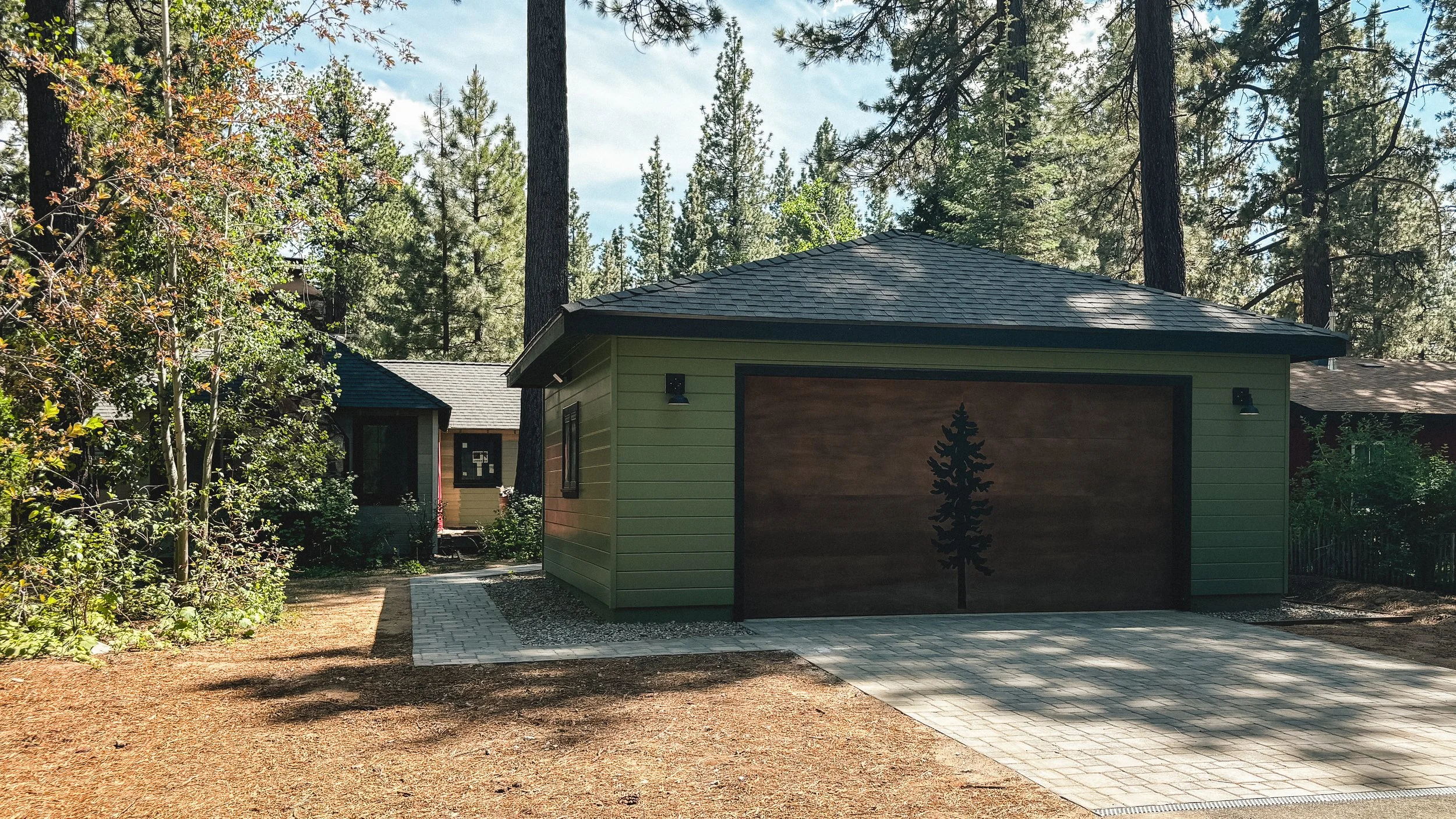
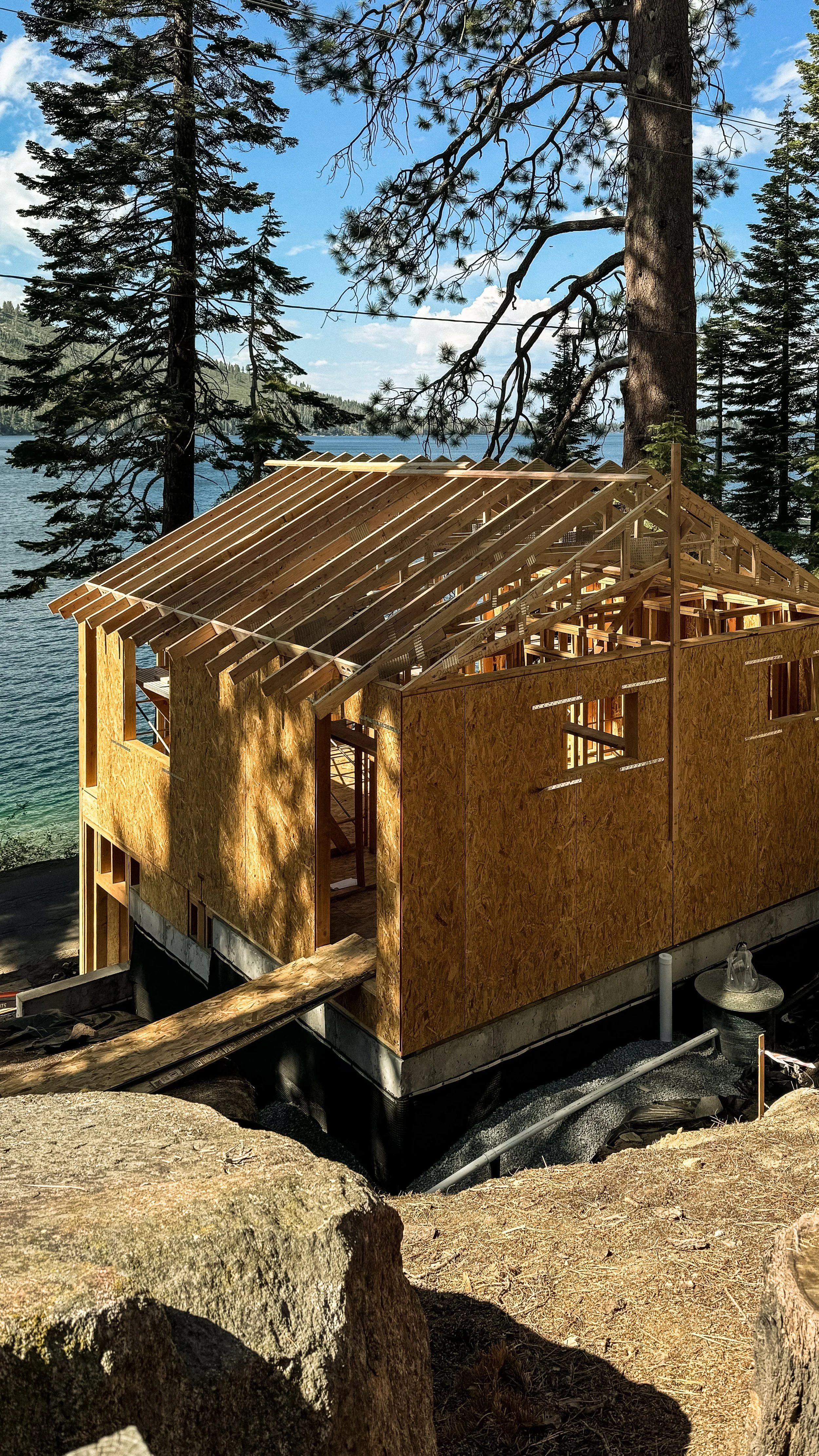
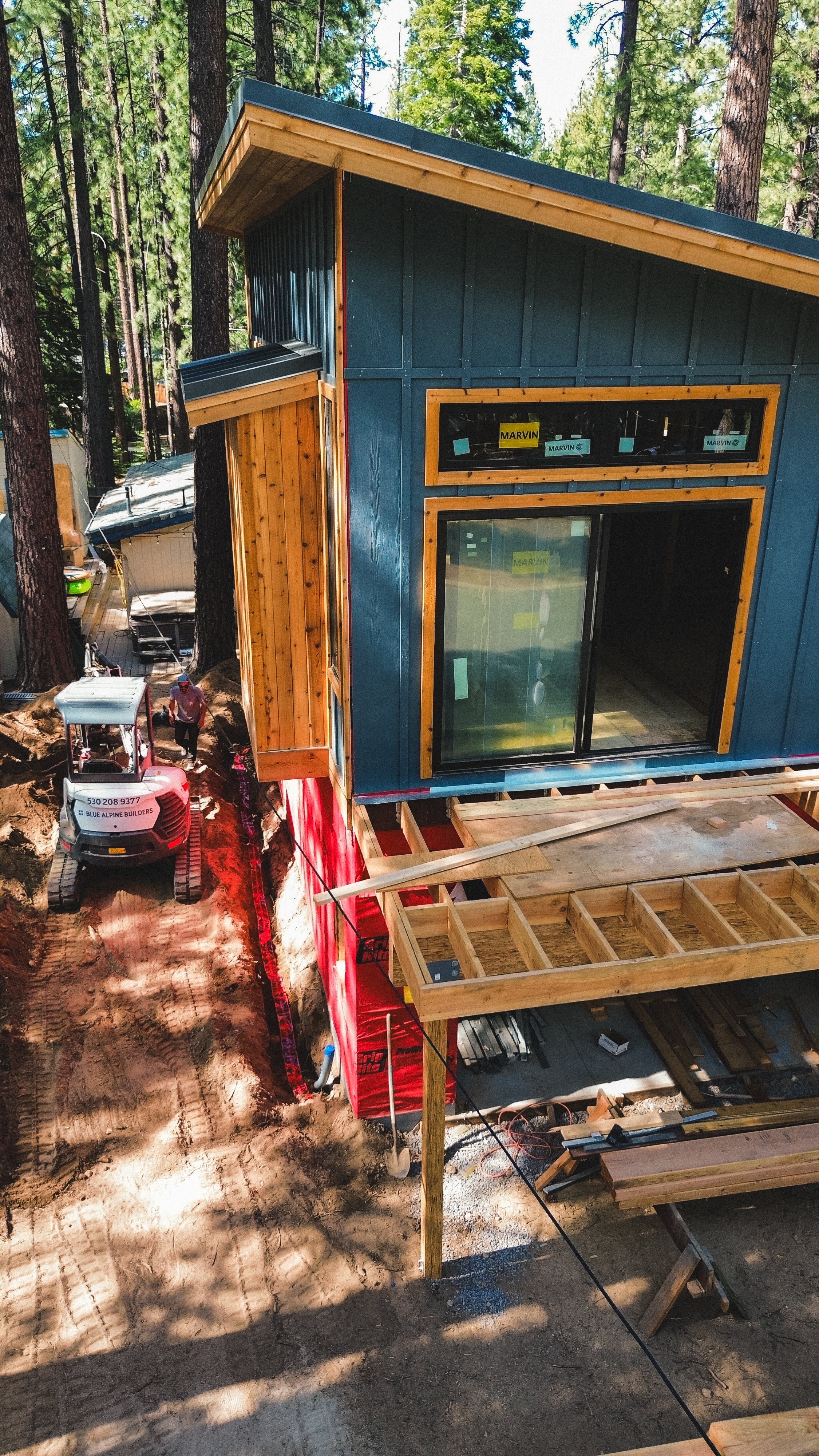
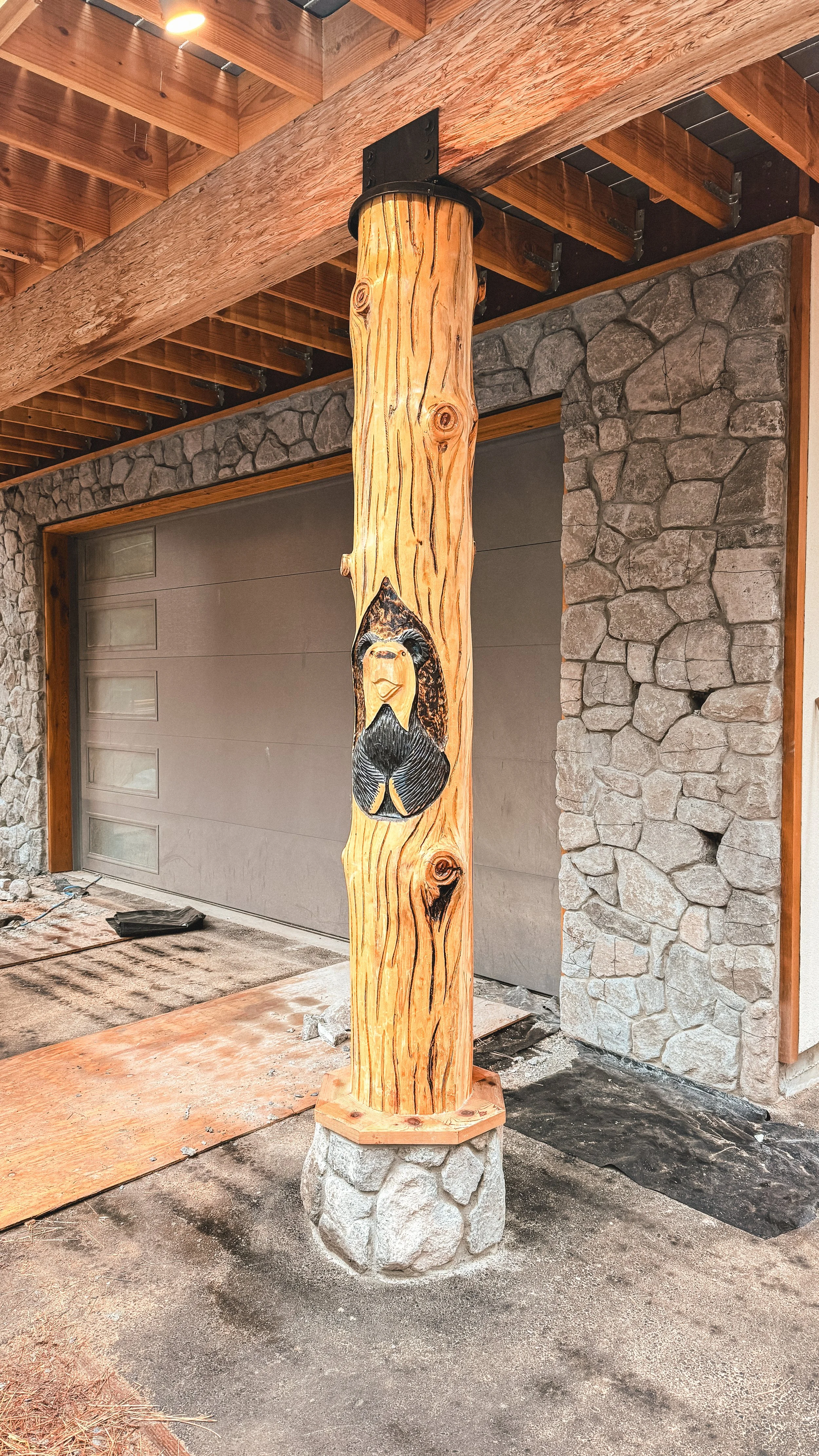
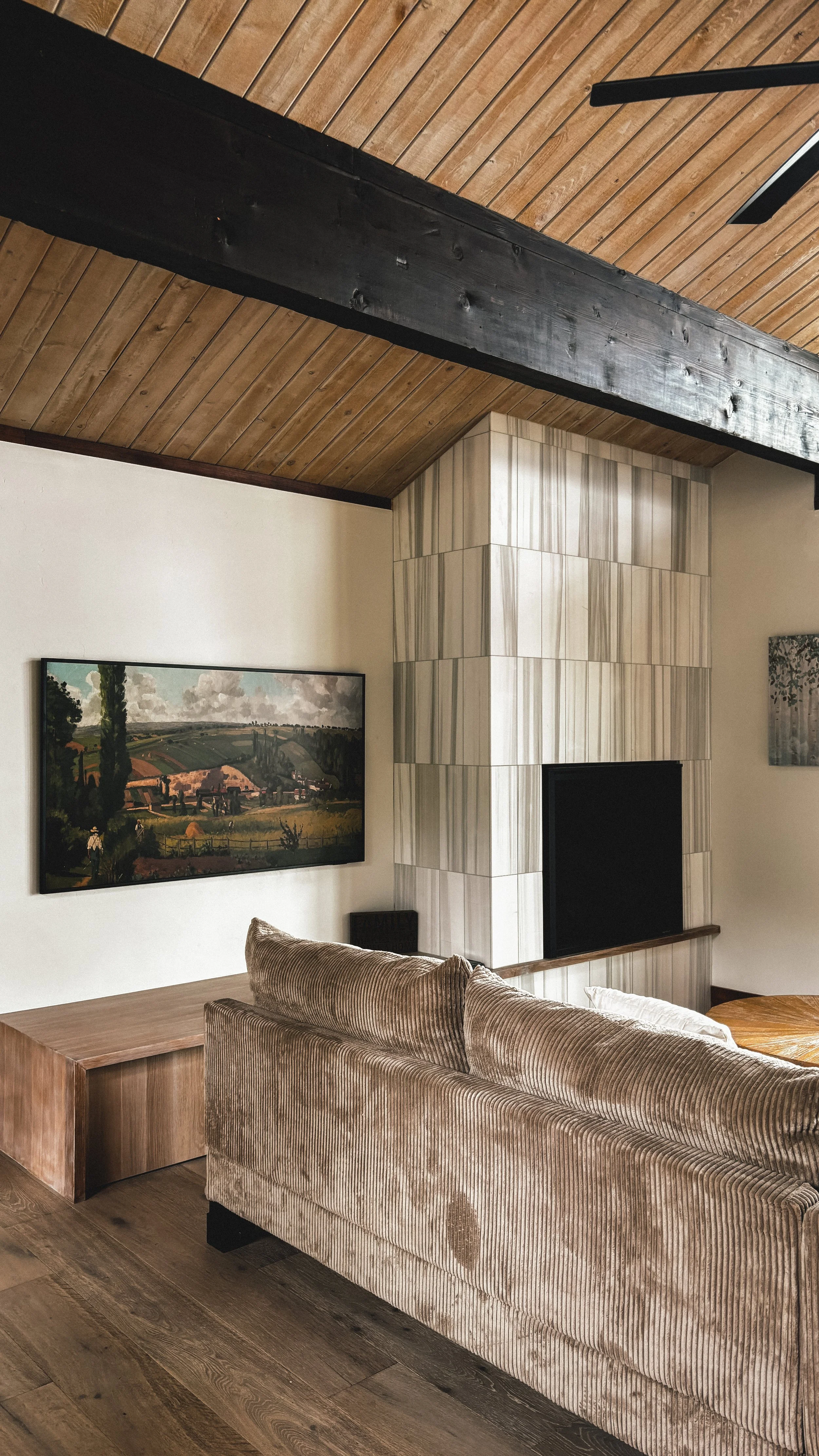
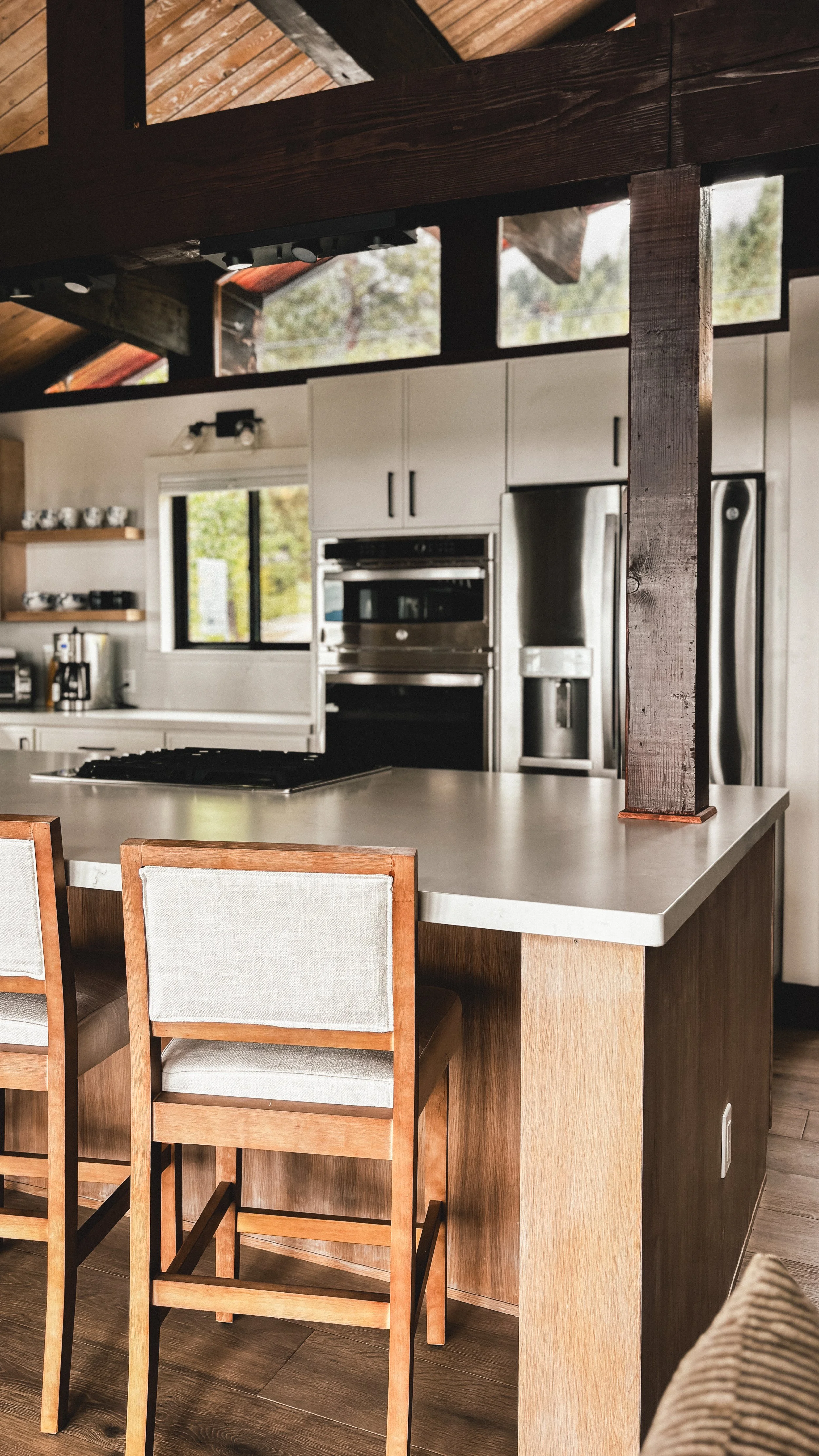
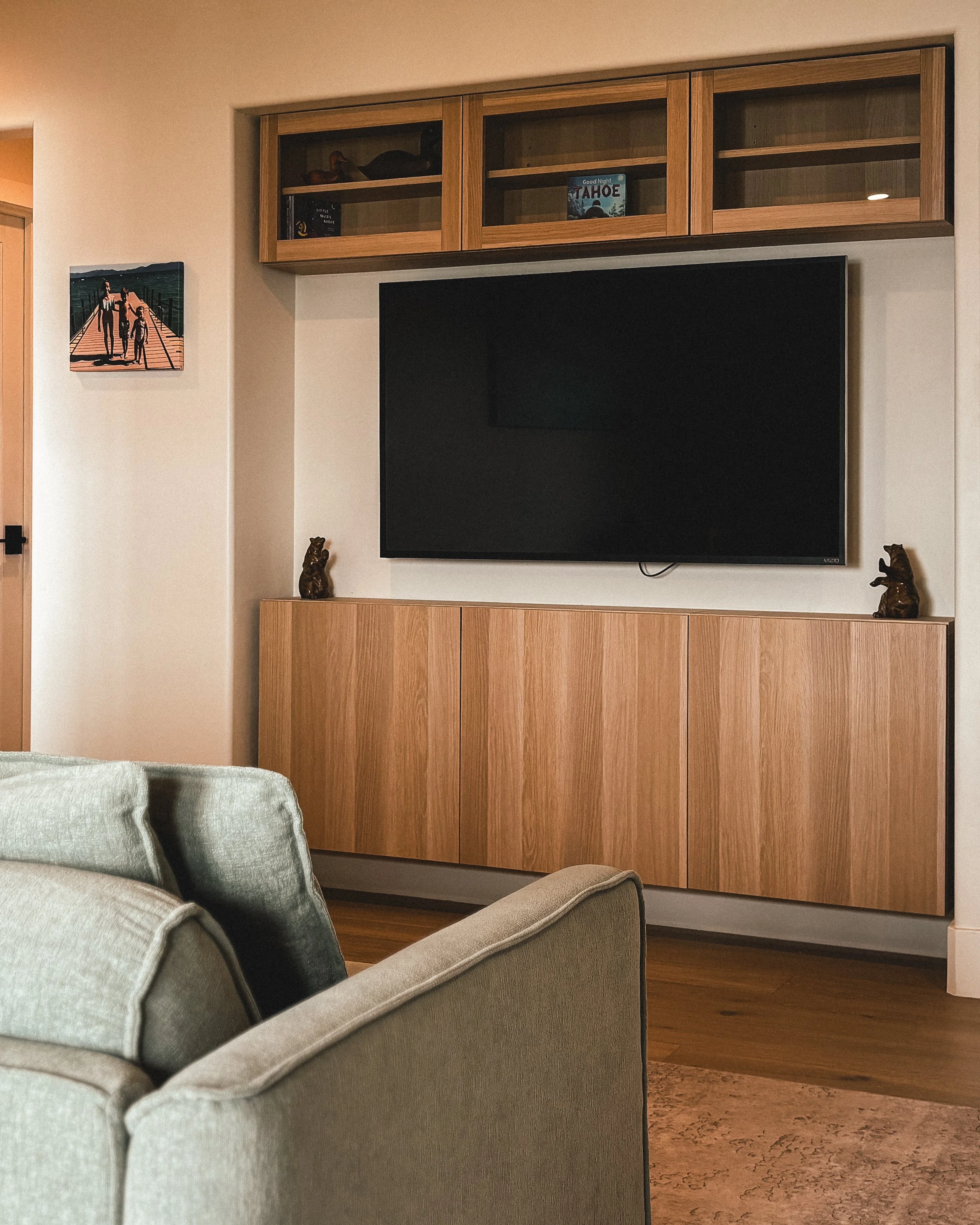
Blue Alpine Builders builds custom homes that blend intentional design with expert construction. Led by CEO Christine Kegel and COO Kirk Lauterbach, two professionals united by a belief that great homes should feel grounded, purposeful, and deeply personal. Christine shapes client experiences and design vision with creativity and strategic insight, while Kirk anchors projects with operational excellence and building science expertise. Together, they deliver custom homes that feel beautiful, and enduring — spaces where life unfolds with intention.
Kirk Lauterbach is the COO of Blue Alpine Builders, where he leads construction excellence, operational execution, and technical delivery. A second‑generation builder, Kirk’s journey in construction began in the foothills outside Yosemite, apprenticing under his General Contractor father and learning the craft firsthand amid the rugged beauty of the Sierra Nevada.
After working across Colorado, Washington, and Utah, Kirk returned to the Sierras in 2020 to build custom homes that reflect both place and purpose. When he’s not on a jobsite, you’ll find him making music or exploring the outdoors with his partner and their pups, continually inspired by the landscapes that shaped his path.
Christine Kegel is the CEO and Head of Design + Client Experience of Blue Alpine Builders, where she leads the creative vision, client partnerships, and overall business strategy. With roots in graphic design and brand strategy, Christine believes that thoughtful design builds trust, enhances daily life, and creates environments where people feel truly at home. She guides clients through the build process with clarity, care, and open communication, ensuring that every home reflects both function and personal meaning. When she’s not on a jobsite, you’ll find her hanging from aerial silks or swimming at the river with her 2 pups and Kirk in tow.
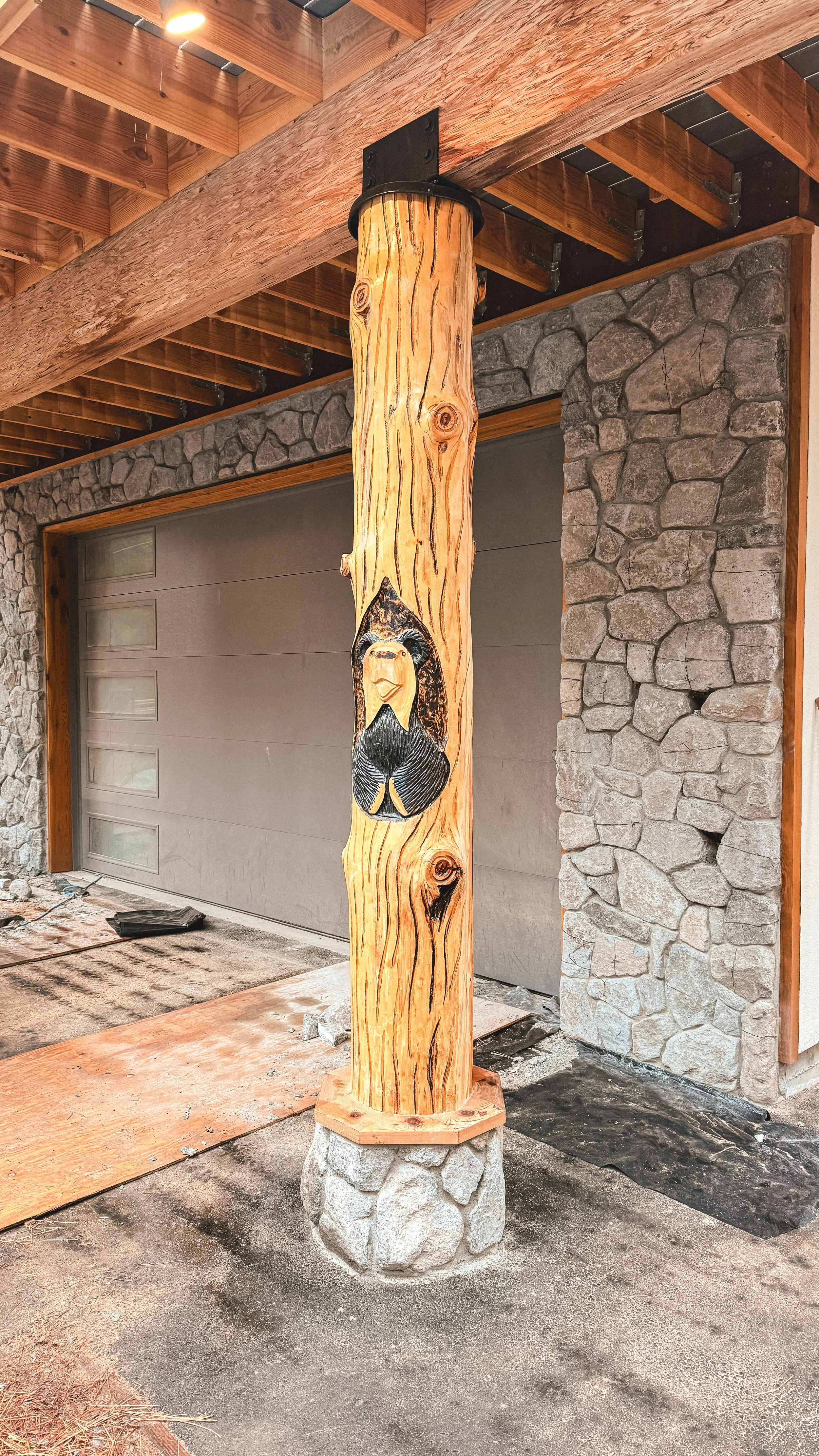
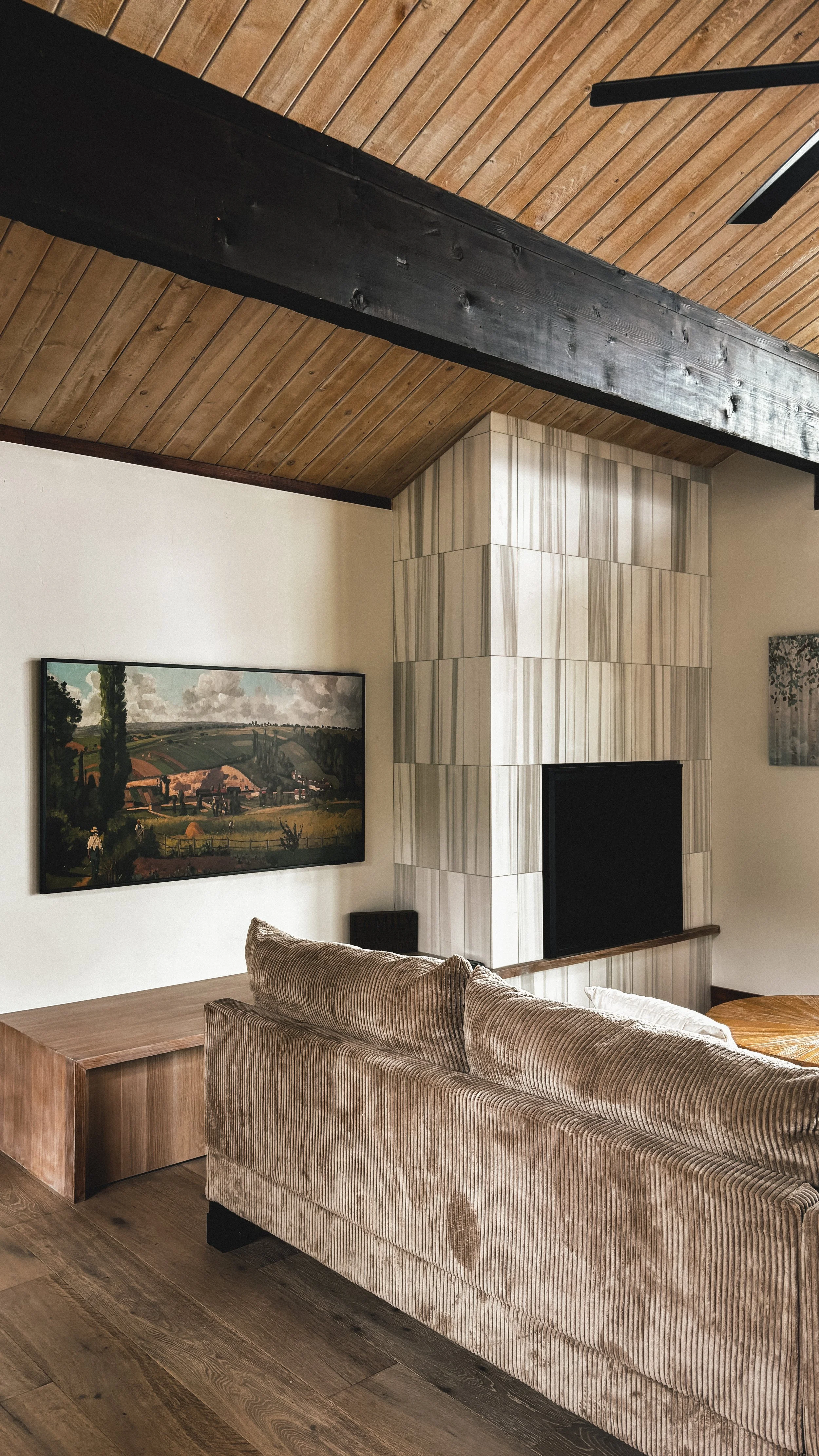
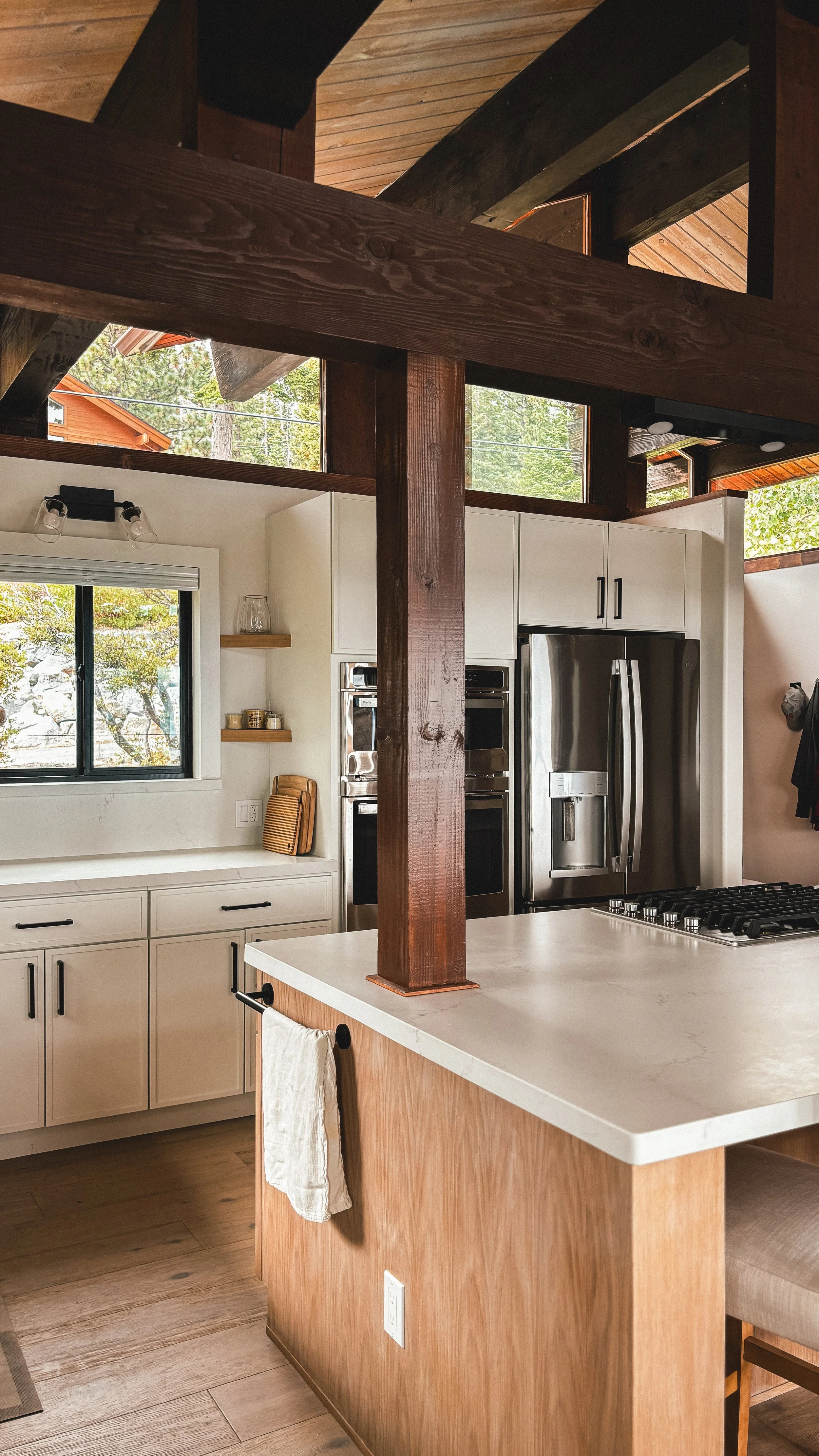
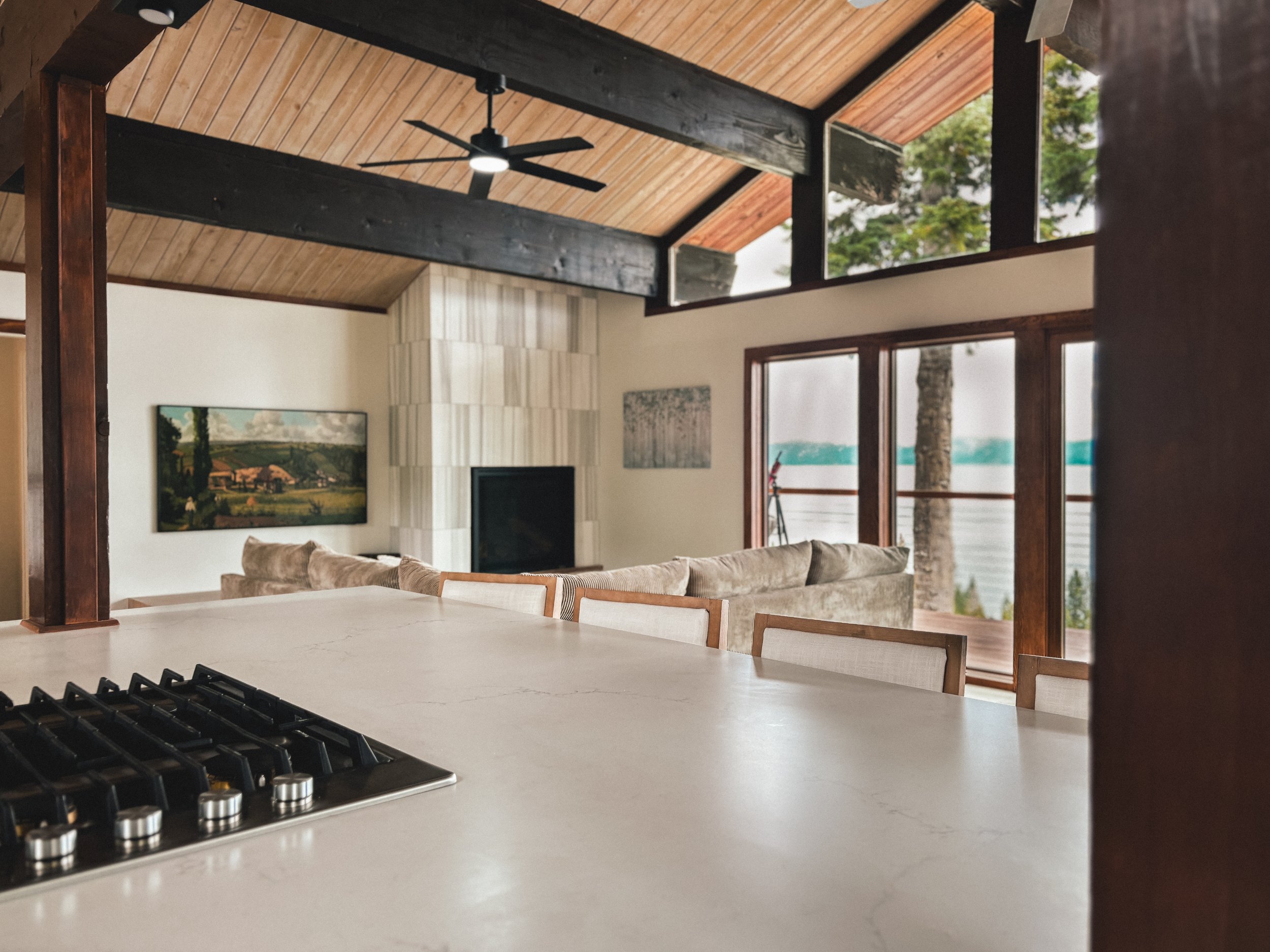
TIMESTAMPS
(00:00) Kirk & Christine's background.
(13:37) How Kirk and Christine met.
(17:25) Working with your partners & roles.
“Homeowners have a busy life. They don't really care about all the nitty-gritty stuff. So I'm giving them the TLDR about what’s important. This is a multi-year relationship where you're building something together. It's inherently a collaborative process; it just doesn't work if people don't approach it that way. There needs to be someone who sees all the moving parts and knows how to distill that and communicate that effectively so that not everybody has to see the bird's eye view, but they do need relevant information. Subcontractors and designers need to coordinate with each other for it to be a truly cohesive project and not a house where all the rooms just feel off.” (26:42)
(30:39) Good contractor & customer service.
“Everybody has a different idea of what a General Contractor is or does. We've certainly interviewed clients before where they've hired us because they want to be in control of the job, they want labor, and somebody who can do it all. I've had to explain that's not what we do as a GC. If you want a framer, you can hire a framer. But the reason you would hire us is to oversee and manage the job. If we clarify that early on in the project, then I find there's less assumptions being made, and fewer of an ego battle where people are upset that we're charging them for a service that they are trying to do themselves because they don't understand what our role is.” (34:10)
“Being a good carpenter does not mean being a good business owner. I knew they were separate. I think there are a lot of very talented carpenters and farmers out there, but maybe they don't have a website [or other forms of formal contact]. I bet that a lot of the communication that the client wants is not going to happen. They're going to say, “Well, I don't have a website. I don't do computer stuff.” I'm hyper aware of how much money these projects cost when people are spending hundreds of thousands, millions of dollars. I think it's fair that they get updates and communication.” (39:04)
(42:30) Contractors & architects working relationship.
(49:20) Ideal client, architect, and contractor relationship.
“There’s a natural scope creep that happens when you get excited about creating. Specifically, in the last couple of years, it's been hard to nail down pricing just with how volatile the building cost has been. We've experienced before where we've gotten plans from an architect and bid them for a client, and the client's like, “Wow, that was double what I expected to pay. But I really still want to do this job.” We can still get them an update to their house and really figure out why they even want this remodel in the first place. How do we make their money have the most impact, even if we do scale down the scope? I hate to see the standoff where an architect won't compromise on the grand scheme of their vision, and the homeowner is just like, “I told you where my line was, and I'm not crossing it.” Then the project never gets realized, and that's sad.” (55:23)
(01:07:00) Understanding everyone's needs & communications.
(01:12:12) Advice for clients working with contractors.
“It does not matter what day we say the project will be done. The owner will almost always try and move that forward, thinking that we'll just squeeze it in quicker. It doesn't work like that. As soon as you move into that project, then we're getting texts on the weekends like, “When are you coming back to do that?” But you live in the house now. We had three subs in there who were in the middle of finishing, and it was apparently of the utmost importance that you moved in on this date that we never promised. Everybody has pulled their stuff out of the garage. That's not enjoyable for the client. It's not enjoyable for us because you just turned what could be another two weeks if we just had the place into two months. We had full-time work during those two weeks. You remove that, so now we're on another job.” (01:18:10)
(01:20:18) Favorite place in Tahoe.